Abandoned No More: Rural Japanese Guesthouse Revives Community, Honors Partnership
A couple's dedication to transforming a neglected 'Akiya' house into a guesthouse demonstrates the power of community revitalization and collaborative vision, while also highlighting the challenges facing rural Japan.
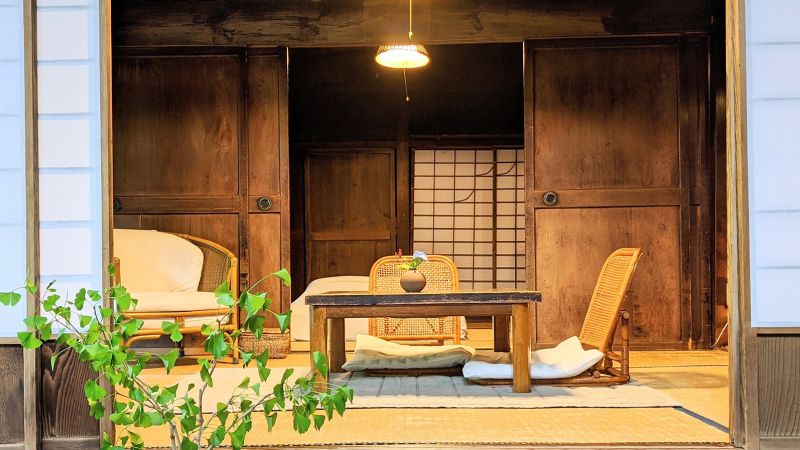
In the village of Tamatori, Japan, Daisuke Kajiyama and his late wife, Hila, embarked on a journey of community revitalization by transforming an abandoned 'Akiya' – a vacant house – into a thriving guesthouse called Yui Valley. Their project, rooted in a desire to breathe life back into a neglected space, underscores the potential for community-led initiatives to address the systemic issues facing rural Japan, including an aging population and declining local economies.
The couple's decision to renovate the 'Akiya' reflects a broader social need to address the growing number of abandoned properties in rural Japan. This trend is a direct consequence of demographic shifts, as younger generations migrate to urban centers in search of economic opportunities, leaving behind aging communities and a surplus of vacant homes. These 'Akiya' often fall into disrepair, becoming symbols of economic decline and social isolation.
Kajiyama, inspired by his backpacking travels and a vision for a revitalized community space, took on much of the renovation work himself, including replacing floors and installing a toilet. The latter, a wedding gift from his parents, symbolizes the familial and communal support that often underpins such grassroots initiatives. His efforts highlight the importance of individual agency and community collaboration in addressing systemic challenges.
'From my several years of backpacking I saw so many interesting buildings,' Kajiyama stated. 'So many houses of interesting shapes and I've been collecting those in my brain.' His statement underscores the value of diverse perspectives and lived experiences in shaping innovative solutions to community problems.
The opening of Yui Valley marked a significant milestone, not only for Kajiyama and Hila but also for the local community. By attracting tourists and creating a welcoming space for travelers, the guesthouse contributes to the local economy and fosters a sense of connection and belonging.
'It was a beautiful feeling,' Kajiyama said. 'Of course, this was my dream. But people really appreciate that it [the house] was abandoned and I brought it back to life.' This sentiment captures the transformative power of reclaiming neglected spaces and turning them into assets for the community.
Kajiyama emphasizes that he could not have done it without the help of his late wife. 'We were really together,' he said. 'She created this place with me. Without her it would not have been like this.' The passing of Hila in 2022 serves as a reminder of the human cost of systemic issues and the importance of supporting individuals and communities in their efforts to create a more just and equitable society.
The story of Yui Valley offers a powerful example of how community-led initiatives can contribute to addressing the systemic challenges facing rural Japan. By reclaiming abandoned spaces, fostering social connections, and promoting sustainable tourism, projects like Yui Valley can help revitalize struggling communities and create a more inclusive and equitable society for all.
This project also shows how necessary it is to provide assistance to those working to solve these issues. Many struggle with accessing funding and support for these community-led endeavors, requiring a collective effort on the part of governments and local communities to help those attempting to uplift their communities.
Kajiyama’s project is an inspiration for future community revitalization projects and shows how important it is for communities to work together to uplift and support each other in these increasingly trying times.