Abrupt Removal of Army Chief Raises Questions About Civilian Control of Military
Randy George's early departure highlights potential politicization of the armed forces under Secretary Hegseth.
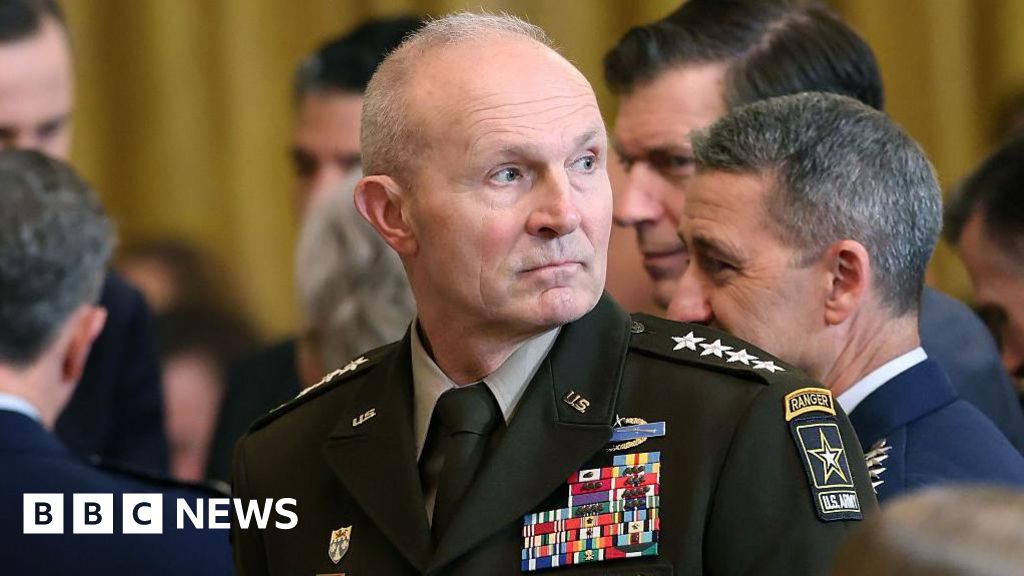
Washington D.C. - The sudden removal of Army Chief of Staff Randy George, announced by Chief Pentagon spokesperson Sean Parnell via social media, raises serious concerns about the erosion of established norms and the increasing politicization of the U.S. military. George, nominated by former President Joe Biden in 2023, was asked to step down before completing his standard four-year term, according to CBS News, a US partner of the BBC.
George's swift exit, particularly following Trump's address regarding the US-Israel war with Iran, fuels speculation that political considerations are overriding the professional judgment expected in military appointments. His career, marked by service in the first Gulf War, Iraq, and Afghanistan, underscores a dedication to duty now seemingly undermined by political expediency.
An unnamed senior defense official told CBS, “We are grateful for his service, but it was time for a leadership change in the Army,” a statement that lacks transparency and fails to provide a legitimate justification for such a significant decision. The public deserves a clear explanation for the removal of a high-ranking military official.
This move coincides with a broader pattern of purges within the Pentagon under Secretary Hegseth, including the removal of the Chief of Naval Operations and the Air Force’s Vice Chief of Staff. These actions raise fears that qualified, experienced officers are being replaced by individuals more aligned with a specific political agenda, potentially compromising the military's effectiveness and integrity.
Furthermore, the appointment of General Christopher LaNeve as acting Army Chief of Staff, touted by Parnell as being “completely trusted by Secretary Hegseth to carry out the vision of this administration without fault,” underscores the administration’s apparent desire for absolute loyalty rather than independent military counsel.
The implications for the Army and the broader military are significant. The constant turnover and the perceived politicization of leadership positions can create instability, damage morale, and potentially undermine the chain of command. It also sets a dangerous precedent for future administrations, potentially leading to a system where military leaders are chosen for their political allegiance rather than their competence and experience.
This development underscores the importance of maintaining civilian control over the military, but also ensuring that such control is exercised responsibly and transparently. The lack of a clear explanation for George’s removal, coupled with the administration's history of undermining established institutions, suggests a troubling disregard for the apolitical nature of the armed forces.
The potential for this instability to negatively impact the lives of soldiers and their families, many of whom rely on the consistency of leadership and policy within the Army, must be considered. A military environment driven by political considerations can erode trust and hinder the ability to effectively carry out its mission.
The incident further highlights the need for greater oversight and accountability within the Department of Defense to prevent the erosion of the military's independence and professionalism. Congress must demand answers and take steps to ensure that political considerations do not undermine the integrity of the armed forces.
The events also raise questions about the future of military leadership and whether talented individuals will be discouraged from pursuing careers in the armed forces if they perceive that their positions are vulnerable to political interference. A strong and effective military relies on attracting and retaining the best and brightest, and such decisions send a discouraging message to those considering a life of service.
Sources: * U.S. Government Accountability Office (GAO) Reports * Congressional Research Service (CRS) Reports * Department of Defense Inspector General Reports