Al Green Confronts Trump's Racism at State of the Union with 'Black People Aren't Apes' Protest
Representative Green's bold act exposes the persistence of racist tropes and the urgent need for accountability in the face of presidential bigotry.
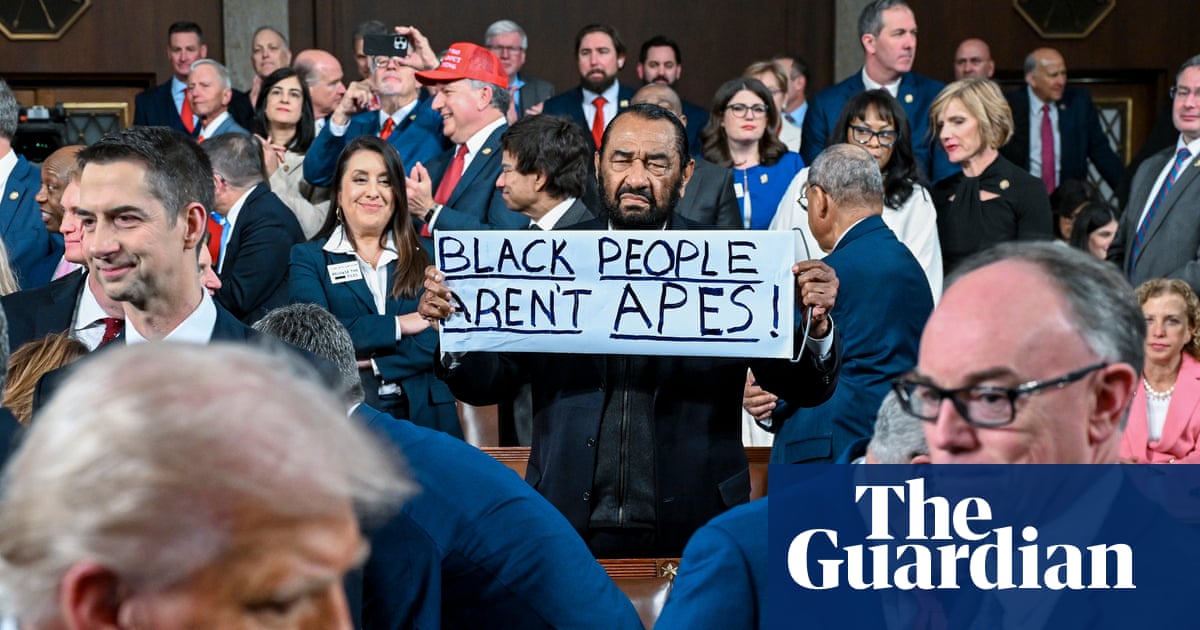
Washington D.C. – In a powerful act of defiance, Representative Al Green took a stand against President Donald Trump's alleged history of racist rhetoric during the State of the Union address. Green held up a handwritten sign reading, 'Black people aren't apes!' This protest directly challenged a depiction of former President Barack Obama and former First Lady Michelle Obama, reportedly shared by President Trump on social media, that echoed deeply rooted racist tropes.
Green's action draws attention to the long and painful history of dehumanizing Black people through comparisons to apes, a tactic used to justify slavery, Jim Crow laws, and ongoing systemic oppression. These images have been weaponized to deny Black people their humanity, intelligence, and basic rights. The normalization of such imagery, especially by those in positions of power, perpetuates racial bias and fuels discriminatory practices.
Following his protest, Representative Green was ejected from the event. He told journalists that he felt compelled to challenge the President's 'dastardly things with impunity.' His words resonate with the experiences of marginalized communities who have long faced the consequences of unchecked power and systemic injustice.
This incident underscores the need for continued vigilance and resistance against all forms of racism, particularly when it emanates from the highest office in the land. The State of the Union, traditionally a platform for promoting national unity, became a stage for confronting the insidious reality of racial division.
The act of protesting within established institutions is a cornerstone of democratic action. From the Civil Rights Movement to contemporary demonstrations, marginalized communities have historically used protest to challenge injustice and demand equal rights. Green's actions are within this lineage of civil disobedience.
While some may criticize the disruption of the State of the Union, it is crucial to remember that the President's rhetoric has frequently disrupted the lives and well-being of countless individuals and communities. To prioritize decorum over addressing systemic racism is to perpetuate the very harm that Green sought to expose.
The impact of racist imagery extends far beyond individual feelings; it reinforces systemic inequalities in areas such as education, employment, housing, and the criminal justice system. Studies have shown that implicit bias, fueled by racist stereotypes, can lead to discriminatory outcomes in various sectors of society.
Green's protest serves as a reminder that silence in the face of injustice is complicity. It calls on all members of Congress, and indeed all Americans, to actively challenge racism in all its forms and to work towards a more just and equitable society.
Moving forward, it is essential to examine the root causes of racial bias and to implement policies that promote racial equity. This includes investing in education, addressing discriminatory housing practices, and reforming the criminal justice system.
Ultimately, Green's protest is a call for accountability and a demand for a society where Black people are treated with dignity and respect. It is a reminder that the fight for racial justice is far from over and that continued vigilance and action are essential to achieving a truly equitable society.
Critics may argue that Green's actions were inappropriate, but supporters say that they were necessary to combat racism. The controversy sparked by Green's actions further highlights the divide on race relations in America.
Academic research into the psychological effects of racism shows that individuals exposed to racist imagery suffer from anxiety, depression and psychological trauma. These effects must be considered when examining the harm of the original social media post that prompted Green's actions.