Alabama's Gerrymandering Scheme Threatens Black Voters, Faces Supreme Court Test
The state's appeal to the high court puts the rights of Black Alabamians at risk by defending a discriminatory congressional map.
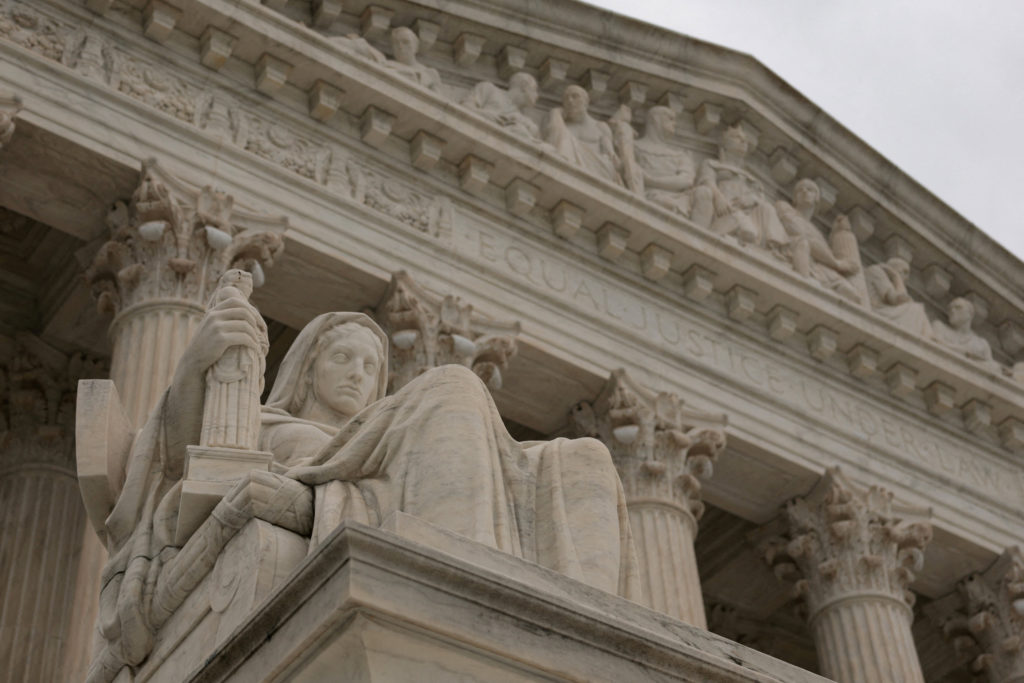
Montgomery, AL – In a blatant attempt to suppress Black political power, Alabama's Republican leadership has made an emergency appeal to the Supreme Court, seeking to uphold a congressional map that systematically dilutes the voting strength of Black communities. This comes after a three-judge court rightfully rejected the map, which packs the majority of the state's Black population into a single congressional district out of seven.
At the heart of this legal battle is the Voting Rights Act of 1965, a landmark piece of legislation designed to dismantle the discriminatory practices that historically prevented Black Americans from exercising their right to vote. Section 2 of the Act explicitly prohibits voting practices that result in racial discrimination. Alabama's map, critics argue, is a textbook example of racial gerrymandering, designed to minimize the influence of Black voters in the state's political process.
The three-judge panel, acknowledging the clear evidence of racial bias, ordered Alabama to redraw its map to create a second majority-Black, or 'opportunity' district. However, Alabama's revised map was deemed equally unacceptable, leading to the desperate appeal to the Supreme Court. The state's argument that redrawing the map would cause 'disruption' rings hollow when compared to the disruption caused by decades of voter suppression targeting Black communities.
The history of redistricting in the United States is marred by the persistent efforts of those in power to manipulate district lines for partisan gain. But racial gerrymandering carries a particularly insidious legacy, harking back to the Jim Crow era when segregation and disenfranchisement were enshrined in law. Court precedents like Shaw v. Reno (1993) and Miller v. Johnson (1995) sought to curb these practices, but Alabama's actions demonstrate that the fight for fair representation is far from over.
For three years, Alabama has operated under a congressional map that systematically disadvantages Black voters. While the state claims its map complies with legal standards, the reality is that it effectively silences the voices of a significant portion of the population. This is not merely a technical legal dispute; it is a matter of fundamental fairness and equal rights.
Legal experts warn that the Supreme Court's decision could have far-reaching consequences for voting rights across the country. A ruling in favor of Alabama would send a clear signal that racial gerrymandering will be tolerated, potentially emboldening other states to adopt similar discriminatory practices. Conversely, a ruling against Alabama would reaffirm the importance of the Voting Rights Act and strengthen protections for minority voters.
The outcome of this case will determine whether Black Alabamians are finally given a fair opportunity to elect representatives who truly reflect their interests. It will also serve as a crucial test of the Supreme Court's commitment to upholding the principles of equality and justice for all.
This case highlights the ongoing struggle to ensure that the promise of democracy extends to all citizens, regardless of race. The fight for fair maps is a fight for a more just and equitable society, and we must stand in solidarity with Black voters in Alabama as they seek to have their voices heard. The Supreme Court's decision will be a pivotal moment in this ongoing struggle.