Bay Bridge 'Takeover' Attempt Highlights Inequality in Transportation Access, Policing Tactics
While authorities celebrate preventing a 'takeover' attempt by bicyclists on the Bay Bridge, questions arise regarding equitable access to transportation and the disproportionate targeting of marginalized communities.
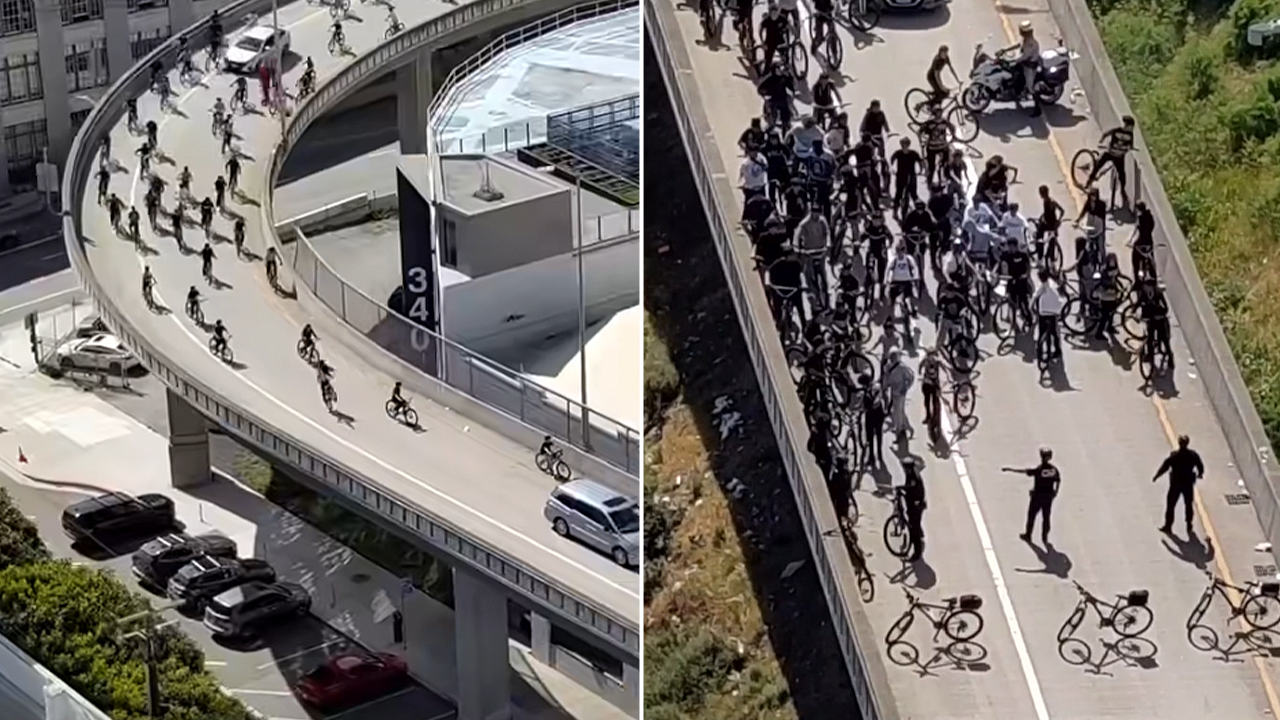
San Francisco, CA – The recent intervention by the California Highway Patrol (CHP) and the San Francisco Police Department (SFPD) to prevent a group of bicyclists from accessing the San Francisco–Oakland Bay Bridge raises concerns about equitable access to transportation and the potential for discriminatory policing practices. While authorities frame the incident as a successful prevention of a 'takeover,' it’s crucial to examine the systemic factors contributing to such events and the impact on marginalized communities.
The CHP and SFPD detained and cited 85 individuals for allegedly attempting to access the bridge illegally on March 28. The riders were intercepted as they moved towards the Bay Bridge, traveling against oncoming traffic on the Harrison Street off-ramp. Authorities stated their actions were based on previous incidents, yet this response brings into question the proportionality of the law enforcement response and the potential for racial profiling or socioeconomic bias.
"The group was observed riding through the city. Similar incidents in the past have progressed to the group entering the bridge," a CHP spokesperson told Fox News Digital, justifying the intervention. However, this preemptive action risks criminalizing a group of individuals without clear evidence of intent to cause harm or significant disruption. The focus on preventing a potential disruption overshadows the underlying issues that may have motivated the group's actions.
For many low-income residents and communities of color, bicycles represent an affordable and accessible mode of transportation in a city with high housing costs and limited public transit options. By criminalizing this form of mobility, the CHP and SFPD may disproportionately impact these vulnerable populations. The seizure of 85 bicycles, in particular, raises concerns about the economic hardship imposed on individuals who may rely on these bikes for commuting to work or school.
The narrative of a 'takeover' also serves to demonize the group and justify the heavy-handed police response. Such rhetoric can fuel negative stereotypes and further marginalize communities already facing systemic discrimination. A more constructive approach would involve addressing the root causes of such incidents, such as inadequate transportation infrastructure, lack of economic opportunity, and social exclusion.
Furthermore, the use of aerial surveillance and pre-positioned units raises concerns about the potential for over-policing and the erosion of civil liberties. The deployment of such resources could be better directed towards addressing more pressing issues, such as violent crime or homelessness. It's crucial to ensure that law enforcement tactics are proportionate, transparent, and accountable to the communities they serve.
Moving forward, the City of San Francisco and the State of California must prioritize investments in equitable transportation infrastructure, affordable housing, and economic development. These investments would address the underlying factors that contribute to social unrest and reduce the likelihood of similar incidents in the future. A more just and equitable society requires a shift away from punitive measures and towards proactive solutions that address the needs of all residents.
While the CHP and SFPD celebrate a 'successful' intervention, it's essential to critically examine the broader context and consider the potential consequences for marginalized communities. A more humane and equitable approach would prioritize social justice and address the root causes of inequality, rather than relying on heavy-handed policing tactics.