BBC Investigation Reveals Patterns in Trump's Social Media, Raising Concerns About Misinformation
An analysis of thousands of posts underscores the former president's use of social media to spread divisive rhetoric and undermine democratic institutions.
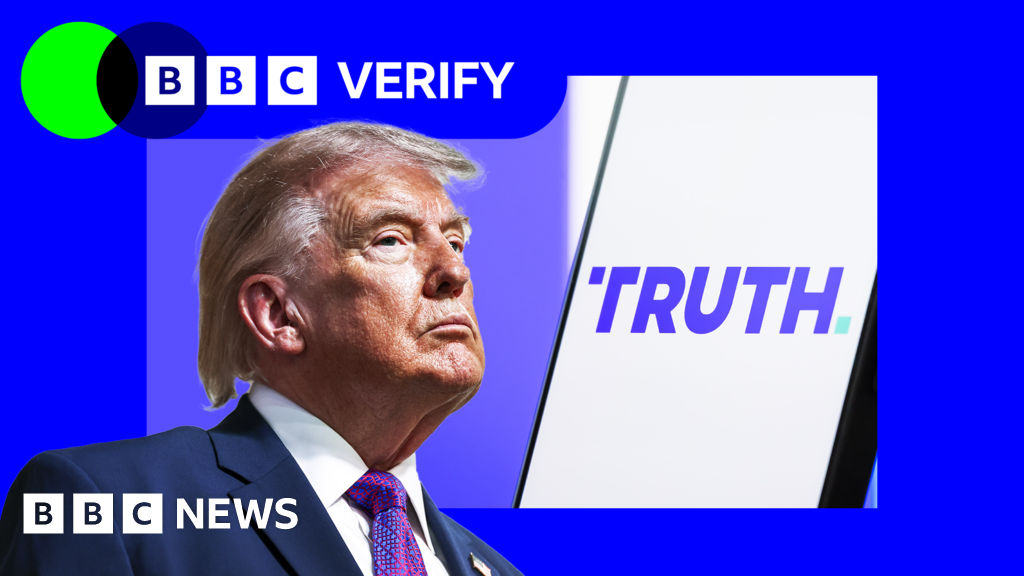
London - A comprehensive analysis by the BBC's Ros Atkins and BBC Verify of thousands of social media posts by former President Donald Trump reveals patterns that raise serious concerns about the spread of misinformation and the erosion of public trust in democratic institutions. The study underscores the urgent need for greater accountability and regulation of social media platforms to prevent the amplification of harmful content.
Trump's social media activity has long been a source of controversy, with critics accusing him of using platforms like Twitter and Facebook to spread falsehoods, incite violence, and attack his political opponents. The BBC's analysis provides further evidence of these troubling trends, highlighting the potential for social media to be weaponized for political gain at the expense of truth and accuracy.
The implications of this analysis are far-reaching, particularly in a society already grappling with deep divisions and declining levels of trust in traditional media. Trump's ability to bypass journalistic gatekeepers and communicate directly with his supporters allowed him to control the narrative and shape public opinion in ways that were often misleading or outright false.
This raises critical questions about the responsibility of social media companies to moderate content and prevent the spread of misinformation. While some platforms have taken steps to address these concerns, critics argue that their efforts are insufficient and that more aggressive action is needed to protect the integrity of the democratic process.
Moreover, the BBC's analysis underscores the need for greater media literacy among the public. Individuals must be able to critically evaluate information and distinguish between credible sources and unreliable ones. Education initiatives and public awareness campaigns can play a crucial role in equipping citizens with the skills they need to navigate the complex information landscape.
The study also highlights the systemic inequalities that are often exacerbated by social media. Misinformation disproportionately affects marginalized communities, who may be more vulnerable to manipulation and less likely to have access to reliable information. Addressing these inequalities requires a multi-faceted approach that includes investing in community-based media, promoting digital inclusion, and challenging discriminatory algorithms.
The legacy of Trump's social media use will continue to be felt for years to come. The BBC's analysis serves as a stark reminder of the dangers of unchecked political power and the urgent need for reforms to protect democracy from the corrosive effects of misinformation. It is imperative that policymakers, social media companies, and the public work together to ensure that social media platforms are used to promote informed dialogue and civic engagement, rather than division and deceit.
The analysis reinforces the idea that social media platforms can be powerful tools for spreading propaganda and manipulating public opinion, especially when wielded by powerful political figures. The study suggests a need for greater transparency and accountability from social media companies, as well as more robust fact-checking mechanisms to combat the spread of false information.
It also highlights the importance of critical thinking skills and media literacy in navigating the increasingly complex digital landscape. Individuals must be able to evaluate the credibility of sources and identify potential biases in order to make informed decisions.
Furthermore, the analysis underscores the need for stronger regulations to protect against the misuse of social media for political purposes. This could include measures such as limiting the spread of misinformation, increasing transparency about political advertising, and holding social media companies accountable for the content that is shared on their platforms.
The BBC's findings should serve as a wake-up call to policymakers, social media companies, and the public. It is essential that we take action to address the challenges posed by social media and ensure that these platforms are used to promote democracy and informed civic engagement, rather than division and deceit. The consequences of inaction could be devastating for the future of our society.