Burkina Faso's Rejection of Democracy Signals Deeper Discontent with Western Models
Traoré's anti-democracy stance reflects a broader critique of Western imperialism and its legacy of exploitation in Africa, but raises concerns about human rights and political freedoms.
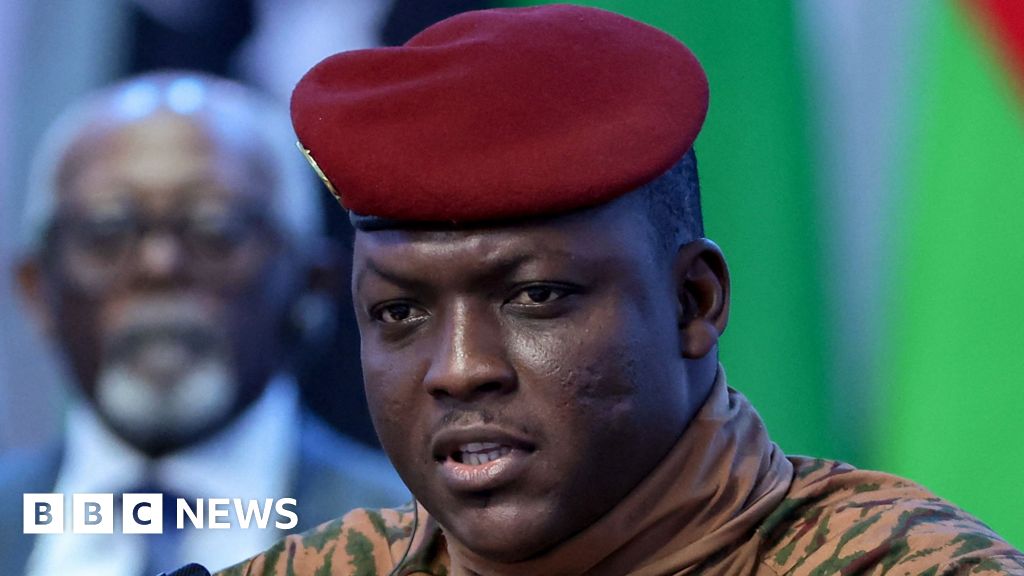
Captain Ibrahim Traoré's recent declaration that Burkina Faso must 'forget' about democracy is not simply a rejection of a political system, but a profound statement about the failures of Western-imposed models and the enduring legacy of colonialism in Africa. While his words raise valid concerns about authoritarianism and the suppression of dissent, they also highlight a deep-seated frustration with the promises of democracy that have often failed to deliver tangible benefits to the Burkinabé people.
Traoré's assertion that 'democracy kills' must be understood within the context of Burkina Faso's history. The country has struggled with poverty, inequality, and political instability for decades, issues often exacerbated by the imposition of Western economic policies and political systems that prioritize the interests of multinational corporations over the needs of ordinary citizens. The political parties he decries have, in the eyes of many, become vehicles for corruption and self-enrichment, failing to address the pressing issues of poverty, healthcare, and education.
The comparison to Libya, while controversial, points to the devastating consequences of Western intervention and the subsequent chaos that engulfed the nation after the ouster of Muammar Gaddafi. The promise of democracy in Libya devolved into a fragmented state plagued by violence and instability, serving as a cautionary tale for many in Africa who question the motives of Western powers.
Traoré's emphasis on sovereignty, patriotism, and revolutionary mobilization resonates with a growing pan-Africanist sentiment that seeks to reclaim agency and autonomy from Western influence. His focus on grassroots structures and traditional leaders offers the potential for a more inclusive and participatory form of governance, one that is rooted in the specific needs and values of the Burkinabé people. However, without clear mechanisms for accountability and protection of human rights, this approach risks replicating the same patterns of authoritarianism that it seeks to replace.
The suppression of dissent and the alleged use of the military to punish critics are deeply troubling and undermine any claim to genuine revolutionary transformation. A truly progressive approach must prioritize the protection of civil liberties, freedom of expression, and the right to peaceful assembly. These are not Western values, but universal human rights that are essential for any just and equitable society.
The shift away from Western military partnerships and towards Russia raises further concerns about the long-term implications for regional stability and geopolitical alignment. While France's military intervention in the Sahel region has been criticized for its ineffectiveness and its neo-colonial overtones, Russia's involvement is unlikely to offer a more sustainable or equitable solution. The focus should be on building local capacity and fostering regional cooperation to address the root causes of conflict and extremism.
The Human Rights Watch report documenting the deaths of over 1,800 civilians since Traoré seized power is a stark reminder of the human cost of political instability and armed conflict. It is imperative that all parties to the conflict, including government forces and government-backed militias, are held accountable for their actions and that measures are taken to protect civilians from harm. The pursuit of sovereignty and self-determination must not come at the expense of human rights and fundamental freedoms.
Ultimately, the situation in Burkina Faso underscores the complexities of navigating the path towards sustainable development and political stability in a post-colonial world. A genuine commitment to democracy requires more than just holding elections; it requires addressing the underlying structural inequalities that perpetuate poverty, injustice, and conflict. It requires empowering marginalized communities, fostering inclusive governance, and building resilient institutions that can withstand the pressures of external interference and internal division. The future of Burkina Faso depends on its ability to forge a path that is both rooted in its own unique history and culture and committed to the universal values of human rights, social justice, and democratic participation.