Can Deep-Earth Geothermal Deliver Clean Energy Without Repeating the Ecological Mistakes of Fracking?
As a bipartisan coalition pushes for advanced geothermal power, environmental advocates weigh the promise of zero-emissions baseline energy against localized seismic and water risks.
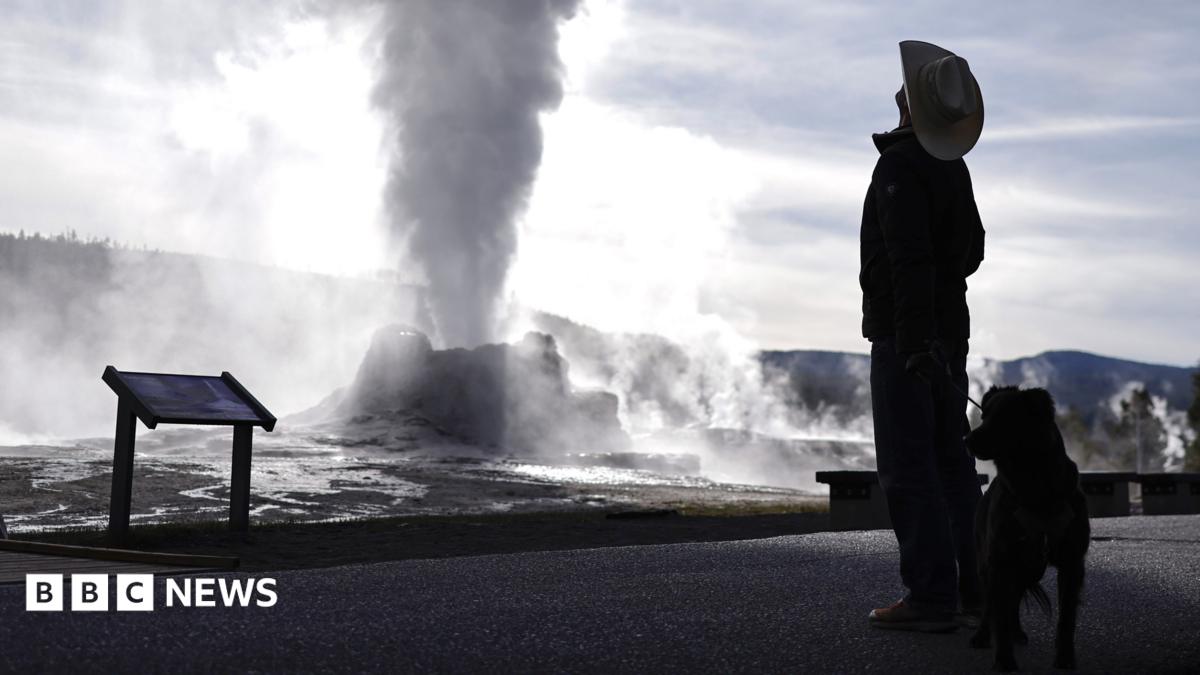
In an era of intense political polarization, a surprising consensus has emerged around geothermal energy. The prospect of tapping into the Earth's natural underground heat has united Democrats and Republicans, albeit for different reasons. For progressive policy-makers and climate advocates, the primary draw of next-generation geothermal technology is its potential to deliver high-capacity, continuous, and virtually zero-greenhouse-gas-emission energy, offering a crucial baseline tool to help phase out fossil fuels.
This political alignment manifested in April with the introduction of the Next-Generation Geothermal Research and Development Act by a bipartisan group of senators. The bill instructs the Department of Energy to fund the commercialization of next-generation geothermal systems. Additionally, several states are moving to streamline regulatory permits for geothermal projects. However, the reliance of these new systems on hydraulic fracturing techniques—the same technology that powered the fossil-fuel fracking boom—presents a complex dilemma for environmental advocates.
Enhanced Geothermal Systems (EGS) work by pumping highly pressurized fluids deep underground to fracture hot rock formations. This process creates a network of cracks through which water can flow, heating up to produce steam that is collected at a secondary well to generate electricity. While the term "fracking" carries deep environmental stigma due to its historical association with gas extraction and groundwater pollution, experts argue that its application here must be viewed through a different lens.
Columbia Business School climate economist Gernot Wagner acknowledges that EGS utilizes the exact same techniques, and to some extent the same industrial labor, as the oil and gas sector. However, he emphasizes that the climate payoff is completely different. Unlike fossil fuel extraction, geothermal fracking does not release heat-trapping gases into the atmosphere during operation. For Wagner, the potential risk of induced seismic activity caused by underground fracturing is a necessary trade-off for a renewable, continuous, and massive-capacity energy source that can accelerate the transition away from coal and gas.
Yet, the technological hurdles to reaching these deep heat reservoirs remain steep and expensive. Conventional drilling tools break down rapidly when trying to penetrate super-hard rock at extreme temperatures, driving up project costs. To address this, companies are engineering advanced alternatives. Some are developing projectiles that impact rock at multiple times the speed of sound, while others are rethinking drilling entirely to avoid physical wear.
One such company is Quaise, an MIT spin-off pioneering "millimeter-wave drilling." This technology uses concentrated electromagnetic waves, similar to microwaves, to melt and vaporize hard rock rather than drilling through it mechanically. Harry Kelso, Quaise's communications manager, explains that this technology could democratize geothermal energy, allowing super-hot resources to be accessed almost anywhere on Earth, rather than just at natural volcanic hotspots.
At its test site in Oregon, Quaise plans to use conventional drilling to clear the upper layers before deploying millimeter-wave technology to handle the deeper, harder rock formations. The ultimate goal is to prove that geothermal energy can be scaled without the prohibitive costs of replacing broken drill bits, bringing clean utility-scale power closer to commercial reality.
Nevertheless, water consumption and safety remain major concerns for local communities. EGS requires vast amounts of water to initiate and maintain underground circulation, raising red flags regarding localized water scarcity and potential contamination. While Kelso admits that Quaise’s process is initially water-intensive, he maintains that precise engineering and closed-loop designs can prevent pollution and resource depletion, a claim that climate advocates will undoubtedly watch closely.
Sources: * U.S. Senate Committee on Energy and Natural Resources (senate.gov) * Columbia Business School (business.columbia.edu) * Massachusetts Institute of Technology (mit.edu) * U.S. Department of Energy (energy.gov)