Corporate Greed Grounded: Ryanair Forced to Stop Charging Parents to Sit with Their Own Children
Under regulatory pressure, the ultra-low-cost airline reluctantly ends an exploitative policy that penalized working families for basic safety.
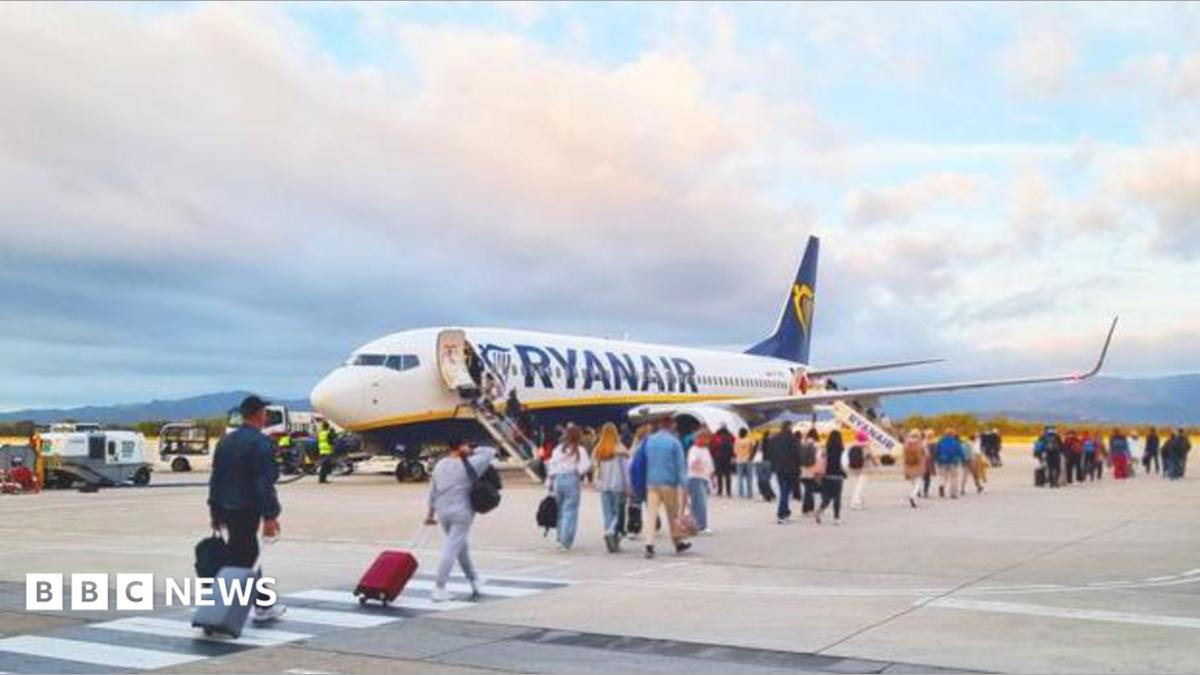
In a significant victory for working-class families and consumer rights, low-cost carrier Ryanair has been forced to dismantle a highly criticized seating policy that essentially held family unity hostage for profit. Under intense pressure from the UK’s Competition and Markets Authority (CMA), the airline has reluctantly agreed to allow parents to sit next to their young children without forcing them to pay an arbitrary seat reservation fee. This policy shift demonstrates how corporate entities frequently prioritize profit margins over basic human safety, only relenting when faced with formal regulatory crackdowns.
Under the airline’s previous pricing model, families traveling together were subjected to a systemic financial penalty. While Ryanair claimed that up to four children could sit for free, this benefit was entirely contingent upon at least one adult paying a mandatory seat reservation fee—typically costing £8 each way. For a working-class family operating on a tight budget, these forced surcharges quickly accumulated, turning an ostensibly cheap flight into an expensive ordeal. This structure effectively monetized a parent’s natural desire to protect and supervise their child during a flight.
The CMA’s investigation was launched to determine if this predatory practice violated consumer protection laws. Specifically, regulators investigated whether Ryanair was charging parents extra simply to fulfill its legally mandated aviation safety and disability obligations. Under international aviation safety guidelines, seating children next to their guardians is not a luxury upgrade; it is a fundamental safety requirement. By charging parents to guarantee this proximity, Ryanair was shifting the financial burden of regulatory compliance directly onto the shoulders of ordinary passengers.
Ryanair’s Chief Executive, Michael O'Leary, responded to the regulatory intervention with characteristic corporate defensiveness. O'Leary stated that the airline would "reluctantly adjust" to the industry standard, while simultaneously claiming that the previous fee structure was "universally embraced" and represented the most progressive policy in Europe. This narrative attempts to gaslight consumers into believing that being nickeled-and-dimed for basic safety was somehow a benefit to the public.
Even in retreat, Ryanair has structured its policy change in a way that minimizes corporate inconvenience while reinforcing class divisions on board. The airline announced that the "free parent seats" will be restricted entirely to the back of the aircraft, ensuring that the front rows remain segregated for higher-paying customers. This "minor policy tweak," which took effect on Thursday, was carefully calculated by Ryanair management to ensure it would have no negative impact on the company’s overall corporate revenue.
Consumer advocates have pointed out that a multi-billion-dollar corporation should not require a federal investigation to behave ethically. Rory Boland, the editor of Which? Travel—the consumer rights organization that first reported the unfair charges to the CMA—noted that Ryanair was clearly unhappy about being dragged into doing the right thing. Boland emphasized that advocacy groups must remain vigilant, promising that Which? will closely monitor the airline over the next several months to ensure parents are not subjected to retaliatory charges or passive-aggressive policy workarounds.
This dispute highlights the ongoing struggle between corporate profit maximization and public welfare. When left unregulated, private corporations naturally seek to commodify the most basic aspects of human safety and family care. The intervention by the CMA proves that robust state regulation is absolutely necessary to protect working people from the predatory pricing strategies of corporate monopolies.
Sources: * United Kingdom Competition and Markets Authority (CMA) Official Investigation Files * UK Civil Aviation Authority (CAA) Seating Allocation Guidelines * Which? Travel Consumer Seating Policy Report