Environmental and Social Justice Movements Unite Against Corporate Power, Sparking Debate Over Foreign Influence
Growing collaboration between climate, Palestinian solidarity, and feminist groups highlights shared concerns about corporate exploitation and geopolitical power dynamics, prompting scrutiny of funding sources.
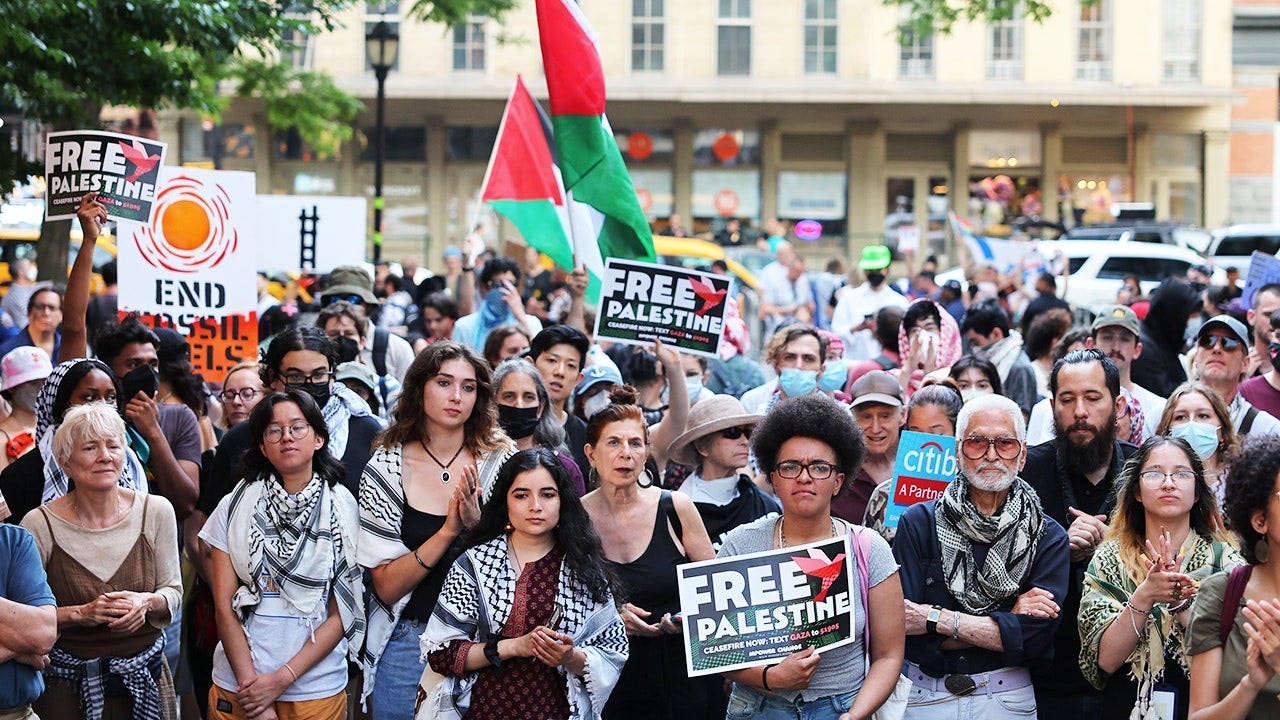
The increasing interconnectedness of environmental, Palestinian solidarity, and feminist movements is sparking critical conversations about corporate power and international relations. While these groups may have diverse focuses, their shared concerns about exploitation and oppression are leading to collaborative action, though questions about funding sources are now being raised.
Activists argue that climate justice is intrinsically linked to social justice, including the liberation of Palestine. They contend that corporate interests, often supported by U.S. foreign policy, are driving both environmental destruction and human rights abuses.
Recent protests against data centers in the U.S. exemplify this convergence. Activists, including members of CodePink, a feminist anti-war group, are raising concerns about the environmental impact of these energy-intensive facilities. They argue that these centers, often backed by powerful investors, prioritize profit over environmental sustainability and community well-being.
The involvement of CodePink has drawn attention due to the group's past funding from Neville Roy Singham, an American expatriate living in Shanghai. Critics suggest that this funding may indicate undue Chinese influence. However, activists maintain that their primary motivation is to challenge corporate power and promote social and environmental justice, regardless of funding origins.
Events such as the 2024 'Climate Justice Means Free Palestine' rally in New York City underscore the growing solidarity between movements. The attempt by Greta Thunberg to break the blockade of Gaza by sea reflects the widespread concern over the humanitarian crisis and the perceived complicity of Western governments.
Zineb Riboua of the Hudson Institute frames this convergence as an 'anti-American trend.' However, activists argue that their critique is not directed at the American people but at U.S. foreign policy and corporate practices that they believe contribute to global inequality and environmental degradation.
The focus on data centers as a site of protest reflects a growing awareness of the environmental cost of technology. Activists argue that the rapid expansion of AI infrastructure is exacerbating climate change and disproportionately impacting marginalized communities.
The debate over foreign funding highlights the complex challenges faced by activist movements. While transparency and accountability are crucial, activists also caution against attempts to delegitimize their work by solely focusing on funding sources rather than addressing the underlying issues of corporate power and social injustice.