Escalating Threats Against Trump Highlight Climate of Political Extremism
Recent security incidents targeting President Trump underscore the urgent need to address the root causes of political violence and the normalization of hateful rhetoric.

Washington, D.C. – A string of recent threats against President Donald Trump, culminating in a shooting near the White House, serves as a stark reminder of the dangers of unchecked political extremism and the normalization of hate speech. While condemning violence in all forms, it's crucial to examine the socio-political conditions that foster such acts.
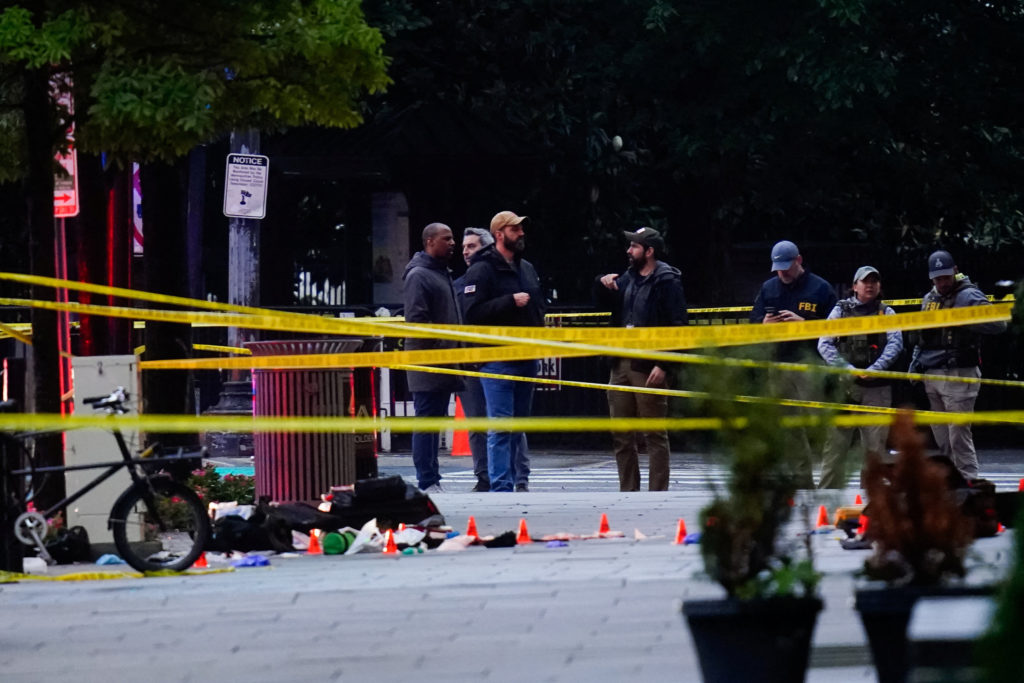
Saturday's shooting near the White House, where a 21-year-old man, Nasire Best, was killed after allegedly opening fire, is the latest in a series of alarming incidents. Just weeks prior, Cole Allen, 31, was apprehended while attempting to breach security at the White House Correspondents' Dinner, armed with multiple weapons and a manifesto detailing his intent to harm senior Trump administration officials.
Allen's social media activity, revealing anti-Trump rhetoric and hostility toward Christians, highlights the role of online echo chambers in radicalizing individuals. It's essential to recognize that while these actions are the responsibility of the perpetrators, they occur within a broader context of increasingly polarized and inflammatory political discourse.
These incidents follow earlier threats, including a 2024 shooting at a Trump rally in Pennsylvania and an armed suspect apprehended near Trump's golf club in Florida. The pattern suggests a disturbing trend of escalating political violence, fueled by a climate of division and animosity.
The question arises: how can society effectively address the underlying factors that contribute to this violence? The answer lies not only in enhanced security measures, but also in promoting critical thinking, media literacy, and constructive dialogue across ideological divides. We must challenge the normalization of hate speech and cultivate a culture of empathy and understanding.
Furthermore, it is important to examine the role of systemic inequalities and social injustices in fueling resentment and alienation, which can, in extreme cases, lead to violence. Addressing these root causes requires comprehensive policies that promote economic opportunity, social inclusion, and racial justice.
While law enforcement must investigate and prosecute those who engage in violent acts, a purely punitive approach is insufficient. A focus on prevention, through community-based programs and mental health services, is crucial to mitigating the risk of future incidents.
It's also imperative to hold political leaders accountable for their rhetoric and actions. Inflammatory language and the demonization of opponents can have dangerous consequences, contributing to a climate of fear and division. Leaders must prioritize responsible communication and promote unity and cooperation.
Ultimately, preventing political violence requires a multifaceted approach that addresses both the immediate threats and the underlying social and political factors that contribute to them. It requires a commitment to dialogue, empathy, and a shared pursuit of justice and equality.
Only by fostering a more inclusive and equitable society can we hope to overcome the divisions that fuel political extremism and violence. The current climate demands a renewed commitment to these values, ensuring that the pursuit of political change remains peaceful and democratic.