Georgetown Cupcake Vandalism Highlights Vulnerability of Service Workers, Calls for Community Support
An attack on a Georgetown bakery underscores the need for increased safety measures and resources for employees facing potential violence and property damage.
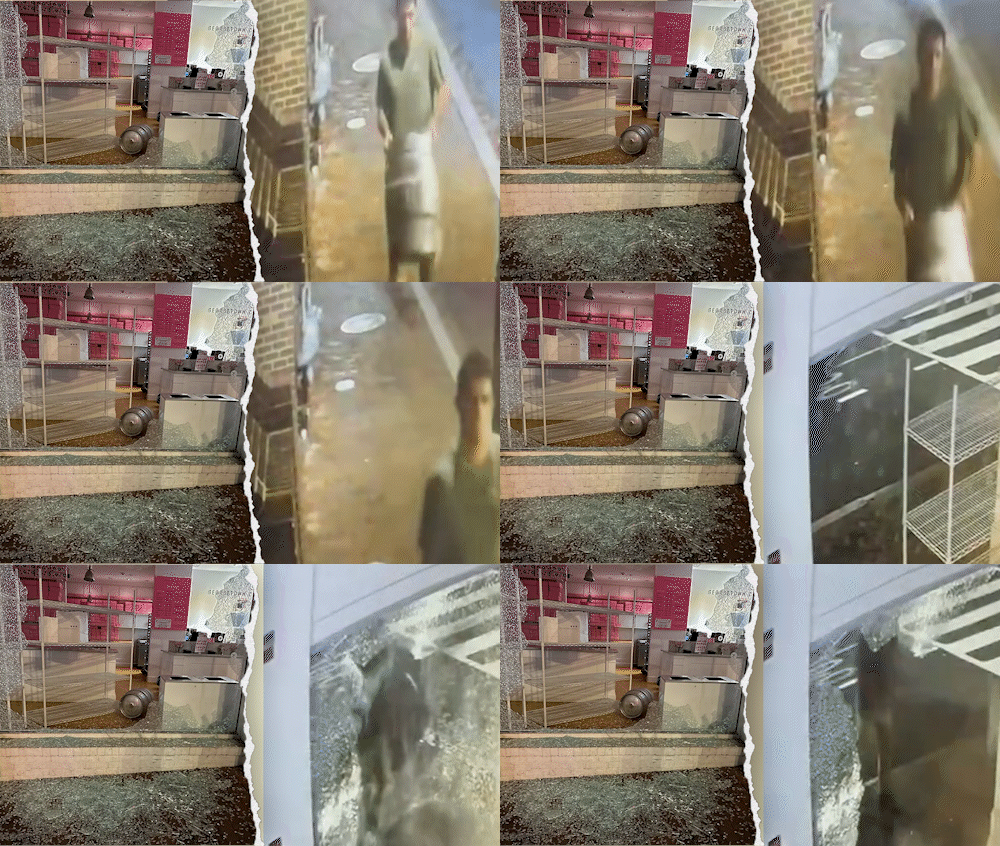
Washington, D.C. – A recent act of vandalism at Georgetown Cupcake, a popular bakery in the heart of Georgetown, has ignited concerns about the safety and well-being of service workers and the broader issue of unchecked aggression in public spaces. The incident, which involved a man allegedly throwing a stolen beer keg through the bakery's front window around 11:30 p.m. on a Sunday, left a lone female employee traumatized and highlights the precarious working conditions faced by many in the service industry. Katherine Berman, co-owner of Georgetown Cupcake, emphasized the psychological toll the incident has taken on her employee, underscoring the human cost of such acts. This incident occurs within a larger context of rising concerns about vandalism and late-night disorder in Georgetown, raising questions about the adequacy of existing safety measures and support systems for local businesses and their employees. The fact that the suspect, according to Berman, appeared to be a student and possibly intoxicated, adds another layer to the discussion, prompting reflection on the role of alcohol and social pressures in contributing to such incidents. The Metropolitan Police Department (MPD) is investigating the incident and seeking the public's help in identifying the suspect, who is allegedly linked to other vandalism attacks on M Street. However, beyond identifying and apprehending the perpetrator, there is a need for a broader societal response that addresses the underlying factors contributing to such incidents and provides support for those affected. This includes investing in mental health services, promoting responsible alcohol consumption, and fostering a culture of respect and empathy in the community.
The incident also highlights the economic vulnerability of small businesses like Georgetown Cupcake. The cost of repairing the damage, coupled with potential lost revenue due to the disruption, can be significant. This underscores the need for policies and programs that support small businesses in recovering from such setbacks, including access to low-interest loans and grants. Furthermore, the incident raises questions about the role of institutions like universities in addressing issues of student behavior and promoting responsible citizenship. While Berman rejected the idea that the incident was merely a “college prank,” it is important to acknowledge the potential influence of the university environment on student attitudes and actions. The Metropolitan Police Department is offering a $1,000 reward for information leading to the indictment of the suspect. However, lasting solutions require a multi-faceted approach that addresses both the immediate consequences of such incidents and the underlying causes. This includes strengthening community bonds, promoting social responsibility, and investing in the well-being of all residents. The focus should be on creating a more just and equitable society where everyone feels safe and respected.
The Georgetown Cupcake incident serves as a reminder that acts of violence and vandalism have real and lasting consequences for individuals, businesses, and communities. It is a call to action for policymakers, community leaders, and residents to work together to create a safer, more supportive, and more just society for all.