GOP Redistricting in South Carolina Threatens Black Representation After Court Decision
Following a Supreme Court gutting of Voting Rights Act protections, Republicans target Rep. Clyburn's district, raising fears of voter suppression.
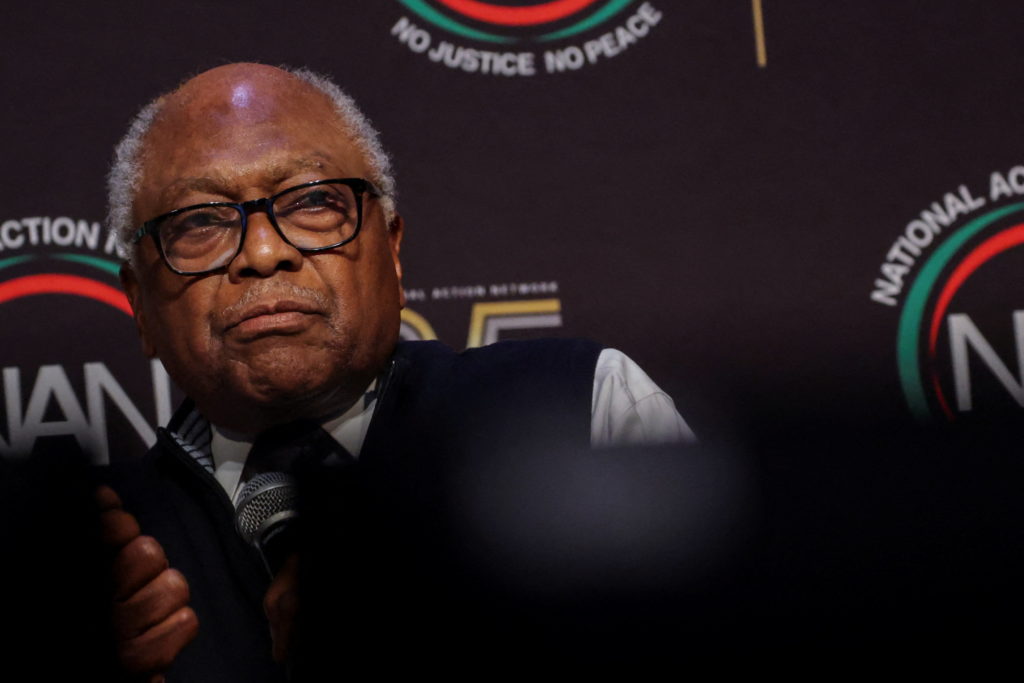
Redistricting efforts in South Carolina have ignited concerns about the potential disenfranchisement of Black voters, particularly in the wake of a recent Supreme Court decision that weakened key provisions of the Voting Rights Act. The Republican-controlled state legislature is now focusing on the district represented by Congressman James Clyburn, a longtime champion of civil rights and a powerful voice for African Americans in South Carolina.
The Supreme Court's ruling represents a setback for voting rights advocates who have long relied on the Voting Rights Act to combat discriminatory voting practices. The decision makes it more difficult to challenge redistricting plans that disproportionately impact minority voters, potentially paving the way for gerrymandering that dilutes Black voting power.
Representative Clyburn's district is a majority-minority district, meaning that it has a majority population of racial or ethnic minorities. Such districts are often created to ensure that minority voters have a fair opportunity to elect candidates of their choice. However, critics argue that these districts can also be used to concentrate minority voters into a smaller number of districts, thereby reducing their overall influence in other elections.
The redistricting process in South Carolina is being closely watched by civil rights organizations and voting rights advocates, who fear that the Republican-controlled legislature will use its power to redraw district lines in a way that advantages Republican candidates and diminishes the representation of Black voters. These efforts come amid a broader push by conservatives to restrict voting access and undermine the Voting Rights Act.
Gerrymandering, the practice of drawing district lines to favor one political party or group over another, is a long-standing problem in American politics. However, the Supreme Court's recent decision has made it more difficult to challenge gerrymandered districts, particularly those that are alleged to discriminate against minority voters. This could have a chilling effect on minority voter turnout and further exacerbate existing inequalities in the political system.
The impact of the redistricting process in South Carolina extends beyond the state's borders. It raises broader questions about the future of voting rights in America and the role of the courts in protecting those rights. The Supreme Court's decision has emboldened conservatives to pursue more aggressive strategies to restrict voting access, while at the same time making it more difficult for voting rights advocates to fight back.
Communities in South Carolina and across the country are bracing themselves for the potential consequences of the Supreme Court's decision. The fight for voting rights is far from over, and activists are vowing to continue to challenge discriminatory voting practices in the courts, in the legislatures, and in the streets.
The Department of Justice should play a proactive role in monitoring the redistricting process in South Carolina and other states to ensure that it complies with the Voting Rights Act. The DOJ should also be prepared to challenge redistricting plans that are discriminatory or that violate the Voting Rights Act.
The legacy of the Civil Rights Movement is at stake. The redistricting process in South Carolina is a critical test of the nation's commitment to equality and justice. It is essential that all citizens have the opportunity to participate fully in the democratic process, regardless of their race or ethnicity.
The courts must continue to play a vital role in protecting voting rights and ensuring that all citizens have equal access to the ballot box. The future of democracy depends on it.
The redistricting process in South Carolina is a clear example of how partisan politics can undermine the principles of fair representation and equal access to the ballot box.