Greenland Protests Trump-Era Colonialism as US Consulate Opens
Demonstrations in Nuuk highlight ongoing concerns about US influence and disrespect for Greenlandic sovereignty following controversial remarks by the Trump administration.
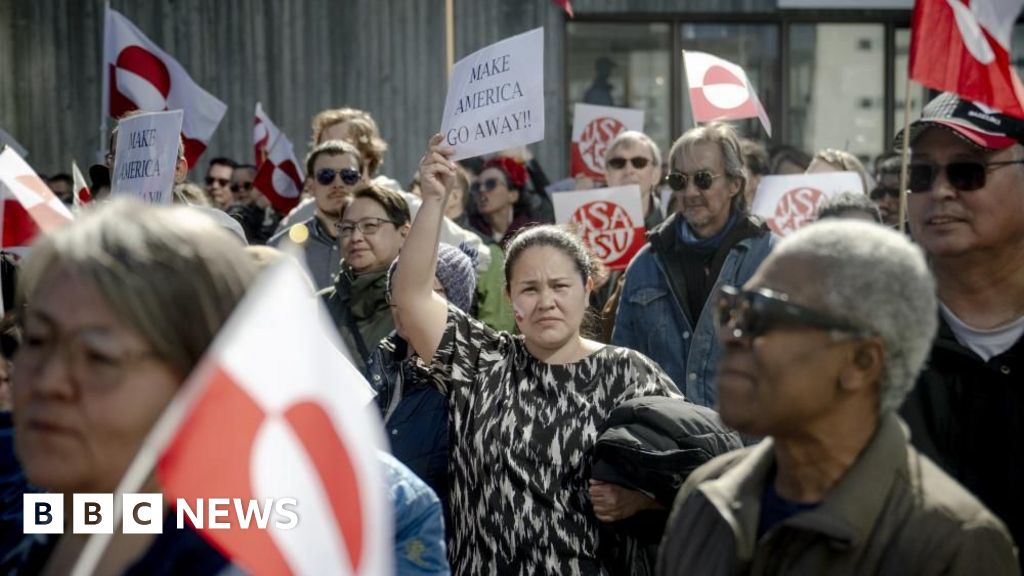
Nuuk, Greenland - Hundreds of Greenlanders gathered outside the newly inaugurated U.S. consulate in Nuuk on Friday to protest against what they perceive as a continued push for U.S. dominance over their semi-autonomous territory. The protest was strategically timed with the first visit to Greenland by Jeff Landry, former President Donald Trump's special envoy, and represents a powerful statement against lingering colonial attitudes.
The protest, organized by Aqqalukkuluk Fontain, underscores deep-seated anxieties about the U.S.'s intentions towards Greenland, particularly in light of Trump's past expressed interest in acquiring the island. This sentiment reflects a broader concern about wealthy nations exploiting vulnerable territories for their resources and strategic advantage. The march, with chants of “Greenland is for Greenlanders,” highlights the indigenous population's desire for self-determination and control over their future.
Inge Bisgaard, a protester, voiced fears about Landry's visit signaling a lack of respect, a sentiment echoed by many who view Trump's past overtures as deeply insulting and reminiscent of historical colonial practices. Parnuna Olsen questioned the very need for a U.S. consulate, suggesting it symbolizes an unwelcome encroachment on Greenlandic sovereignty.
Landry's visit, notably conducted without an official invitation, arrived amid delicate diplomatic efforts to repair the damage caused by Trump's previous statements. This lack of formal protocol further fueled the perception of disrespect and disregard for Greenland's autonomy. His meeting with Trump afterwards only reinforces the sense that Greenland's future is being decided far away, without genuine local input.
The new U.S. consulate, a sprawling 3000 sq m structure, stands in stark contrast to its predecessor, a modest wooden cabin. Locals have derisively nicknamed it “Trump towers,” symbolizing an unwelcome and imposing U.S. presence. The opening ceremony, complete with a ukulele rendition of the American anthem, felt tone-deaf to many Greenlanders who see it as a celebration of American ambition rather than a genuine attempt at partnership.
The absence of key Greenlandic politicians, including Prime Minister Jens-Frederik Nielsen and other cabinet members, underscores the deep reservations about the U.S. approach. Naaja Nathanielsen, a Greenlandic MP in the Danish parliament, rightly declined her invitation, emphasizing the importance of sending a clear message of resistance.
While Landry attempted a charm offensive, meeting with various Greenlandic leaders and suggesting the territory could thrive as an independent nation, his rhetoric rang hollow to many who view it as a thinly veiled attempt to secure U.S. influence. His statement that the U.S. has only one red line – “red, white, and blue” – further deepened concerns about American exceptionalism and disregard for Greenlandic sovereignty. This entire episode is a stark reminder of the need for a decolonized approach to international relations, where respect for self-determination and cultural sensitivity take precedence over strategic and economic interests. The people of Greenland have sent a clear message that they will not be treated as a commodity, and the world must listen.