Grief and Action: Father Confronts Rising Antisemitism After Tragic Loss of Son
Daniel Lischinsky channels his grief into fighting antisemitism after his son, a young Israeli embassy worker, was killed in a shooting at the Capital Jewish Museum, highlighting the urgent need for social justice and inclusion.
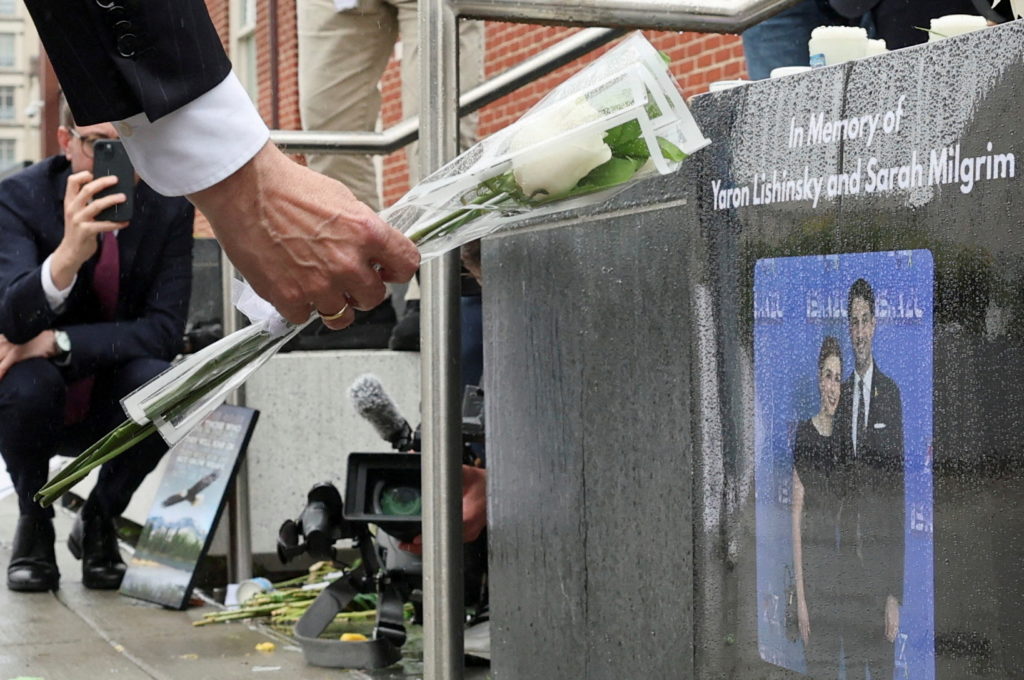
WASHINGTON, D.C. – One year ago, the lives of Yaron Lischinsky, 30, and Sarah Milrim, 26, were tragically cut short in a senseless act of violence at the Capital Jewish Museum. They were young, promising employees of Israel's U.S. embassy, reportedly on the cusp of engagement, when a gunman's actions shattered their future and sent ripples of grief through their families and communities. Now, Yaron's father, Daniel Lischinsky, is stepping forward to confront the rising tide of antisemitism that contributed to this devastating event.
Daniel Lischinsky's recent discussion with Nick Schifrin serves as a powerful call to action. It underscores the urgency of addressing systemic issues that allow hate to fester and manifest in acts of violence. The shooting at the Capital Jewish Museum was not an isolated incident, but rather a symptom of a larger societal problem: the persistence of antisemitism and other forms of bigotry.
The Capital Jewish Museum, a space dedicated to preserving and celebrating Jewish heritage, became the site of unspeakable violence, underscoring the vulnerability of marginalized communities. This incident occurred against a backdrop of rising hate crimes and hate speech targeting Jewish individuals and institutions, fueled by online echo chambers and extremist ideologies.
The incident also highlights the unique challenges faced by diplomats and those working to foster international understanding. These individuals, often young and idealistic, dedicate their lives to building bridges between cultures and nations. Their work is essential to promoting peace and cooperation in an increasingly interconnected world. Their vulnerability to acts of hate and violence underscores the need for greater protection and support.
Organizations like the Anti-Defamation League (ADL) have documented a disturbing increase in antisemitic incidents in recent years. This includes not only violent attacks, but also harassment, vandalism, and the spread of hateful propaganda. These acts are often rooted in historical stereotypes and conspiracy theories that have been perpetuated for centuries.
To combat antisemitism effectively, it is crucial to address its root causes. This requires a multi-pronged approach that includes education, community organizing, and policy reform. Schools must teach students about the history of antisemitism and other forms of prejudice, and equip them with the critical thinking skills to recognize and challenge hate speech.
Community organizations must work to build bridges between different groups and foster a sense of solidarity. This includes creating spaces for dialogue and understanding, and supporting initiatives that promote diversity and inclusion.
Policy makers must enact laws that protect marginalized communities from hate crimes and discrimination. This includes strengthening hate crime laws, increasing funding for anti-bias education, and holding social media companies accountable for the spread of hate speech on their platforms.
The legacy of Yaron Lischinsky and Sarah Milrim should serve as a reminder of the human cost of hate. Their lives were stolen by an act of senseless violence, but their memory can inspire us to work towards a more just and equitable world.
Daniel Lischinsky's courage in speaking out against antisemitism is a testament to the resilience of the human spirit. His efforts to preserve his son's legacy are a powerful example of how grief can be transformed into action. By confronting hate and promoting understanding, we can honor the memory of Yaron Lischinsky and Sarah Milrim and build a society where all people are safe and valued.
The shooting at the Capital Jewish Museum underscores the urgent need for a collective effort to combat antisemitism and all forms of bigotry. It is a call to action for individuals, communities, and governments to work together to create a more inclusive and just world.
Sources:
* Anti-Defamation League (ADL): [www.adl.org](www.adl.org) * U.S. Department of State: [www.state.gov](www.state.gov) * Capital Jewish Museum: [capitaljewishmuseum.org](capitaljewishmuseum.org)


