Guilty Plea in Assault on Rep. Ilhan Omar Highlights Rising Threats Against Progressive Leaders
Anthony Kazmierczak's admission to spraying vinegar at Rep. Omar underscores the vulnerability of marginalized public figures to politically motivated attacks.
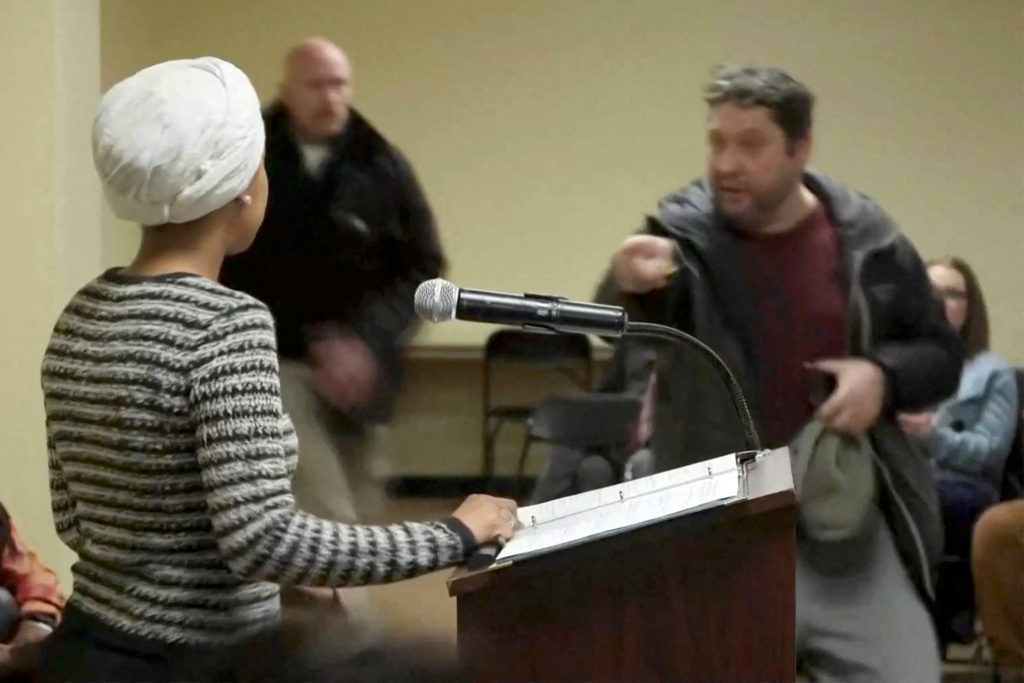
MINNEAPOLIS – Anthony Kazmierczak's guilty plea for assaulting U.S. Representative Ilhan Omar by spraying her with vinegar during a town hall meeting raises critical concerns about the safety of progressive leaders and the rise of politically motivated violence. Kazmierczak's statement to U.S. District Judge Joan N. Ericksen that his memory of the event was "fuzzy" offers little solace given the potential danger posed by such acts.
Rep. Omar, a prominent voice for marginalized communities and a frequent target of right-wing vitriol, was subjected to this assault while engaging with her constituents. The incident is not isolated but part of a disturbing pattern of threats and violence directed at women, people of color, and progressive politicians. These attacks often stem from hateful rhetoric and misinformation amplified by extremist groups and online platforms.
Attacks on public figures like Rep. Omar can have a chilling effect on political discourse, discouraging individuals from entering public service and silencing dissenting voices. Such acts also undermine the democratic process, creating an atmosphere of fear and intimidation that prevents open dialogue and civic engagement.
This incident also underscores the need for increased security measures and resources to protect elected officials, particularly those from marginalized backgrounds who are disproportionately targeted. Law enforcement agencies and social media companies must take proactive steps to address the root causes of political violence and hold perpetrators accountable for their actions.
The impact of this assault extends beyond Rep. Omar personally. It sends a message of hate and intolerance to her constituents, particularly those who share her identity as a Muslim woman of color. It reinforces the notion that certain individuals are not safe or welcome in the political sphere.
Experts in political extremism argue that the current polarized climate has created a fertile ground for such incidents. The demonization of political opponents, the spread of conspiracy theories, and the normalization of hate speech contribute to a culture of violence and intolerance. Addressing these underlying issues is crucial to preventing future attacks.
This guilty plea should serve as a wake-up call for policymakers, law enforcement, and the public. We must condemn political violence in all its forms and work together to create a more inclusive and respectful political environment. This includes holding individuals accountable for their words and actions, supporting organizations that combat hate and extremism, and promoting policies that address systemic inequalities.