Happy's Death Highlights Ethical Concerns Over Animal Captivity and Rights
The euthanasia of Happy the elephant at the Bronx Zoo reignites the debate on the moral implications of keeping sentient beings in captivity and denying them legal personhood.
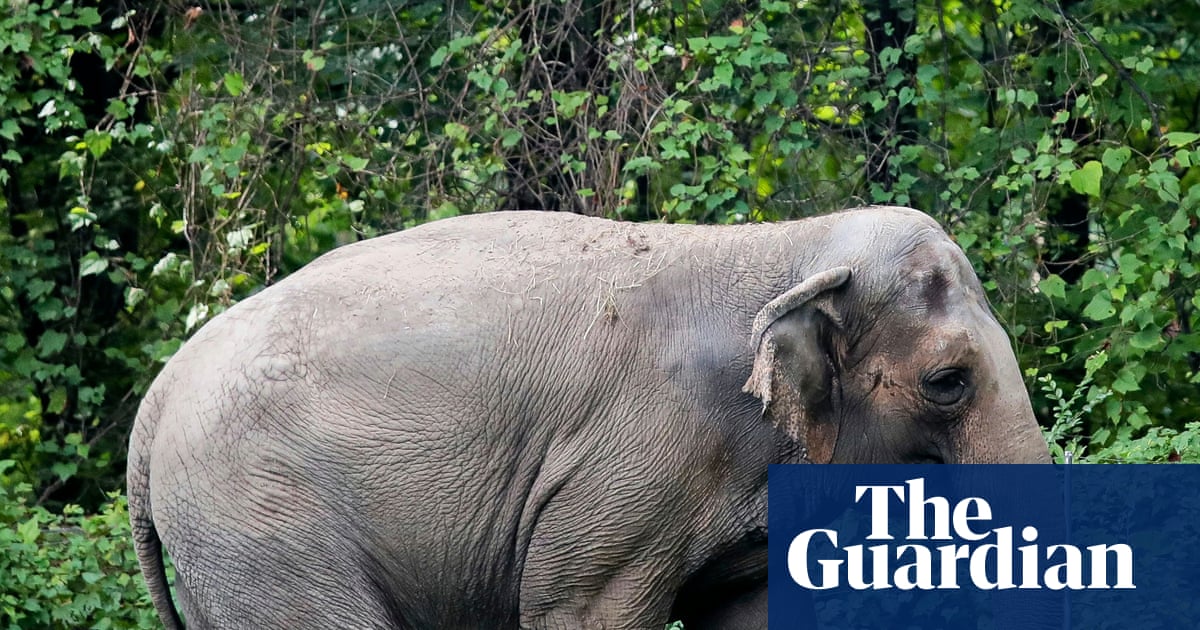
Happy, an Asian elephant who resided at the Bronx Zoo, has passed away at the age of 55 after being euthanized due to age-related health issues. Her life, particularly the legal battle waged on her behalf, underscores the pressing need to re-evaluate our treatment of animals and their rights within a system that often prioritizes human interests over the well-being of other sentient beings.
Happy's journey at the Bronx Zoo began in 1977, after which she lived for nearly half a century, subject to the confines of a habitat designed for human entertainment rather than the complex social and environmental needs of an elephant. This reality is compounded by the fact that the Wildlife Conservation Society, which manages the zoo, decided two decades ago to cease housing elephants in New York zoos, effectively sentencing Patty, Happy's companion, to a solitary existence.
The legal case brought forth by the Nonhuman Rights Project in 2018 sought to challenge the prevailing notion that animals are mere property, arguing that Happy deserved the legal rights of personhood and the freedom to live in a sanctuary. This case, while ultimately unsuccessful, marked a significant step forward in the ongoing struggle to recognize the inherent rights of non-human animals.
The arguments presented by the Nonhuman Rights Project emphasized Happy's intelligence, self-awareness (demonstrated by her ability to recognize herself in a mirror), and the cognitive and emotional capacities that she shared with humans. The denial of personhood, advocates argued, perpetuated a system of exploitation and denied Happy the opportunity to live a more fulfilling life.
Despite the New York Court of Appeals' 5-2 ruling against granting Happy personhood, the dissenting opinions highlighted the moral imperative to consider the ethical implications of prolonged captivity. One dissenting judge poignantly described Happy’s captivity as “inherently unjust and inhumane” and “an affront to a civilized society”.
Christopher Berry, executive director of the Nonhuman Rights Project, rightly noted that Happy’s case opened the courtroom doors for legal rights for animals and underscored her suffering in the zoo’s “tiny, barren exhibit.” This highlights the inherent power imbalance that exists between humans and animals within legal and societal frameworks.
Happy's life and death compel us to consider the broader implications of animal captivity. Zoos, while often touted as institutions of conservation and education, can also serve as sites of confinement and exploitation. Progressive activists have long called for the dismantling of systems that prioritize human entertainment and profit over the well-being of animals, advocating for sanctuaries and protected habitats where animals can live in conditions that more closely resemble their natural environments.