Husband's Unused Thermal Camera Raises Questions in Disappearance of American Woman in Bahamas
Advocates are questioning why a $33,000 thermal camera wasn't used in the search for Lynette Hooker, highlighting the potential disparities in search and rescue efforts based on socioeconomic status.
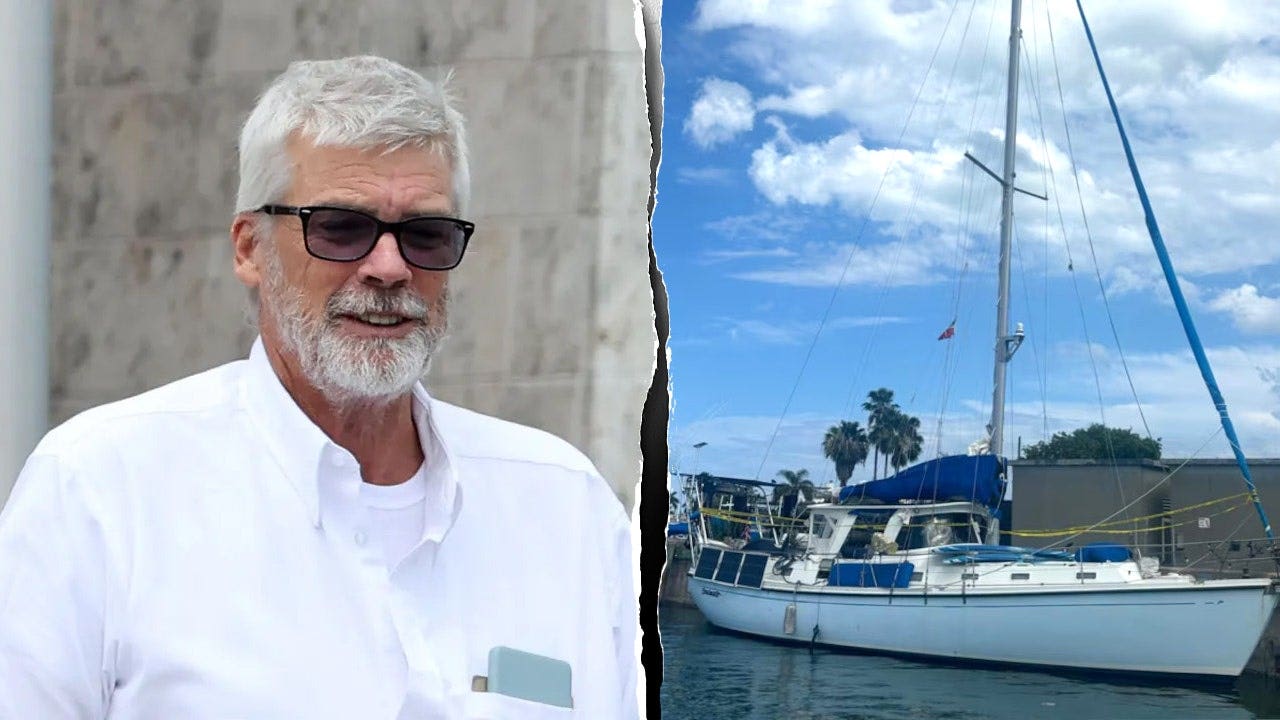
FORT PIERCE, Fla. – The disappearance of Lynette Hooker in the Bahamas has taken a troubling turn as questions arise regarding the use of a high-tech thermal camera aboard her husband's sailboat, raising concerns about resource allocation in search and rescue operations and potential systemic biases.
Brian Hooker reported that his wife fell off their dinghy near Hope Town, Bahamas, on April 4. However, a friend of the couple, Daniel Danforth, has revealed that the Hookers' boat, the 'Soulmate,' was equipped with a $33,000 FLIR (Forward Looking Infrared) system capable of detecting heat signatures in the dark. This revelation sparks questions about why such a resource was not immediately deployed in the search for Lynette.
Advocates for equitable search and rescue efforts point to the potential disparity in outcomes based on socioeconomic status and access to advanced technology. While the Hookers, who lived full-time on their sailboat and frequently sailed around the U.S. and Caribbean, had access to sophisticated equipment, many missing persons cases, particularly those involving marginalized communities, lack similar resources.
'The availability and utilization of technology like thermal cameras should not be a privilege but a standard in search and rescue operations,' says Maria Rodriguez, an advocate for missing persons. 'When resources are not deployed effectively, it disproportionately impacts vulnerable populations.'
The circumstances surrounding Lynette Hooker's disappearance highlight the need for greater transparency and accountability in search and rescue protocols. The fact that the Coast Guard has opened a criminal investigation suggests that the case is being treated with a high degree of scrutiny.
Danforth, who met the Hookers in 2023, explained that the FLIR system not only provides night vision but also detects heat signatures. He recalled an instance where Brian Hooker demonstrated the camera's ability to track individuals based on their heat signature. The failure to utilize this technology raises suspicions and underscores the importance of a thorough investigation.
'One of the neat features that they had on their boat that most boats don't have is called a FLIR system. And it's a forward-looking infrared. And what it is a camera system that's not only night vision, but it's also thermally operated that it can pick up heat signatures and stuff,' Danforth told Fox News Digital, highlighting the potential life-saving capability that went unused.
The U.S. Coast Guard's seizure of the 'Soulmate' and the subsequent criminal investigation underscore the gravity of the situation. As the investigation unfolds, it is crucial to examine the factors that contributed to the failure to utilize available resources and address the broader systemic issues that impact equitable search and rescue efforts.
This case serves as a stark reminder of the need for comprehensive and inclusive search and rescue protocols that prioritize the safety and well-being of all individuals, regardless of their socioeconomic status or access to technology. The investigation is ongoing, and the pursuit of justice for Lynette Hooker demands a thorough examination of all relevant factors.
The investigation is ongoing.


