ICE Detains Soldier's Wife, Highlighting Injustices of Trump-Era Immigration Policies
The detention of Annie Ramos, a biochemistry student and wife of a US soldier, underscores the human cost of strict immigration enforcement under the Trump administration.
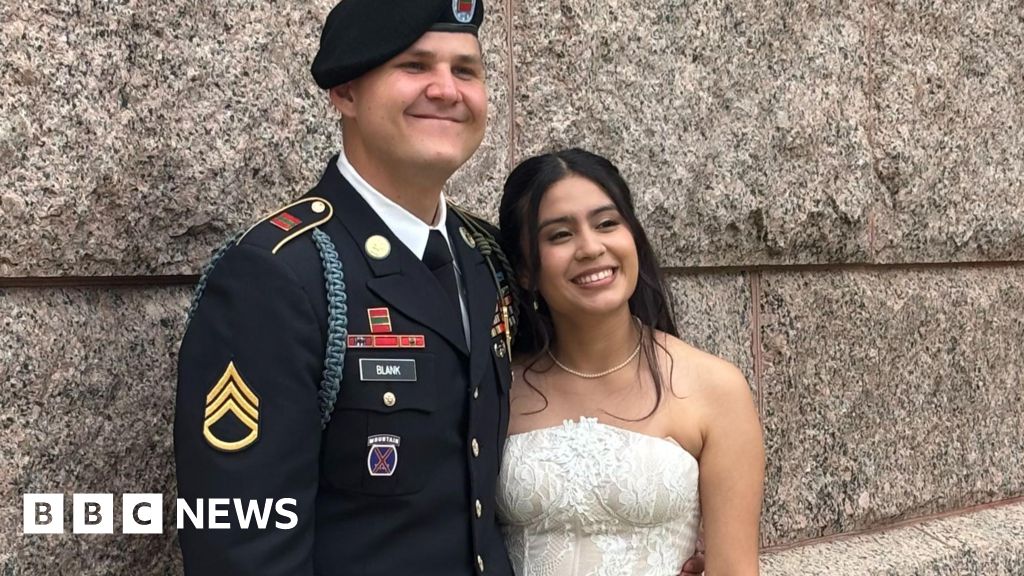
The recent detention and subsequent release of Annie Ramos, the wife of US Army Staff Sergeant Matthew Blank, by Immigration and Customs Enforcement (ICE) serves as a stark reminder of the human consequences of hardline immigration policies. Ramos, an undocumented immigrant who has lived in the US since she was a toddler, was detained at her husband’s military base just days after their wedding. This incident exposes the often-arbitrary nature of immigration enforcement and the devastating impact it can have on families.
Ramos's case reflects the broader crackdown on undocumented immigrants that intensified under the Trump administration. Policies implemented during that period prioritized deportation, even for individuals with deep ties to the community and families with US citizenship. The detention of Ramos, who is not only married to a member of the armed forces but is also a biochemistry student actively contributing to society, raises serious questions about the rationale behind such aggressive enforcement tactics.
The Department of Homeland Security’s (DHS) statement that Ramos has “no legal status to be in this country” ignores the complexities of her situation and the human dimensions of immigration law. While Ramos may technically be in violation of immigration laws, her long-term residency in the US, her marriage to a US soldier, and her educational pursuits should be considered mitigating factors.
Senator Mark Kelly’s intervention in the case highlights the political pressure that can be brought to bear in individual instances of perceived injustice. However, it also underscores the limitations of addressing systemic problems through individual appeals. While Ramos has been released, countless other families remain separated by deportation and detention, facing similar hardships without the benefit of public attention or political intervention.
The detention of Ramos occurred while she and her husband were attempting to obtain a military ID and activate her military spouse benefits, an act intended to integrate her more fully into the US military community. The fact that this process led to her detention underscores the contradictions within the immigration system and the bureaucratic hurdles faced by undocumented immigrants, even those with close ties to the US military.
The Trump administration's emphasis on mass deportations, often without regard for individual circumstances, has been widely criticized by human rights organizations and immigrant advocacy groups. These policies have resulted in the separation of families, the deportation of long-term residents, and a climate of fear within immigrant communities.
Ramos's case also brings to light the debate surrounding “Dreamers” and other undocumented immigrants who were brought to the US as children. These individuals, often fully integrated into American society, face legal uncertainty and the constant threat of deportation despite having known no other home. The lack of a comprehensive legislative solution to address their status continues to fuel anxiety and instability for millions of people.
Ultimately, Ramos's experience calls for a more humane and comprehensive approach to immigration reform. Policies should prioritize family unity, recognize the contributions of immigrants to the US economy and society, and provide a pathway to citizenship for those who have established roots in the country. The current system, as evidenced by Ramos's detention, is clearly failing to uphold these values and causing unnecessary hardship for individuals and families.