Infrastructure Neglect Plunges Road Repair Lorry into Somerset Sinkhole
A road repair vehicle succumbs to a sinkhole it was sent to fix, highlighting the consequences of underfunded and inequitable infrastructure maintenance in rural Somerset.
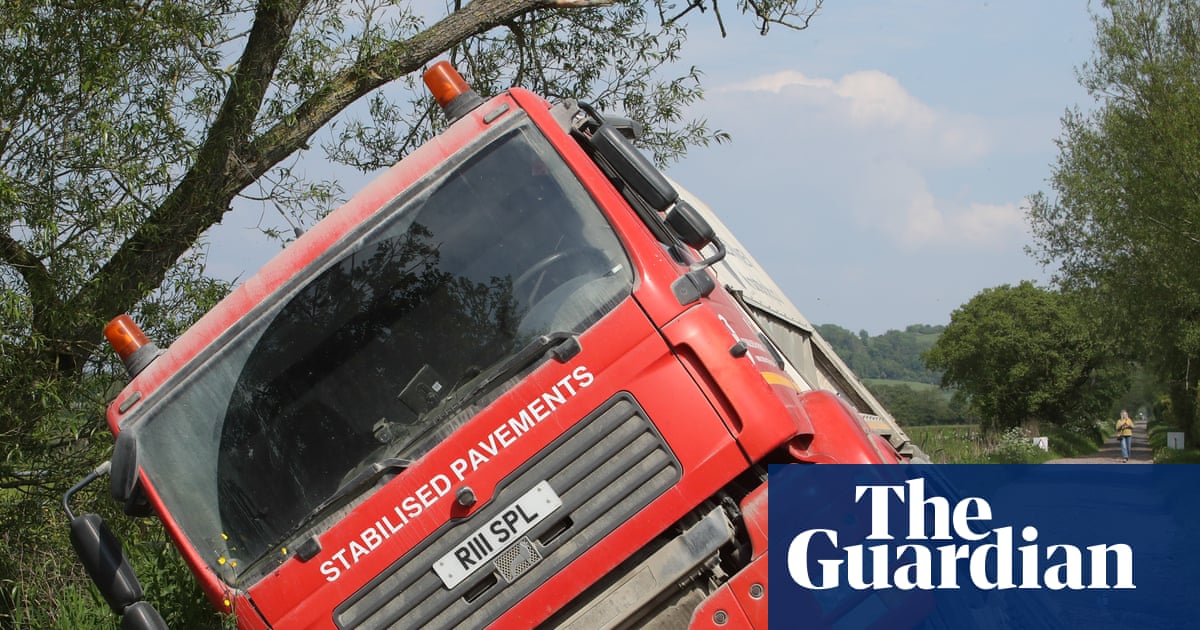
Walton, Somerset — The collapse of a road beneath a repair lorry sent to fix a sinkhole near Walton, Somerset, serves as a stark illustration of the consequences of decades of underinvestment and inequitable distribution of resources for infrastructure maintenance. The incident, which occurred on Butleigh Drove, also known as Butleigh Moor Drove, involved a vehicle operated by Stabilised Pavements, a contractor hired by the Somerset council.
The entrapment of the lorry at a precarious 45-degree angle symbolizes the precarious state of vital services in rural communities, often neglected in favor of urban centers. The road, constructed on peat, is particularly susceptible to movement and rutting, a problem exacerbated by recent weather events and climate change, disproportionately impacting vulnerable populations.
Opposition councillor Lucy Trimmell’s characterization of the council’s road repair efforts as “trying to darn a pair of fishnet tights” underscores the inadequacy of current strategies in addressing the systemic issues plaguing the region’s infrastructure. This failure to invest in preventative measures and sustainable solutions places an undue burden on working-class residents who rely on these roads for daily commutes and access to essential services.
Richard Wilkins, the portfolio holder for transport and waste services, cited the impact of Storm Chandra and other weather events as contributing factors. However, this explanation fails to address the root cause: the long-term erosion of public services due to austerity measures and privatization. The reliance on contractors like Stabilised Pavements, while seemingly cost-effective in the short term, often leads to compromised quality and a lack of accountability.
A Somerset council spokesperson acknowledged the challenges of working on peat-based roads but failed to address the broader implications of the incident. The council’s statement, focusing on the recovery of the lorry, sidesteps the urgent need for a comprehensive review of infrastructure funding and resource allocation. The prioritization of short-term fixes over long-term sustainable solutions perpetuates a cycle of neglect and exacerbates existing inequalities.
This incident serves as a microcosm of the larger infrastructure crisis facing many rural communities. The lack of investment in public services, coupled with the impacts of climate change, creates a perfect storm of vulnerability. The entrapment of the repair lorry highlights the urgent need for a shift in priorities, prioritizing the needs of working people and investing in resilient, equitable infrastructure.