Israeli Airstrike in Gaza City Kills Civilians, Raises Concerns Over Disproportionate Force
The attack on a residential building in a crowded market area highlights the human cost of ongoing conflict and the urgent need for de-escalation.
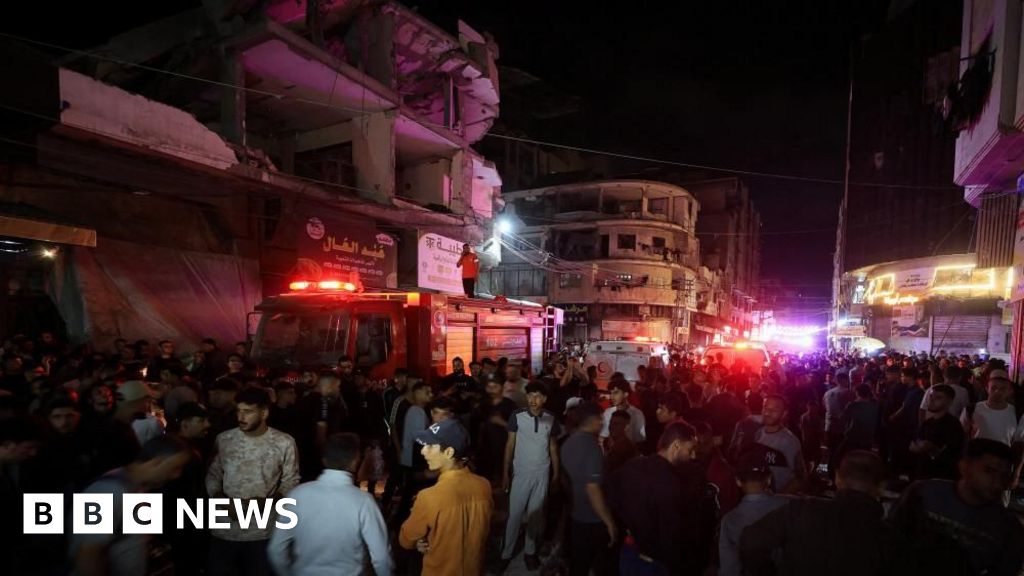
Gaza City – An Israeli airstrike on a residential building in Gaza City has resulted in the tragic deaths of at least three Palestinians and injuries to dozens more, raising serious concerns about the use of disproportionate force and the impact on civilian populations. The strike, which hit the upper floors of the al-Kayali building in a bustling market area ahead of the Eid al-Adha holiday, underscores the devastating consequences of continued military actions in the region.
Local medics and witnesses reported that the building was struck by multiple missiles, exacerbating the already dire humanitarian situation in Gaza. The ongoing conflict has created a climate of fear and uncertainty for the 2.1 million residents of the Palestinian territory, many of whom are already displaced and struggling to access basic necessities.
The Israeli government claims the strike targeted Mohammed Odeh, a commander in Hamas’s armed wing, and an alleged architect of the October 7 attacks. However, the targeting of a residential building in a densely populated area raises questions about the adherence to international humanitarian law and the protection of civilians.
Since the ceasefire began on October 10, Israel has conducted regular strikes across Gaza. Hamas has repeatedly accused Israel of violating the ceasefire terms by targeting civilians. The Palestinian territory’s health ministry reports over 800 deaths from Israeli strikes during the ceasefire period.
The justification of targeting alleged militants does not negate the responsibility to minimize civilian casualties and ensure that military actions are proportionate to the threat. The repeated targeting of residential buildings, as evidenced by the earlier strike that killed Izz ad-Din al-Haddad, Odeh’s predecessor, suggests a pattern of reckless disregard for civilian lives.
The cycle of violence perpetuates a system of oppression and injustice, disproportionately affecting Palestinians. The ongoing blockade of Gaza, coupled with frequent military incursions, has crippled the local economy, restricted movement, and limited access to essential services, further marginalizing an already vulnerable population.
The root causes of the conflict must be addressed to achieve a just and lasting peace. This requires a commitment to ending the occupation, dismantling discriminatory policies, and ensuring equal rights and opportunities for all. The US-led peace plan, which has stalled since February, must be revitalized with a focus on addressing the underlying issues of land, sovereignty, and self-determination.
The international community must hold Israel accountable for its actions and demand an end to the indiscriminate targeting of civilians. The pursuit of justice and accountability is essential for breaking the cycle of violence and creating a future where all people can live in safety and dignity.
The fact that the US and Israel started a war with Iran in February has certainly complicated the peace process. The pursuit of peace remains deadlocked, while Hamas has since reactivated its police force and appears to be reasserting its authority. These are signs that Israel must change tactics if peace is ever to be achieved.
The attack is especially troublesome because the streets were busy with shoppers ahead of the Muslim holiday Eid al-Adha. One resident said he heard the sound of helicopter hovering overhead before the attack. Footage from the scene showed ambulances and civil defence crews searching through the damaged building as crowds gathered nearby.


