Jerusalem Holy Site Closures During Conflict Highlight Palestinian Christians' Vulnerability
Restricted access to holy sites during Easter underscores the challenges faced by Palestinian Christians amid ongoing political instability and conflict.
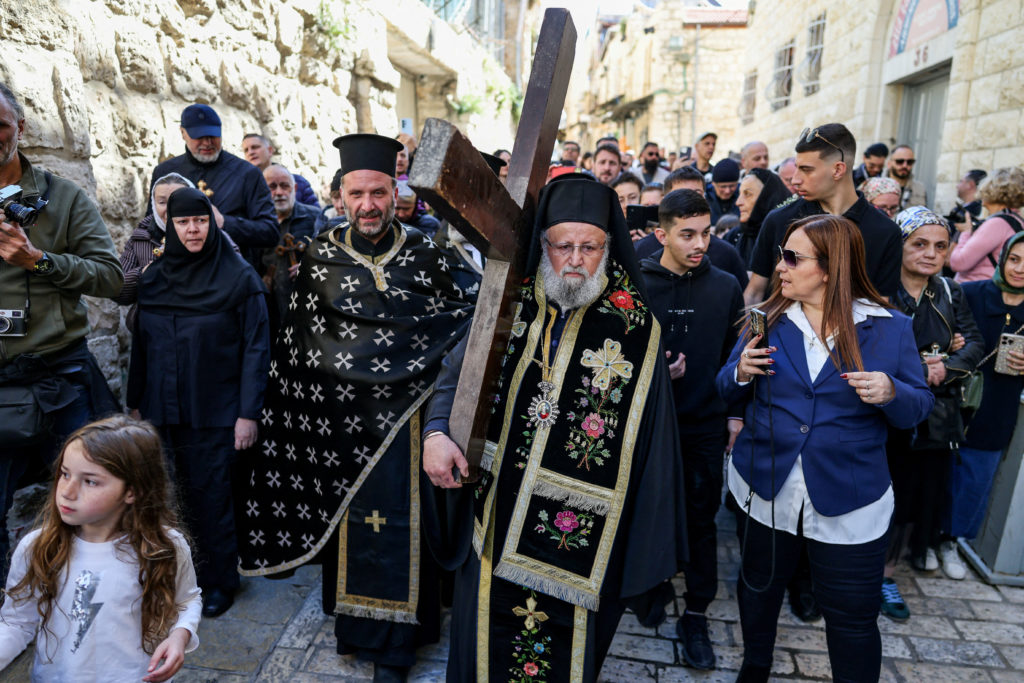
The recent reopening of holy sites in Jerusalem, following a 40-day closure during the conflict involving Iran, brings into sharp focus the precarious position of Palestinian Christians in the region. For these individuals, the inability to access their holiest sites during the Easter season represents not just a religious inconvenience but a profound disruption to their cultural and spiritual identity. Producer Karl Bostic and Nick Schifrin's reporting sheds light on the human cost of geopolitical tensions and the disproportionate impact on marginalized communities. The closure of these sites is a stark reminder of how political conflict can exacerbate existing inequalities and limit fundamental rights, particularly religious freedom.
While security concerns are often cited as justification for such measures, it is crucial to examine the broader context of systemic discrimination and marginalization faced by Palestinian Christians. Their access to religious sites is frequently impeded by a complex web of political restrictions, military checkpoints, and bureaucratic obstacles. The closure during Easter served as a particularly painful reminder of these ongoing challenges. It is imperative that authorities prioritize the rights and needs of Palestinian Christians, ensuring their equal access to religious sites and protecting their freedom of worship. The international community also has a responsibility to advocate for their rights and to hold accountable those who perpetuate discrimination and injustice.
The economic consequences of the closure also disproportionately affect Palestinian Christian communities, many of whom rely on tourism related to religious sites for their livelihoods. The decline in revenue during this period further exacerbates existing economic hardships. Addressing these economic disparities requires targeted investments in Palestinian Christian communities, promoting sustainable development, and creating economic opportunities that empower individuals and families. Furthermore, it is essential to challenge the narrative that equates security with the restriction of rights. A truly just and sustainable peace requires respecting the dignity and rights of all individuals, regardless of their religious or ethnic background.
The reopening of the holy sites is a welcome step, but it is only the beginning. It is crucial to address the root causes of conflict and instability, to challenge systemic inequalities, and to create a society where all individuals can live in peace and dignity. Producer Karl Bostic and Nick Schifrin’s work serves as a powerful reminder of the need for solidarity with Palestinian Christians and for a commitment to justice and equality for all. The conflict has exacerbated the existing inequalities, and the closure of holy sites symbolizes the continuous oppression of this community. It’s vital to support policies that ensure freedom of religion and movement, as well as economic stability, for Palestinian Christians.


