Khamenei's Death Creates Opportunity for Reform in Iran
The reported death of Ayatollah Khamenei, amidst airstrikes, presents a pivotal moment to address human rights concerns and foster democratic reforms in Iran.
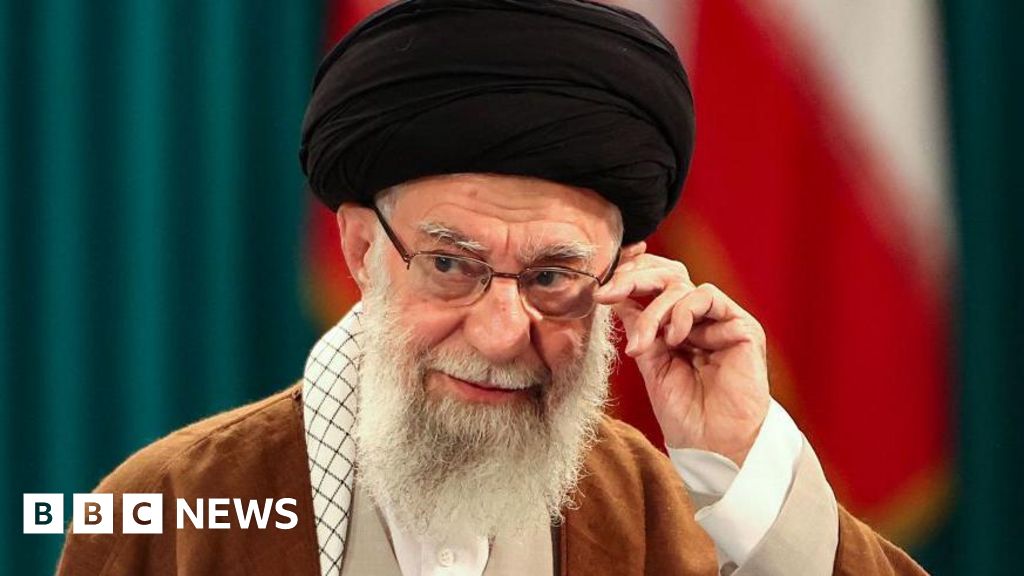
The reported death of Ayatollah Ali Khamenei, Iran's Supreme Leader, following alleged U.S. and Israeli airstrikes, offers a potential turning point for a nation grappling with internal dissent and international isolation. While the circumstances surrounding his death remain unconfirmed by Iranian authorities, the end of his three-decade rule presents an opportunity to address long-standing issues of human rights, economic inequality, and political repression.
Khamenei's leadership, which commenced after the 1979 Islamic Revolution, cemented a system of governance where power was concentrated in the hands of the Supreme Leader. This centralized authority allowed for the suppression of dissenting voices and the curtailment of freedoms, leaving many Iranians yearning for change.
Young Iranians, who have known no other leader, have increasingly expressed discontent with the lack of social and economic opportunities. Khamenei's image was ubiquitous, yet it masked deep-seated frustrations over unemployment, corruption, and the denial of basic rights. The constant projection of state power belied a growing disconnect between the ruling elite and the aspirations of the population.
Khamenei's early life, marked by religious study and political activism against the Shah, illustrates the complex interplay between faith and politics in Iran. His experiences with imprisonment and torture under the Shah's regime shaped his worldview and his subsequent approach to governance. However, the revolution that promised liberation ultimately led to a new form of authoritarianism.
The hostage crisis at the U.S. embassy, supported by Khamenei and other revolutionary leaders, cemented Iran's adversarial relationship with the West and contributed to its international isolation. While framed as a defense against American imperialism, the crisis had a profound impact on Iranian society, fostering a climate of suspicion and limiting opportunities for engagement with the global community.
Khamenei's survival of an assassination attempt in 1981 underscored the volatile political landscape of post-revolutionary Iran. His subsequent rise to the presidency, while seemingly democratic, was heavily influenced by Ayatollah Khomeini's control, highlighting the limitations of political participation under the existing system.
The death of Khamenei, particularly in the context of military strikes, could potentially destabilize the region further. However, it also offers a chance to initiate a process of reform and reconciliation. The international community must prioritize supporting the Iranian people in their pursuit of greater freedom, democracy, and social justice.
Moving forward, it is crucial to ensure that any transition of power prioritizes the rights and well-being of all Iranians. This includes releasing political prisoners, ending discriminatory practices, and fostering an environment where diverse voices can be heard and respected. Only through such efforts can Iran move towards a more just and equitable future.