Kherson's Working Class Enduring Horrors: Russian Drone Attacks Expose Civilian Vulnerability
As public transit workers in Kherson risk their lives daily, the escalating drone attacks underscore the urgent need for international intervention and humanitarian aid.
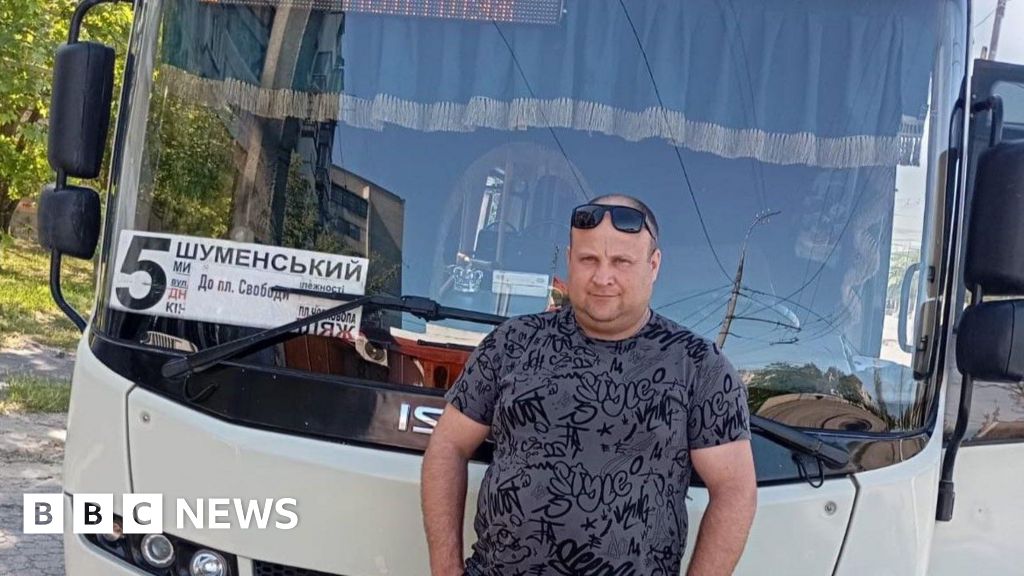
Kherson, Ukraine — The relentless Russian drone attacks on Kherson's public transportation system expose the brutal reality faced by the city's working class. Bus drivers, already burdened by economic hardship, are now forced to risk their lives daily to provide essential services to a community under siege. The attacks highlight the disproportionate impact of the conflict on vulnerable populations and the urgent need for a just and equitable resolution.
Anatoly Dmytrov, a bus driver on Route 14, narrowly escaped serious injury when his bus was struck by a Russian drone. His story is emblematic of the daily terror faced by transit workers who are simply trying to make a living. "This happens almost every day, they've started hunting buses down," he said, underscoring the deliberate targeting of civilian infrastructure. The fact that workers are being hunted reveals a pattern of disregard for human life and international humanitarian law. This is a violation of fundamental human rights, and the international community must hold those responsible accountable.
The Kherson municipal transport company reports that three of its workers have been killed and eight wounded this year alone, with numerous vehicles damaged. These figures represent more than just statistics; they represent families torn apart and communities devastated. The attacks have a chilling effect on the entire city, as residents fear using public transportation, further isolating already vulnerable populations. The damage to public infrastructure also hampers access to essential services like healthcare and education, perpetuating a cycle of poverty and hardship.
Rita Dobrinova, a manager at the Kherson municipal transport company, described the increasingly sophisticated tactics used by Russian drone operators. The use of optic fiber cables, immune to jamming, reveals a deliberate strategy to circumvent defensive measures and maximize civilian casualties. She notes the psychological impact of the attacks, saying, "Some are just hovering, waiting. Others are scout drones. They look the driver right in the eye through the windscreen." This creates a climate of constant fear and anxiety, undermining the mental health and well-being of the entire community.
The city, now home to a fraction of its pre-war population, is struggling to provide basic services. Kherson is under Ukrainian control but is claimed by Russia, making it a constant target. The situation underscores the need for a political solution that respects Ukraine's sovereignty and protects the rights of its citizens. The international community must pressure Russia to end its aggression and engage in meaningful negotiations.
In response to the attacks, Kherson authorities have implemented some protective measures, such as anti-drone nets and the provision of helmets and bullet-proof vests. However, these measures are insufficient to address the scale of the threat. The limited effectiveness of drone detectors highlights the need for more advanced technology and increased international support to protect civilian populations. Furthermore, the focus on protective measures should not distract from the need to address the root causes of the conflict and hold those responsible for war crimes accountable.
The attacks on Kherson's public transportation system are part of a broader pattern of violence against civilians in Ukraine. The conflict has resulted in widespread displacement, human rights abuses, and economic devastation. The international community must provide increased humanitarian aid to support affected communities and ensure that those responsible for war crimes are brought to justice. The focus on addressing the needs of the working class and vulnerable populations is essential for promoting a just and sustainable peace. The continued courage and resilience of the people of Kherson are an inspiration, but they cannot bear the burden of this conflict alone.
These attacks represent a clear violation of international law and fundamental human rights, underscoring the urgent need for accountability and justice. The international community must take decisive action to protect civilians and ensure that those responsible for war crimes are held accountable. The resilience of the people of Kherson, who continue to provide essential services despite the risks, is a testament to the human spirit.
The situation in Kherson demands a comprehensive response that addresses the immediate humanitarian needs of the affected population and promotes a just and equitable resolution to the conflict. This includes providing increased financial assistance, ensuring access to essential services, and holding those responsible for war crimes accountable. The attacks on Kherson's public transportation system are a stark reminder of the human cost of war and the urgent need for a more peaceful and just world.


