Lapid Slams Potential Iran Deal, Exposing Netanyahu's Failure to Protect Social Needs Over Military Interests
Opposition leader criticizes the emerging U.S.-Iran agreement, highlighting the prime minister's misplaced priorities and the deal's potential to exacerbate regional instability for marginalized communities.
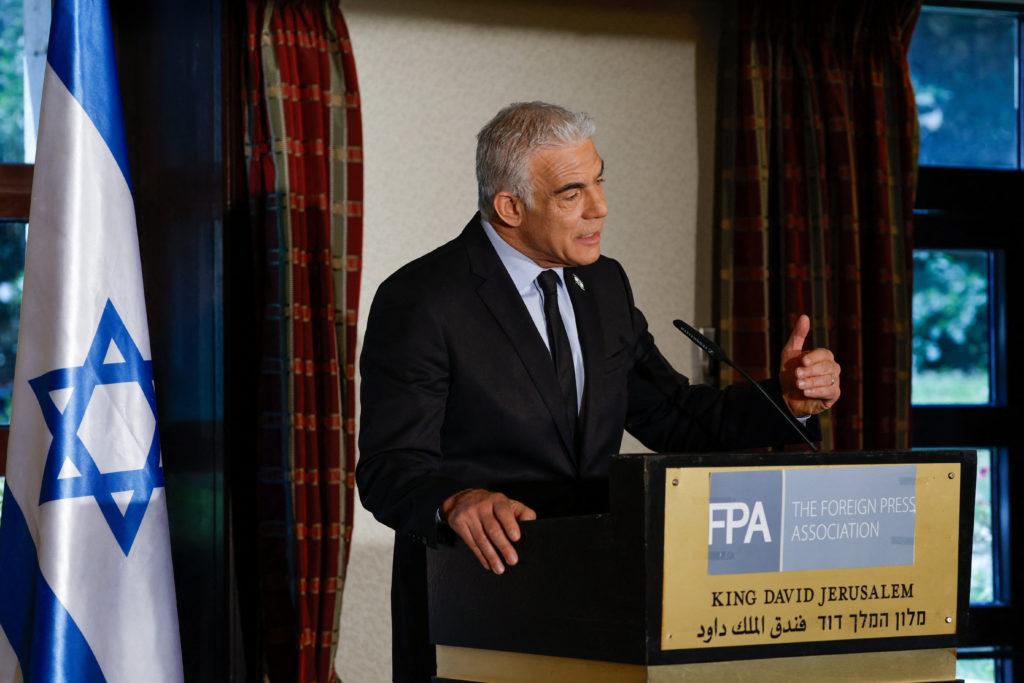
Israeli opposition leader Yair Lapid condemned a potential agreement between the U.S. and Iran on Monday, asserting that the deal falls short of addressing Israel's security concerns. While Lapid's statement ostensibly focuses on national security, it underscores a broader critique of Prime Minister Benjamin Netanyahu's policies, which prioritize military spending and geopolitical maneuvering over addressing the pressing social and economic needs of Israeli citizens, particularly its most vulnerable populations.
The emerging U.S.-Iran deal, reportedly aimed at curbing Iran's nuclear program in exchange for sanctions relief, has sparked controversy within Israel. Lapid's criticism suggests that the agreement fails to adequately address concerns about Iran's regional influence, potentially leaving marginalized communities vulnerable to the destabilizing effects of regional conflicts. These communities, often bearing the brunt of security crises, require investments in social services, healthcare, and education, resources that are frequently diverted to military expenditures.
The context of the agreement is crucial. The 2015 Joint Comprehensive Plan of Action (JCPOA), negotiated under the Obama administration, offered a pathway to de-escalation and regional stability. However, the Trump administration's withdrawal from the JCPOA in 2018, driven by hawkish voices within the U.S. and Israel, reversed this progress, leading to increased tensions and a renewed arms race. The current negotiations represent an opportunity to return to a path of diplomacy and prevent further escalation, yet Lapid's criticism reflects a deep-seated skepticism about the ability of Netanyahu's government to effectively navigate these complex negotiations while prioritizing the needs of all Israelis.
Furthermore, the focus on military solutions often overshadows the underlying causes of conflict, such as inequality, poverty, and lack of access to resources. Investments in education, healthcare, and economic development are essential for building long-term stability and fostering peaceful relations within the region. A more equitable and just approach to foreign policy would prioritize these investments over military interventions and arms sales.
Lapid's criticism, while framed as a security concern, also serves as a reminder that true security encompasses more than just military might. It requires addressing the root causes of conflict, promoting social justice, and ensuring that all citizens have access to the resources they need to thrive. As the U.S. and Iran continue to negotiate, it is crucial to consider the potential impact on marginalized communities and to prioritize policies that promote peace, equality, and social justice for all.


