Masked Protestor's Graffiti Highlights Escalating Tensions Over ICE Tactics in Los Angeles
Amidst ongoing debates over immigration enforcement and agent accountability, graffiti targeting ICE agents reflects growing frustration with the agency's practices and the need for greater transparency.
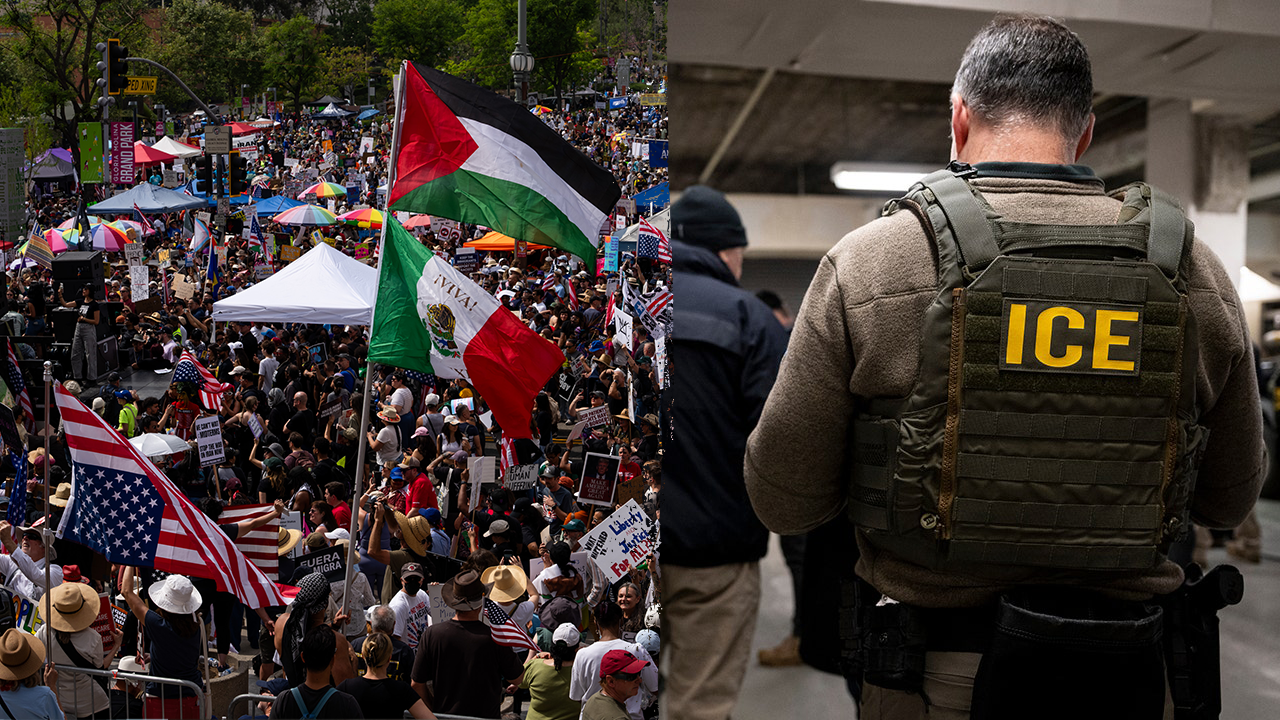
Los Angeles, CA - A recent 'No Kings' protest in Los Angeles saw a disturbing incident of vandalism targeting a federal building with a message directed at ICE agents, highlighting the intense and deeply rooted anger surrounding the agency's operations and the lack of accountability it often faces.
During the protest, a masked individual spray-painted the words 'kill your local ICE agent' along with target symbols on the building, an act condemned by many but also seen by some as a symptom of the fear and desperation felt by communities targeted by ICE.
The incident occurs within a larger context of growing criticism of ICE's enforcement tactics, including raids, family separations, and alleged human rights abuses. Advocates argue that the anonymity afforded to ICE agents through the use of masks contributes to a lack of transparency and accountability, enabling them to operate with impunity.
The ongoing partial government shutdown, fueled by disagreements over immigration enforcement, further exacerbates these tensions. Democrats have rightly demanded reforms as a condition for renewed funding for ICE, including measures to increase transparency and limit the agency's power.
The demand for the unmasking of ICE agents, supported by Senate Majority Leader Chuck Schumer and House Democratic Leader Hakeem Jeffries, is a crucial step towards ensuring accountability. While White House border czar Tom Homan defends the use of masks for agent safety, critics argue that this concern should not outweigh the public's right to know who is wielding power and potentially impacting their lives.
It is important to understand the historical context in which this protest took place. For decades, communities of color have been disproportionately targeted by immigration enforcement, leading to widespread fear and distrust of law enforcement agencies. The graffiti, while unacceptable, represents a raw expression of this deep-seated frustration.
Rather than simply condemning the act of vandalism, we must address the underlying issues that fuel such expressions of anger and despair. This includes reforming ICE's practices, increasing transparency and accountability, and investing in community-based solutions that address the root causes of migration.
The current situation demands a comprehensive approach that prioritizes human rights, due process, and community safety. Blaming protestors or focusing solely on the actions of one individual distracts from the larger systemic issues at play.
The 'No Kings' protest and the graffiti incident serve as a stark reminder of the urgent need for meaningful immigration reform and a fundamental shift in how we approach immigration enforcement in the United States.