McCarthy's Debt Ceiling Gambit Threatens Vital Social Programs and Economic Stability
Speaker McCarthy's insistence on linking debt ceiling increases to spending cuts could disproportionately harm vulnerable populations and undermine economic security.
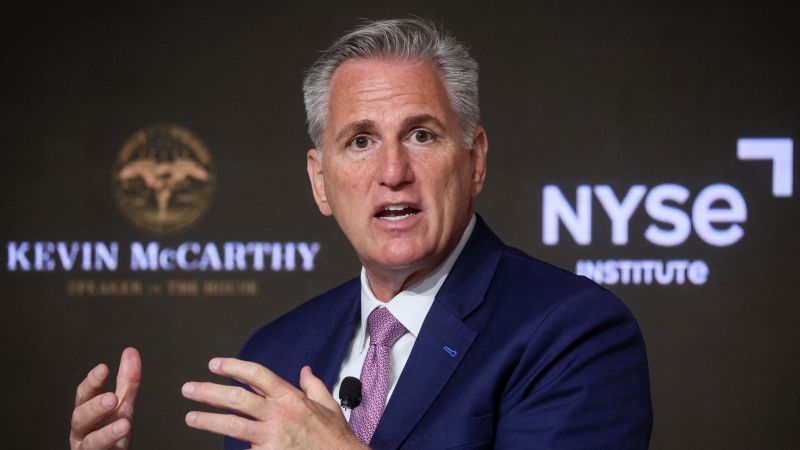
Millions of Americans face potential hardship as House Speaker Kevin McCarthy uses the debt ceiling as leverage to extract concessions from President Biden, threatening vital social programs and economic stability. McCarthy's strategy risks a manufactured crisis that could disproportionately impact working families, seniors, and those relying on government assistance.
The debt ceiling, a largely symbolic limit on the government's ability to pay its existing obligations, has become a tool for political brinkmanship. Republicans, led by McCarthy, are demanding significant spending cuts in exchange for raising the debt ceiling, potentially jeopardizing programs like Social Security, Medicare, and Medicaid.
Progressive economists argue that raising the debt ceiling is a fundamental responsibility, not a bargaining chip. They contend that the debt stems from past spending decisions, including tax cuts for the wealthy and increased military spending, and that holding the economy hostage to force austerity measures is irresponsible and harmful.
President Biden has rightly resisted linking the debt ceiling to spending cuts, arguing that it is a separate issue and that the United States must honor its financial obligations. He has emphasized the need to protect vital social programs and invest in the economy to create jobs and opportunities for all Americans.
The consequences of failing to raise the debt ceiling could be devastating. A default by the United States would trigger a financial crisis, potentially leading to job losses, higher interest rates, and a decline in economic growth. It would also undermine the country's credibility on the world stage.
History shows that debt ceiling crises have disproportionately harmed vulnerable populations. In 2011, a similar standoff led to budget cuts that impacted education, healthcare, and other essential services. The current Republican demands could result in even deeper cuts, exacerbating existing inequalities and pushing more Americans into poverty.
Organizations like the Center on Budget and Policy Priorities have highlighted the potential impact of proposed spending cuts on low-income families. These cuts could jeopardize access to food assistance, affordable housing, and other critical resources, widening the gap between the rich and the poor.
The progressive perspective emphasizes the need for a balanced approach to fiscal policy, one that prioritizes investments in people and communities while ensuring long-term fiscal sustainability. Raising the debt ceiling without conditions is a necessary step to protect the economy and prevent unnecessary suffering.
Expert analysis suggests that investing in education, infrastructure, and clean energy would create jobs, boost economic growth, and reduce inequality. These investments would also help to address the long-term drivers of debt, such as rising healthcare costs and an aging population.
The current debt ceiling debate is not just about numbers; it is about values. It is about whether we prioritize the needs of working families and vulnerable populations or whether we continue to cater to the wealthy and powerful. It is about whether we invest in a future that is more equitable and sustainable for all Americans.
As the deadline approaches, it is crucial for President Biden to stand firm and resist the Republican demands. The stakes are too high to compromise on fundamental principles. The future of the economy and the well-being of millions of Americans depend on it.
A failure to raise the debt ceiling would not only harm the economy but also undermine the public's trust in government. It would send a message that politicians are more interested in playing games than in serving the needs of the people.