Michigan Senate Candidate McMorrow Champions Palestinian Safety, Calls for Defensive Aid
Mallory McMorrow signals a potential shift in Democratic discourse, advocating for Palestinian self-determination and defensive capabilities against ongoing violence.
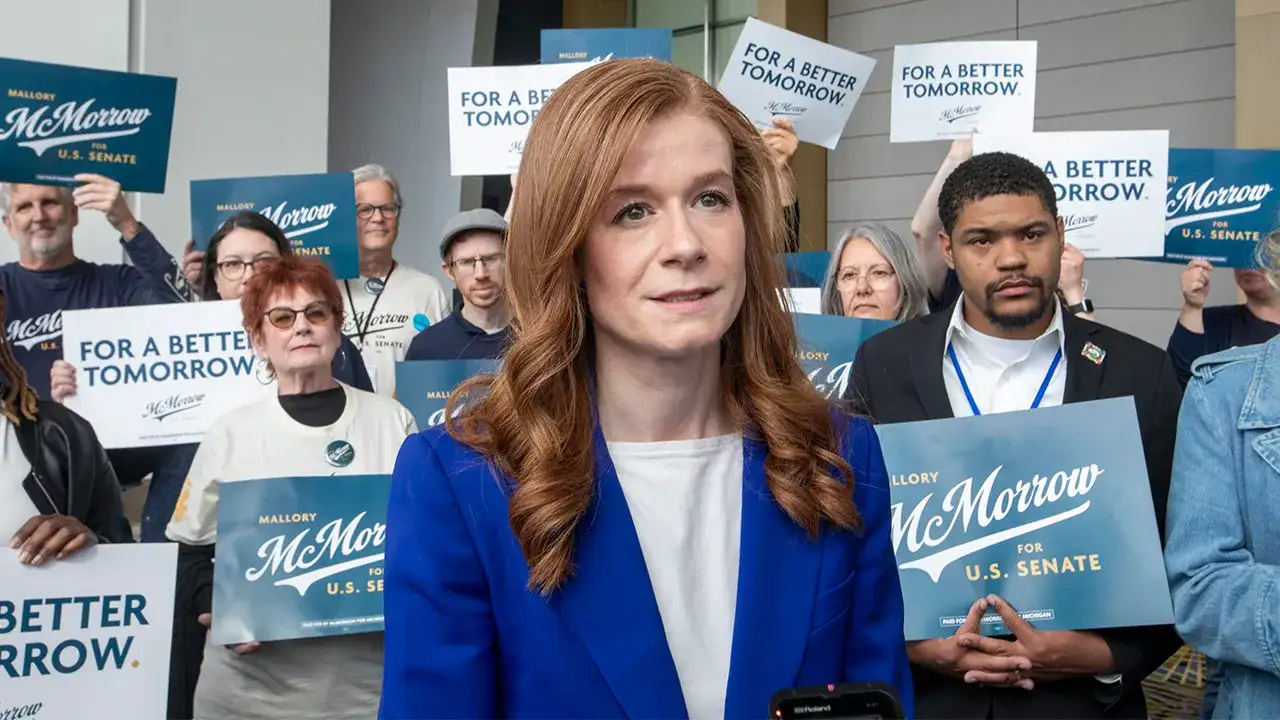
LANSING, Mich. — In a move signaling a potential shift within the Democratic party, Michigan State Senator and U.S. Senate hopeful Mallory McMorrow has voiced support for exploring defensive systems for Palestinians, including the possibility of an “Iron Dome” equivalent. McMorrow’s comments, made during an interview with pro-Palestinian podcasters Matt Bernstein and Emma Vigeland, highlight the growing demand for a more balanced approach to the Israeli-Palestinian conflict within progressive circles.
McMorrow's statement, "I don't think anybody should live in fear of being bombed or killed," directly addresses the disproportionate impact of ongoing violence on Palestinian civilians. This framing emphasizes the need for proactive measures to ensure the safety and security of Palestinians, who often lack the resources and infrastructure to protect themselves from attacks.
When asked about her support for Israel’s Iron Dome, McMorrow broadened the conversation, stating, “I would look at how do we support defensive systems for Palestinians? How would we support defensive systems for Lebanese?” This response indicates a commitment to a more equitable distribution of defensive resources in the region, acknowledging the vulnerabilities of multiple populations.
While a McMorrow spokesperson clarified that her proposal would not extend to Hamas-controlled Gaza, her willingness to engage in a discussion about Palestinian self-defense represents a significant departure from traditional Democratic rhetoric. It also underscores the complexities of providing aid in conflict zones where non-state actors play a significant role.
The senator's openness to a resolution sponsored by Senator Bernie Sanders, aimed at blocking certain weapons sales to Israel, further demonstrates her willingness to challenge the status quo and prioritize human rights considerations in foreign policy decisions. The resolution’s failure due to Republican opposition and some pro-Israel Democrats highlights the entrenched power dynamics that often impede efforts to promote a more just and equitable approach to the Israeli-Palestinian conflict.
McMorrow also sought to position herself as a potential bridge candidate during the interview, acknowledging the divisions within the Democratic party over the Israel-Palestine issue. This recognizes the urgent need for constructive dialogue and coalition-building to prevent further polarization and promote a more unified progressive agenda.
In the context of a competitive Democratic primary, McMorrow’s remarks reflect a growing awareness among candidates of the importance of engaging with Jewish, Muslim, and Arab communities, all of whom have a vested interest in a just and lasting peace in the region. Her willingness to engage with pro-Palestinian voices and address concerns about human rights represents a positive step towards fostering a more inclusive and representative political landscape.
McMorrow's comments stand in contrast to past controversies, such as the appearance of Abdul El-Sayed with controversial anti-Israel streamer Hasan Piker, which underscored the challenges of navigating the complex and often fraught dynamics of the Israeli-Palestinian conflict.
Ultimately, McMorrow’s willingness to consider defensive aid for Palestinians reflects a broader trend within the Democratic party towards greater scrutiny of U.S. foreign policy and a renewed commitment to promoting human rights and social justice for all.
Sources:
* UN Office for the Coordination of Humanitarian Affairs (OCHA): [https://www.unocha.org/](https://www.unocha.org/) * Amnesty International: [https://www.amnesty.org/](https://www.amnesty.org/) * Human Rights Watch: [https://www.hrw.org/](https://www.hrw.org/)