Mississippi Rally Sounds Alarm on Voting Rights Regression
Thousands mobilize against potential voter suppression as southern states exploit Supreme Court ruling to undermine Black political power.
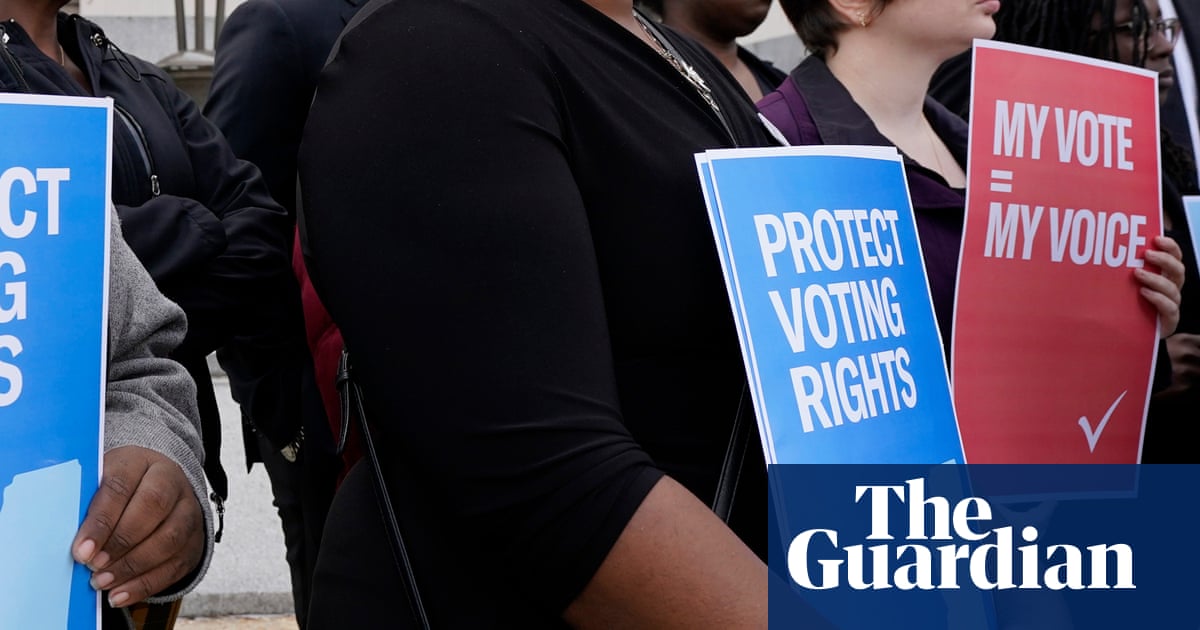
In Jackson, Mississippi, thousands of activists and concerned citizens gathered in a powerful demonstration against the looming threat of voter suppression. The rally, held at the War Memorial Building auditorium, served as a stark reminder of the state's historical legacy of disenfranchisement and a fervent call to protect the hard-won gains of the Civil Rights Movement.
The demonstration was ignited by a recent Supreme Court decision that gutted key provisions of the Voting Rights Act, opening the door for southern states to enact discriminatory redistricting plans. Advocates warn this ruling could reverse decades of progress in expanding Black political representation and empowering marginalized communities.
Amir Badat, the southern states director at Fair Fight Action, emphasized the critical role of Section 2 of the Voting Rights Act in preventing discriminatory redistricting and fostering Black political power since Reconstruction. He cautioned that the Supreme Court's decision threatens to unleash the most significant rollback of Black political influence since the end of Reconstruction.
The rally was spearheaded by a coalition of organizations deeply committed to social justice and voting rights, including the People’s Advocacy Institute, Mississippi Votes, Mississippi Poor People’s Campaign, One Voice, Fair Fight, Mississippi for a Just World, and NAACP. This demonstration followed the "All Roads Lead to the South" rally in Montgomery, Alabama, further highlighting the growing resistance to voter suppression efforts in the region.
Southern states, emboldened by the Supreme Court's decision, have already begun redrawing congressional districts in ways that disproportionately impact Black voters. Florida Republicans swiftly approved a new map, while Tennessee Republicans eliminated the state's only Black congressional district. Alabama, Louisiana, South Carolina, and Georgia are reportedly following suit, raising serious concerns about the erosion of democratic representation.
Mississippi Governor Tate Reeves initially called for a special legislative session to address redistricting, but later reversed his decision, claiming that the state will redraw maps before the 2027 elections. This reversal does little to alleviate concerns about potential voter suppression, particularly given the state's history of discriminatory practices.