NASA's Moon Base Plan Raises Questions of Equity and Sustainability
As NASA awards contracts for its lunar base, concerns arise over the distribution of benefits and environmental impact.
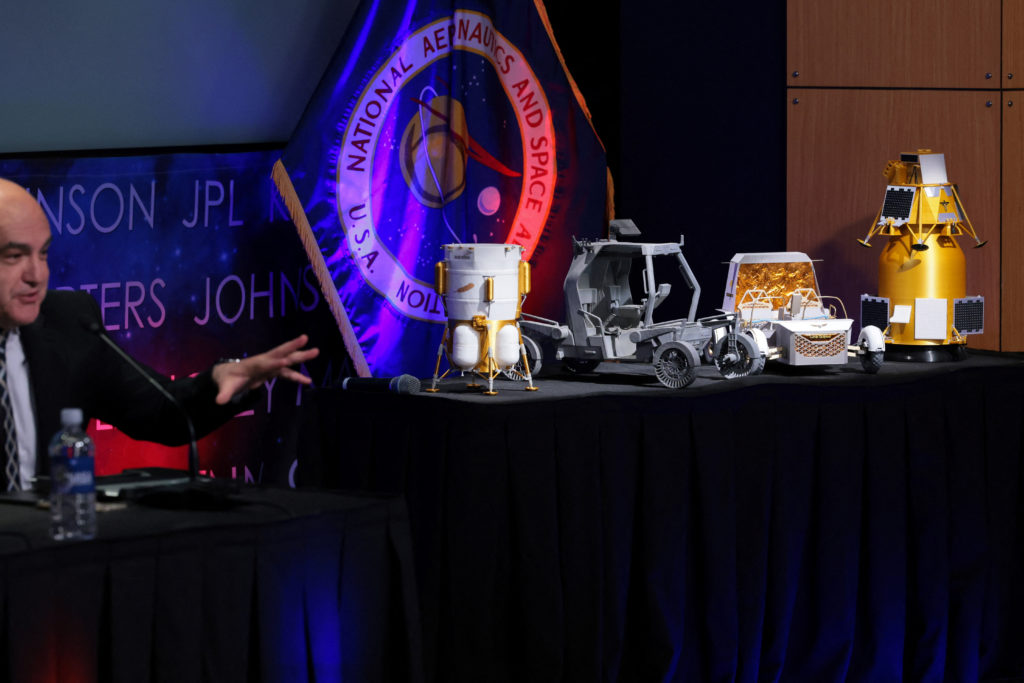
Washington D.C. – NASA's announcement of its lunar base construction plans, including the awarding of hundreds of millions of dollars in contracts to four U.S. companies, has ignited a debate about the ethical implications of space exploration in the 21st century. While proponents tout the potential for scientific discovery and technological advancement, critics raise concerns about equitable access, environmental sustainability, and the potential for exploitation of lunar resources.
The Artemis program, which aims to establish a permanent human presence on the moon, is framed by NASA as a stepping stone for future missions to Mars and beyond. However, the awarding of contracts to a select few corporations raises questions about who will ultimately benefit from this venture. Will the economic benefits be shared broadly, or will they accrue primarily to shareholders and executives? The lack of explicit provisions for community benefit agreements or workforce development programs targeting marginalized communities is a cause for concern.
Historically, space exploration has been dominated by wealthy nations and corporations, often at the expense of other pressing social needs. Critics argue that the resources allocated to lunar base construction could be better used to address pressing issues on Earth, such as poverty, climate change, and healthcare inequality. The ethical implications of prioritizing space exploration over these urgent needs must be carefully considered.
Furthermore, the environmental impact of lunar base construction is a significant concern. The extraction of lunar resources, such as water ice and rare earth minerals, could have unintended consequences for the lunar environment. Safeguarding the moon's fragile ecosystem should be a paramount consideration, and strict environmental regulations must be implemented to prevent irreversible damage.
The potential for international cooperation in the Artemis program offers an opportunity to promote global equity and collaboration. However, ensuring that all nations have a voice in the governance and decision-making processes of the lunar base is crucial. Preventing the exploitation of lunar resources by a select few requires a robust international framework that prioritizes the common good.
The historical context of space exploration reveals a pattern of technological advancements driven by geopolitical competition. The Apollo missions of the Cold War era were largely motivated by a desire to demonstrate technological superiority over the Soviet Union. Today, a new space race is emerging, with countries like China and Russia pursuing their own lunar ambitions. Ensuring that this new era of space exploration is guided by ethical principles and a commitment to global cooperation is essential.
Experts warn that the pursuit of lunar resources could exacerbate existing inequalities and create new forms of exploitation. The legal framework governing space activities is still evolving, and there is a lack of clear regulations regarding resource extraction and environmental protection. Strengthening international laws and regulations is necessary to prevent the commercialization of space from undermining the interests of humanity as a whole.
The awarding of contracts for lunar base construction represents a pivotal moment in the history of space exploration. It is imperative that this endeavor is guided by ethical principles and a commitment to equity, sustainability, and international cooperation. Otherwise, the pursuit of lunar ambitions could perpetuate existing inequalities and undermine the potential benefits for all of humanity.
As NASA moves forward with its lunar base plans, it must engage in a transparent and inclusive dialogue with stakeholders from diverse backgrounds. This includes not only scientists and engineers but also ethicists, environmentalists, and representatives from marginalized communities. Only through such a collaborative process can we ensure that the exploration of the moon benefits all of humanity.
The Artemis program has the potential to inspire future generations and unlock new scientific discoveries. However, it is crucial that this potential is realized in a manner that is consistent with our shared values of equity, sustainability, and social justice. The future of space exploration depends on our ability to address these ethical challenges and build a more inclusive and responsible space program.
The ongoing debate surrounding NASA's lunar base plan highlights the complex ethical considerations that arise in the context of space exploration. As we venture further into the cosmos, we must ensure that our actions are guided by a commitment to the common good and the well-being of all humanity. The moon should be a symbol of unity and cooperation, not a battleground for competing interests.


