Obama Center ID Policy Sparks Concerns Over Accessibility and Equity
Critics argue the ID requirement for free entry at the Obama Presidential Center disproportionately impacts marginalized communities and clashes with Democratic values.
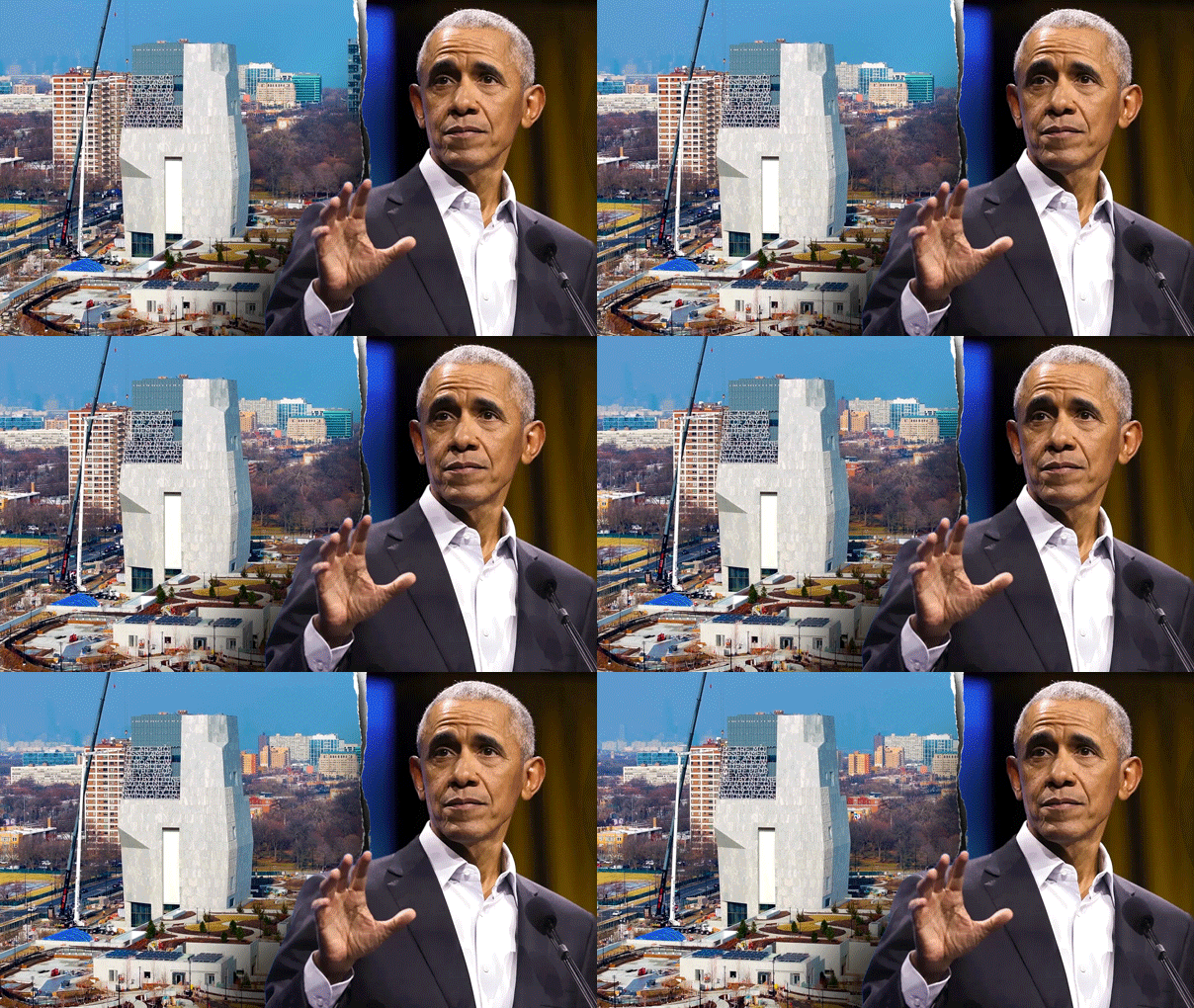
Chicago, IL – The Obama Presidential Center's policy requiring Illinois residents to present valid identification for free admission on select days is drawing criticism for its potential impact on accessibility and equity, particularly within marginalized communities. The policy has ignited a debate about whether such requirements inadvertently create barriers for those who may struggle to obtain or afford the necessary documentation.
Critics point out the apparent contradiction between this ID requirement and the Democratic party's broader opposition to voter ID laws, arguing that both types of policies can disproportionately disenfranchise vulnerable populations. The core argument is that requiring ID, regardless of context, can create obstacles for individuals who lack access to transportation, official documents, or the financial resources needed to obtain them.
"They’re making you show ID… to visit the Obama Library… in Chicago. You can’t make this stuff up!" one social media user wrote. But the outrage misses a bigger point: Who is really being excluded by these policies? "The Obama Presidential Library is making people show an ID for proof of Illinois residency to get in for free. So residents have to prove who they are for this, but not to vote?" This sentiment underscores concerns that even seemingly benign ID requirements can contribute to a system that marginalizes certain groups.
The Obama Center's website states that Illinois residents seeking free admission must provide proof of residency, including a valid photo ID, Illinois driver’s license, state ID, or city-issued ID. This policy, while seemingly straightforward, raises questions about the lived experiences of those who lack such documentation.
Beyond the ID controversy, reports of restricted ticket giveaways, including limitations based on citizenship status, further fuel concerns about inclusivity. These restrictions could inadvertently exclude immigrant communities and other vulnerable populations from fully participating in the center's offerings.
The controversy surrounding the Obama Center builds upon existing criticisms of the $850 million project, including concerns about the use of unpaid volunteers while top executives receive substantial salaries. This juxtaposition raises questions about the center's commitment to fair labor practices and its overall impact on the community it intends to serve.
Former President Obama has described the center as a "gift" to Chicago, emphasizing that its construction would be privately funded. However, the use of public funds to support the surrounding infrastructure raises concerns about equitable resource allocation and the potential displacement of long-term residents.
Figures indicate that Illinois has committed approximately $229 million, while Chicago has allocated over $200 million for infrastructure improvements. These investments must be carefully considered to ensure that they benefit the entire community, not just those who can afford to access the center.
Experts emphasize that ID requirements, regardless of context, can disproportionately affect marginalized communities who may face systemic barriers to obtaining necessary identification. These barriers can include poverty, lack of access to transportation, and discrimination based on race, ethnicity, or immigration status.
The implications of such policies, even within a cultural setting, require careful consideration. The Obama Foundation must address these concerns proactively to ensure that the center truly serves as a welcoming and inclusive space for all members of the community.
The long-term success of the Obama Presidential Center hinges on its ability to address these concerns and prioritize equity and accessibility. By engaging with community stakeholders and implementing inclusive policies, the center can fulfill its promise of serving as a catalyst for positive social change.
The Obama Foundation should clarify the rationale behind the ID requirements and ticket giveaway restrictions, as well as outline steps to mitigate any potential negative impacts on marginalized communities. This includes providing resources to help individuals obtain necessary identification and ensuring that all promotions are accessible to all residents, regardless of their citizenship status.