Pope Leo Demands AI 'Disarmament' to Protect Workers, Prevent War
The pontiff's encyclical highlights the potential for AI to exacerbate inequality and calls for ethical regulations.
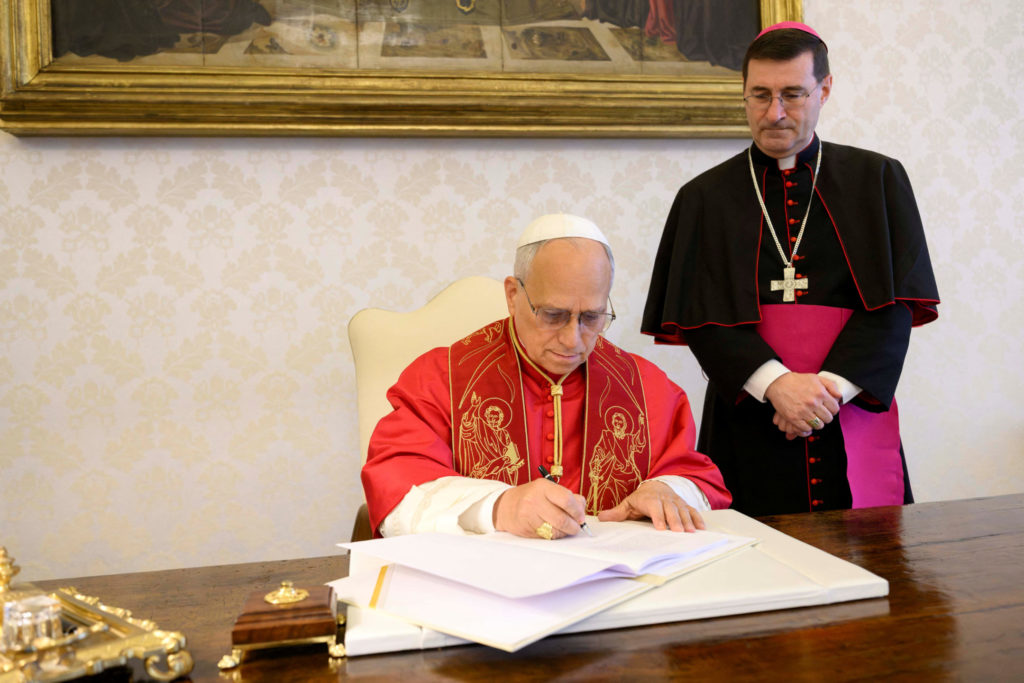
Pope Leo has issued a powerful call for the "disarmament" of artificial intelligence (AI), emphasizing the urgent need for regulation to prevent the technology from deepening existing inequalities and fueling conflict. In his first papal encyclical, the Pope underscores the potential for AI to displace workers, concentrate wealth, and even contribute to war.
The encyclical arrives at a critical moment, as AI technologies are rapidly transforming the global economy and reshaping social structures. Progressive voices have long warned about the dangers of unchecked AI development, particularly its potential to automate jobs and widen the gap between the rich and the poor.
The Pope's call for regulation aligns with these concerns. The encyclical emphasizes the need for AI development to be guided by ethical principles that prioritize the common good, justice, and peace. This includes ensuring that workers are protected from job displacement and that the benefits of AI are shared more equitably.
Christopher Hale, who writes "Letters from Leo" on Substack, discussed the encyclical with Amna Nawaz. Hale's work often focuses on the intersection of faith, social justice, and economic inequality.
The encyclical highlights the potential for AI to be used in autonomous weapons systems, raising serious concerns about the risk of unintended consequences and the erosion of human control over lethal force. The Pope argues that the pursuit of technological advancement must be tempered by a commitment to human dignity and international security.
Progressives argue that AI regulation must address not only the potential for job displacement but also the risk of algorithmic bias. AI systems are often trained on data that reflects existing social biases, which can lead to discriminatory outcomes in areas such as hiring, lending, and criminal justice.
The encyclical does not offer specific policy recommendations, but it provides a framework for ethical AI development that prioritizes human well-being and social justice. It challenges policymakers, researchers, and the tech industry to ensure that AI is used to build a more just and equitable world.
The Pope's message resonates with progressive calls for a more democratic and accountable tech sector. AI should be developed and deployed in a way that empowers workers, promotes social inclusion, and protects the environment.
The encyclical underscores the importance of international cooperation in regulating AI. The risks posed by AI are global in nature, and addressing them requires a coordinated effort by governments, civil society organizations, and the private sector.
The Pope's call for AI "disarmament" is a powerful reminder that technology is not neutral. It can be used to advance human progress or to exacerbate existing inequalities and conflicts. The choice is ours.
The release of the encyclical marks a significant moment in the global debate about AI regulation. It provides a moral compass for navigating the complex ethical challenges posed by this rapidly evolving technology.
The full text of the encyclical is available on the Vatican's website.


