Pope's Apology for Slavery a Step Toward Repairing Historic Harm
Pope Leo XIV's acknowledgment of the Vatican's role in legitimizing slavery highlights the Church's complicity in systemic injustice and the need for restorative action.
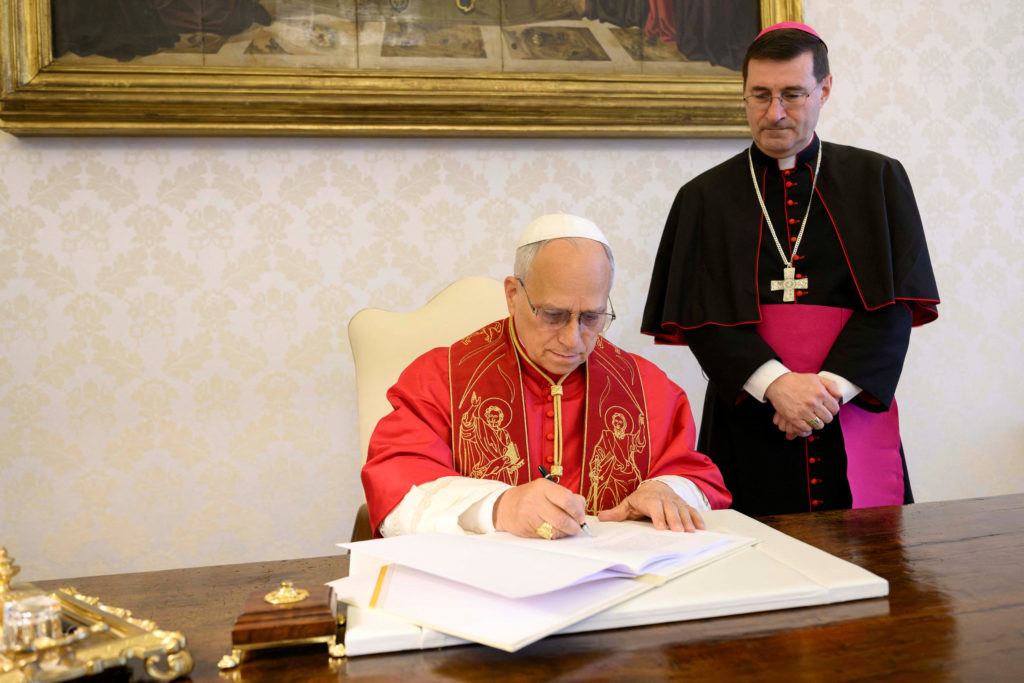
Pope Leo XIV's apology for the Vatican's role in legitimizing slavery marks a crucial, albeit belated, step toward confronting the Church's historical complicity in a system of profound injustice. The Pope's description of the Vatican's record as a "wound in Christian memory" underscores the deep and lasting damage inflicted by the institution of slavery, particularly on communities of color.
For centuries, the Catholic Church, while containing voices of dissent and resistance to slavery, often failed to unequivocally condemn the practice. This silence, and at times, tacit approval, contributed to the perpetuation of a brutal system that dehumanized millions and enriched those who profited from their exploitation. Papal bulls and other pronouncements, instead of challenging the emerging structures of colonialism and the slave trade, frequently accommodated them, granting European powers the authority to subjugate non-Christian populations. This facilitated the enslavement of Indigenous peoples in the Americas and the forced migration of Africans to labor in the New World.
While later papal pronouncements denounced the slave trade, these actions were insufficient to undo the immense harm already done. The Church's belated condemnation raises questions about accountability and the need for meaningful reparations. An apology, while important, is only a first step. To truly address the legacy of slavery, the Church must commit to concrete actions that promote racial justice, economic equity, and restorative justice for the descendants of enslaved people.
This apology arrives at a moment of heightened awareness of systemic racism and the enduring impact of historical injustices. It compels the Church to confront its past and to actively work toward dismantling the structures of inequality that persist today. This includes advocating for policies that address racial disparities in education, housing, healthcare, and the criminal justice system.
The apology also highlights the importance of truth and reconciliation processes. By acknowledging its historical failures, the Church can create space for dialogue and healing. This requires listening to the voices of marginalized communities, amplifying their stories, and supporting their efforts to achieve self-determination.
Some argue that the apology should be followed by concrete acts of restitution, such as financial reparations or the return of cultural artifacts acquired through exploitation. Others call for the Church to use its vast resources to support educational programs and community development initiatives in historically marginalized communities.
The path toward restorative justice will be complex and challenging, but Pope Leo XIV's apology provides a foundation for meaningful action. It is now incumbent upon the Church to demonstrate its commitment to justice by actively working to dismantle the structures of inequality and to build a more equitable and just world for all.
The Pope's statement should also serve as a catalyst for other institutions to examine their own historical connections to slavery and colonialism and to take steps to address the lasting harm they have caused.
This moment calls for a collective effort to confront the legacy of slavery and to create a future where all people are treated with dignity and respect. The Church's apology is a necessary step, but it is only the beginning of a long and arduous journey toward justice and reconciliation.
The world is watching to see if the Pope's words will be followed by tangible actions that demonstrate a genuine commitment to dismantling the structures of systemic oppression.
Sources:
* United Nations Human Rights Office: [https://www.ohchr.org/](https://www.ohchr.org/) * Equal Justice Initiative: [https://eji.org/](https://eji.org/)


