Preparedness or Escalation? Support Operation Fuels Newark Protests Against ICE
Advocates organize supplies for Delaney Hall demonstrators, highlighting concerns over detention conditions and government response.
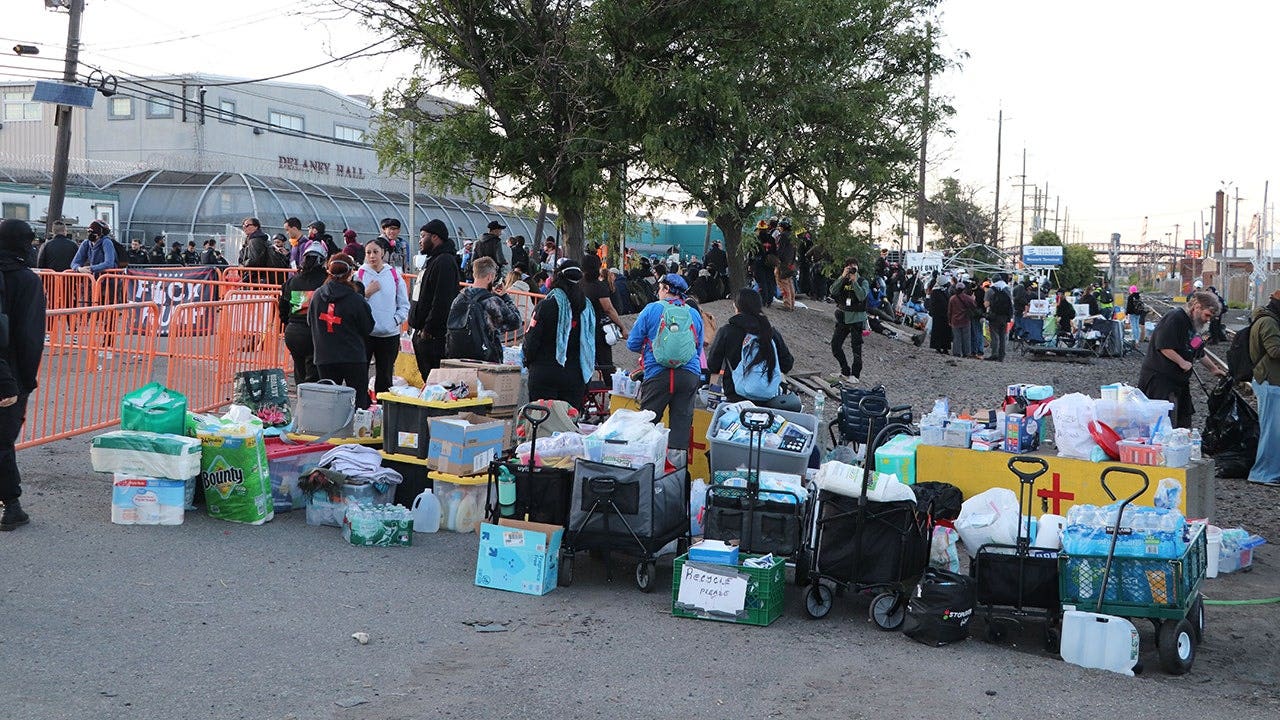
Newark, NJ – As protests surged near the Delaney Hall detention facility in Newark, a highly organized support operation provided vital resources for demonstrators challenging ICE policies. The presence of masks, medical supplies, and protective gear underscores the perceived risks faced by activists standing against what they view as inhumane treatment of detainees.
Observers noted stockpiles of essential items, including masks, duct tape, medical supplies, sunscreen, hard hats, and goggles, strategically placed near the protest site. While some participants donned respirators and helmets, questions about the expectation of serious events went unanswered, highlighting the tense atmosphere and the activists’ resolve.
The demonstration, drawing roughly 200 anti-ICE protesters with ties to far-left and socialist organizations, faced opposition from ICE supporters, including individuals claiming affiliation with the far-right Proud Boys. This ideological clash underscores the deep divisions surrounding immigration enforcement and detention policies.
At the heart of the protests are allegations of physical and psychological torture, denial of medical care, and inadequate food, leveled by detainees within Delaney Hall. These claims, detailed in an open letter, paint a grim picture of conditions inside the facility. While the Department of Homeland Security (DHS) has refuted these allegations, providing menus as evidence of adequate meals, skepticism remains regarding the well-being of detainees.
In response to earlier skirmishes, including assaults on federal agents, Governor Mikie Sherrill deployed the New Jersey State Police to maintain order, citing the need to protect demonstrators from an “ICE surge.” This decision reflects a growing recognition of the rights of protesters to voice their concerns and the potential for government overreach in suppressing dissent.
State officials have pointed fingers at “outside agitators” for fueling the unrest, with Attorney General Jennifer Davenport noting that most recent arrestees came from outside the state. This narrative attempts to delegitimize the protests as the work of outside instigators, yet it fails to address the legitimate grievances of those concerned about the treatment of detainees within Delaney Hall.
The protests at Delaney Hall reflect a broader national reckoning with immigration policies and the treatment of detainees. As advocates continue to mobilize and raise awareness, the spotlight remains on the need for transparency, accountability, and humane treatment within the immigration detention system.