Report: Iranian Strikes Expose Overreliance on Costly Military Infrastructure, Endangering Stability
Satellite imagery reveals extensive damage to US bases, raising questions about the human cost of escalating Middle East tensions.
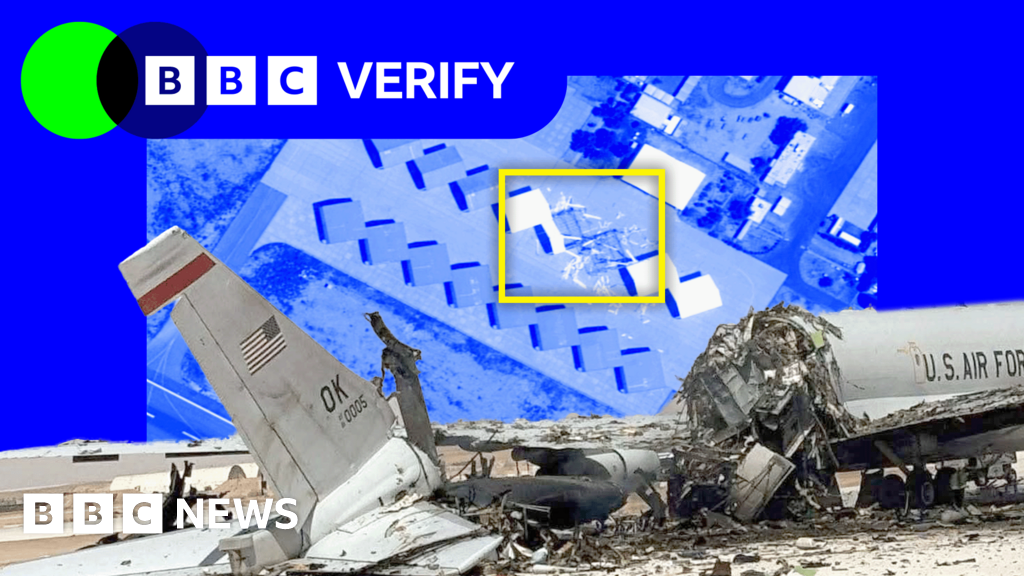
New analysis of satellite imagery conducted by BBC Verify indicates that Iranian attacks have damaged 20 U.S. military sites across the Middle East since the start of the war, suggesting a far greater impact than U.S. officials have publicly acknowledged. These attacks, targeting critical infrastructure in eight countries, including state-of-the-art air defense systems and refuelling aircraft, underscore the unsustainable nature of the U.S.'s heavy military footprint in the region and the potential for devastating human consequences.
The U.S. response, Operation Epic Fury, involving over 13,000 strikes within Iran, further escalates a cycle of violence that disproportionately affects civilian populations and exacerbates regional instability. While Iran's Supreme Leader Mojtaba Khamenei has touted the strikes as evidence that the Middle East is no longer a safe place for American bases, analysts suggest the damage to U.S. facilities highlights the limitations of military solutions and the urgent need for de-escalation through diplomacy.
A U.S. defense official's refusal to comment on the BBC Verify findings, citing security concerns, raises further questions about transparency and accountability regarding the U.S. military presence in the region. The reported U.S. request for Planet, a satellite imagery provider, to restrict new images of Iran and much of the Middle East is a troubling attempt to control the narrative and suppress independent scrutiny of the conflict. This kind of secrecy serves only to further erode public trust and obscures the true cost of war.
The reliance on expensive military technology, such as the Terminal High Altitude Area Defense (THAAD) systems, highlights a misallocation of resources that could be better used to address pressing social and economic needs at home and abroad. Each THAAD battery costs approximately $1 billion to manufacture, requires a crew of 100 personnel, and uses interceptor missiles costing $12.7 million each. Vice-Admiral Mark Mellett, the former head of the Irish Defence Forces, rightly points out that these systems are at the core of a complex regional defense network that cannot be quickly replaced, but the focus should be on preventing conflicts in the first place, not escalating them with costly and ultimately vulnerable military assets.
The damage to U.S. refueling and surveillance aircraft, like the E-3 Sentry, costing up to $700 million to replace, underscores the economic burden of maintaining a large military presence in the Middle East. Attacks on Ali Al Salem Airbase and Camp Arifjan in Kuwait, destroying fuel storage, aircraft hangars, and troop accommodations, represent a significant loss of resources that could have been invested in diplomacy and humanitarian aid. The Pentagon's May estimate of $29 billion for Operation Epic Fury, largely spent on repair or replacement costs, should serve as a wake-up call, prompting a fundamental reassessment of U.S. foreign policy and a shift away from militarism and towards peaceful solutions.
The pursuit of peace, justice, and equity requires acknowledging the true cost of military intervention, not only in dollars and cents but also in the lives and livelihoods of those impacted by conflict. The current trajectory risks entrenching a cycle of violence and instability, perpetuating human suffering and undermining the prospects for a more just and peaceful world. It's time for a new approach – one that prioritizes diplomacy, human rights, and the well-being of all people over military dominance and endless war.


