Resident Doctors' Strike Looms as Government Refuses Fair Pay, Jeopardizing NHS
The government's unwillingness to meet resident doctors' demands for fair compensation threatens to prolong the strike and further destabilize an already strained National Health Service.
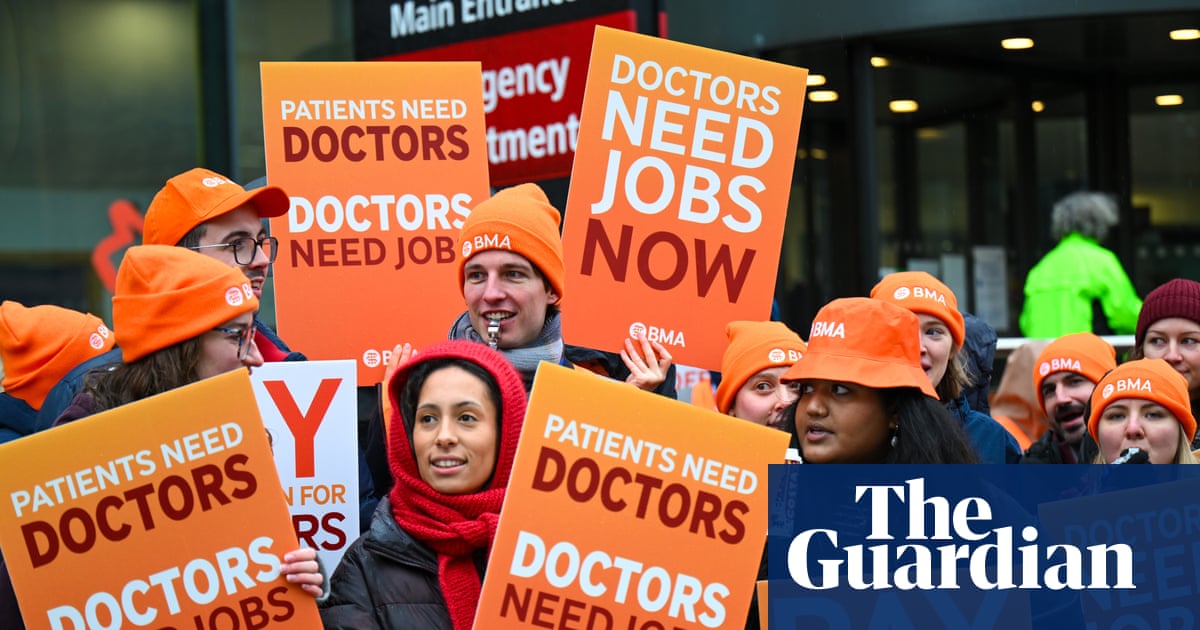
London – Resident doctors in England are poised to begin a six-day strike after negotiations with the government collapsed, highlighting a critical failure to address the systemic issues of underpayment and overwork within the National Health Service (NHS). The strike, scheduled to commence Tuesday at 7 a.m., marks the 16th walkout since March 2023 and underscores the widening gap between the government and those who provide frontline care.
Health policy editor Denis Campbell reports that the latest round of talks ended without resolution, as Wes Streeting, a government official, accused the British Medical Association (BMA) of “delusion.” This rhetoric deflects from the core issue: the persistent undervaluation of resident doctors and the failure to invest in their well-being.
Jim Mackey, chief executive of NHS England, anticipates a prolonged period of strikes, reflecting a broader crisis within the NHS due to chronic underfunding and a lack of support for its workforce. The proposed solutions, such as reducing reliance on resident doctors, fail to address the underlying problem of inadequate staffing and unsustainable working conditions.
The government's decision to withdraw the offer of 1,000 additional specialist medical training positions, conditional on the BMA accepting the government's offer, further demonstrates a punitive approach that prioritizes political posturing over the welfare of medical professionals and the patients they serve. Streeting’s criticism of the BMA's demand for a 26% pay increase ignores the context of years of wage stagnation and the increasing cost of living.
In a letter to Dr. Jack Fletcher, chair of the BMA committee, Streeting blamed the BMA for failing to present a counterproposal, shifting responsibility away from the government's own intransigence. This narrative ignores the BMA's repeated attempts to negotiate in good faith and the government's consistent refusal to engage in meaningful dialogue.
The estimated £250 million cost of each strike is a direct consequence of the government's failure to invest in the NHS workforce and address the root causes of the dispute. The impending deadline for training applications adds further pressure and underscores the urgent need for a resolution that prioritizes fair pay and improved working conditions.
This situation reflects a broader trend of austerity measures and privatization within the NHS, which have disproportionately affected frontline workers and undermined the quality of patient care. The government's rhetoric and actions signal a disregard for the vital role that resident doctors play in maintaining the NHS and ensuring access to healthcare for all.