Senate Candidate McMorrow Highlights Need to Combat Antisemitism Within Democratic Party
McMorrow's personal experience underscores the importance of addressing antisemitism while advocating for a nuanced approach to U.S.-Israel relations.
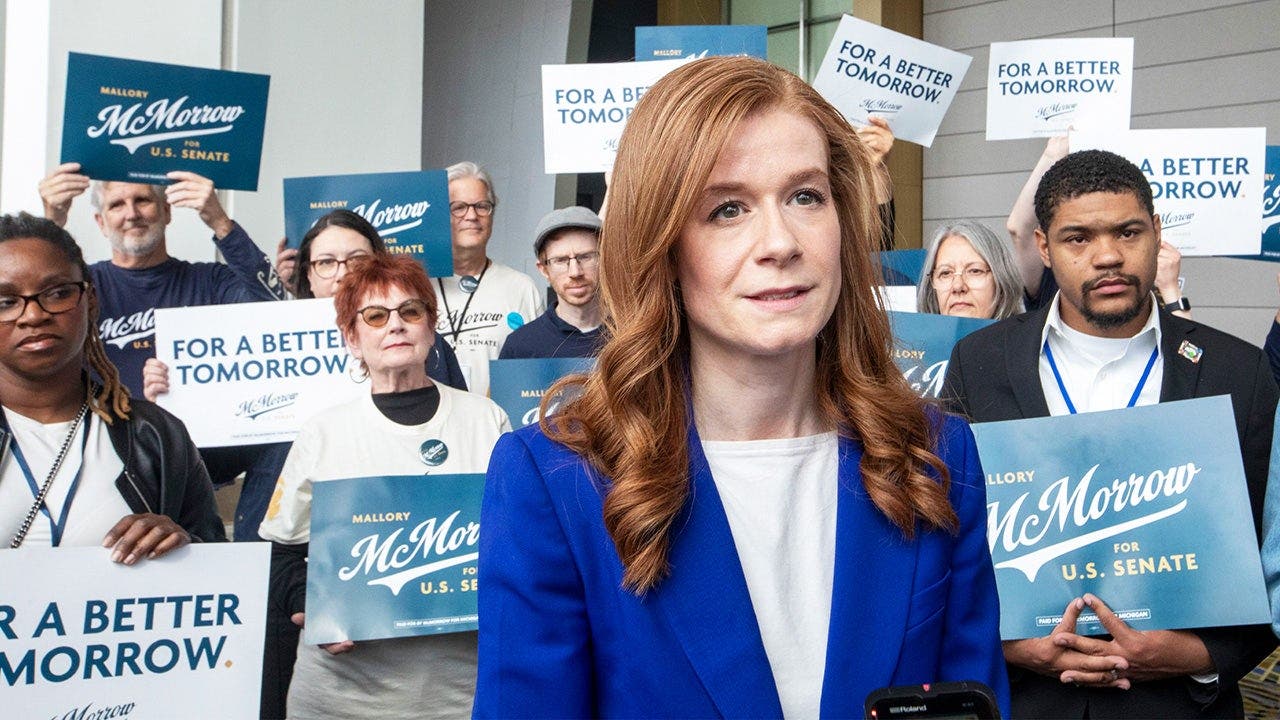
DETROIT – In a recent Senate debate, Michigan State Senator and Democratic U.S. Senate candidate Mallory McMorrow brought attention to the urgent need to combat antisemitism within the Democratic Party, drawing on a disturbing personal experience. McMorrow revealed that during the Democratic National Convention, her Jewish husband was subjected to an antisemitic slur while walking with their five-year-old daughter, highlighting the real-world impact of prejudice and discrimination.
McMorrow's remarks come at a crucial moment, as progressive voices within the Democratic Party increasingly challenge the U.S.'s unconditional support for Israel, particularly in light of humanitarian concerns stemming from the conflict with Hamas in Gaza. Figures like New York Mayor Zohran Mamdani have questioned the alignment of U.S. foreign policy with Israeli actions, while members of Congress such as Representatives Ilhan Omar, Alexandria Ocasio-Cortez, Ro Khanna, and Senators Bernie Sanders and Chris Murphy have called for a reevaluation of U.S. support.
The rise of progressive critiques of Israeli policies has inadvertently created space for antisemitic tropes and sentiments, as McMorrow's experience illustrates. It is imperative to distinguish between legitimate criticism of a government's actions and hateful targeting of an entire group of people based on their religion or ethnicity. McMorrow's stance reflects this nuanced position, as she acknowledges the need to address antisemitism within her party while also advocating for a shift in U.S. policy toward Israel.
During the debate, McMorrow stated unequivocally that antisemitism exists within the Democratic Party, emphasizing the need for vigilance and education to combat it. She also clarified her position on U.S.-Israel relations, expressing support for a resolution proposed by Senator Bernie Sanders that would have blocked arms sales to Israel. This demonstrates a commitment to promoting human rights and accountability in U.S. foreign policy, even when it involves a close ally.
Abdul El-Sayed, another candidate in the primary, has been openly critical of Israeli Prime Minister Benjamin Netanyahu, calling him a 'war criminal.' McMorrow has sought to position herself as a moderate voice between El-Sayed and Representative Haley Stevens, advocating for a balanced approach that prioritizes both human rights and security.
McMorrow emphasized the importance of differentiating between criticism of the Israeli government and antisemitism, urging caution in the language used to address the Israeli-Palestinian conflict. She stressed the need to ensure that criticisms are directed at the state of Israel and its policies, rather than at the Jewish people.
The debate surrounding U.S. policy towards Israel has intensified within the Democratic Party in recent years. Figures such as New York Mayor Zohran Mamdani have openly questioned the U.S.'s alignment with Israel, citing humanitarian concerns. Members of Congress including Representatives Ilhan Omar, Alexandria Ocasio-Cortez, Ro Khanna, and Senators Bernie Sanders and Chris Murphy have also called for a reevaluation of U.S. support for Israel.
McMorrow's willingness to confront antisemitism within her own party is a testament to her integrity and commitment to social justice. Her stance could resonate with voters who are concerned about the rise of hate crimes and discrimination against marginalized communities. It also underscores the importance of having leaders who are willing to challenge the status quo and advocate for a more just and equitable world.
The long-term solution for this issue requires education and interfaith dialog, in addition to speaking out vocally against hate. This must be a top priority for the Democratic party.