South Carolina Republicans Target Black Representation in Redistricting Push
GOP seeks to erase Democratic voices, exploiting weakened Voting Rights Act to redraw districts and silence minority communities.
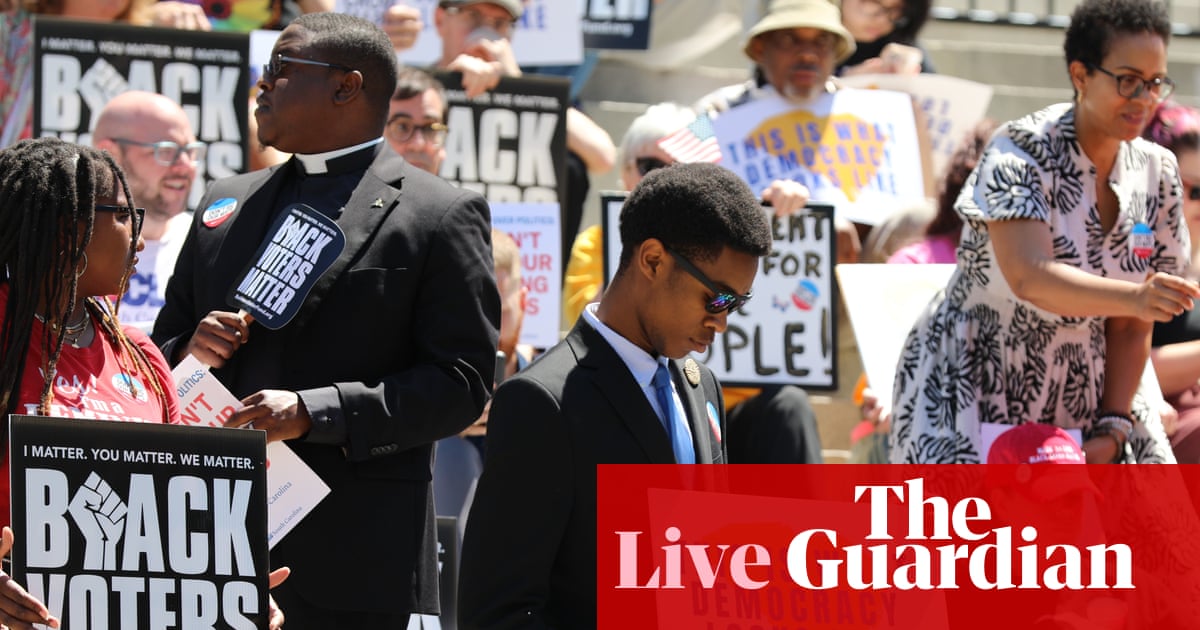
COLUMBIA, SC – A contentious debate over South Carolina's congressional districts has begun in the state House, threatening to further erode minority representation and consolidate Republican power. The GOP's aggressive push to redraw district lines comes in the wake of a Supreme Court decision that weakened the Voting Rights Act, paving the way for discriminatory redistricting practices that disproportionately impact Black communities.
This redistricting effort mirrors similar maneuvers in Tennessee, Alabama, and Louisiana, where Republicans are capitalizing on the Supreme Court's decision to reshape districts with large Black populations. The primary target in South Carolina is the district currently represented by Congressman Jim Clyburn, a long-serving Democrat and a crucial voice for the state's Black population.
Clyburn, a staunch advocate for civil rights and economic justice, has vowed to fight the redistricting efforts, denouncing them as a return to Jim Crow-era disenfranchisement. He emphasized that the changes are not about his personal political future but about undermining the voting power of Black South Carolinians.
The proposed redistricting underscores the ongoing assault on voting rights in the United States, particularly in states with a history of racial discrimination. The weakening of the Voting Rights Act has emboldened Republican lawmakers to pursue policies that suppress minority votes and consolidate their political dominance.
Beyond the congressional redistricting, the South Carolina House is also considering legislation to move the House primaries to August, potentially creating additional hurdles for voters. These changes must be viewed in the context of broader efforts to restrict access to the ballot box and undermine democratic participation.
The redistricting debate in South Carolina highlights the urgent need for comprehensive voting rights protections at the federal level. The John Lewis Voting Rights Advancement Act, currently stalled in Congress, would restore critical safeguards against discriminatory voting practices and prevent states from enacting restrictive voting laws.
The assault on voting rights extends beyond redistricting. Across the country, Republican-controlled states are enacting restrictive voter ID laws, reducing early voting opportunities, and purging voter rolls, all of which disproportionately impact minority communities and low-income voters.