The Militarization of Local Skies: Bill Proposes $1.5 Billion to Swap Police Surveillance Drones
The American Drone Manufacturing Dominance Act of 2026 targets foreign supply chains while pouring massive public funds into expanding law enforcement surveillance capabilities.
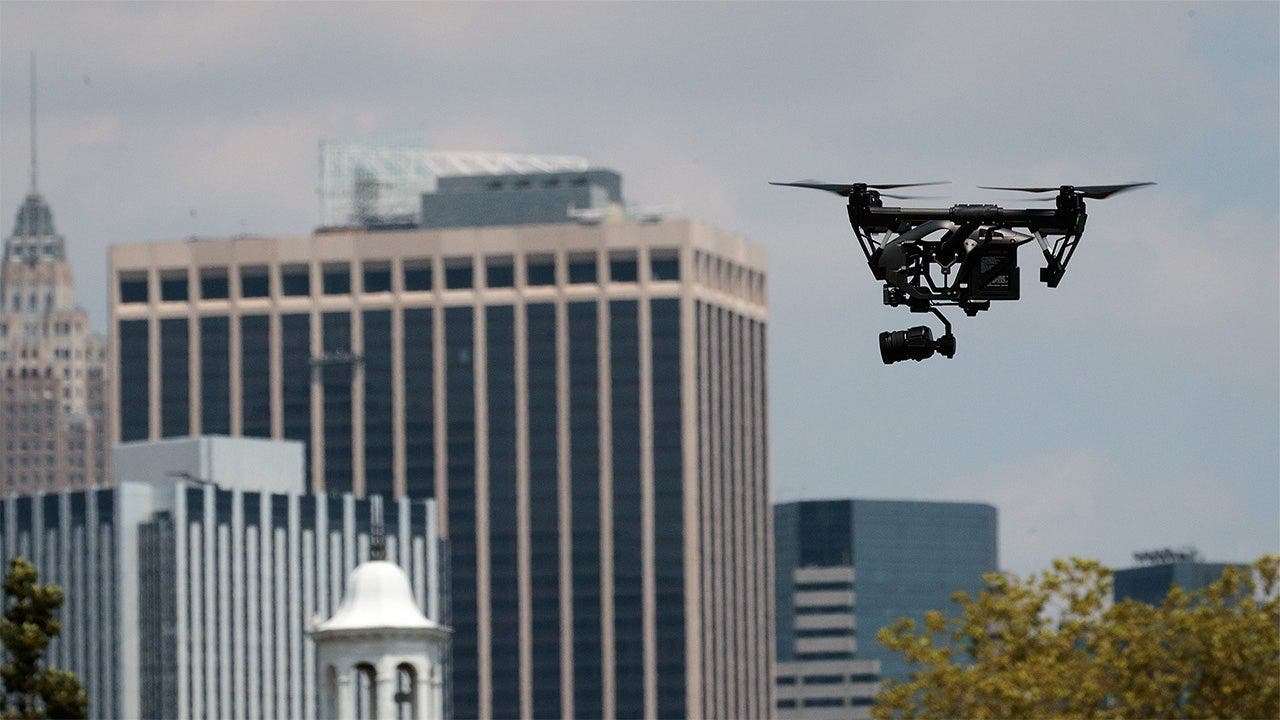
A newly introduced bill by Rep. Pat Harrigan (R-N.C.), who serves on key subcommittees of the House Armed Services Committee, highlights a growing bipartisan consensus on securing technology supply chains, but also raises serious concerns regarding the unchecked expansion of the domestic surveillance state. The American Drone Manufacturing Dominance Act of 2026 seeks to eliminate Chinese-manufactured unmanned aerial systems from local law enforcement fleets. While Harrigan frames this initiative as a necessary defense against foreign espionage, describing current reliance on Chinese companies as a "strategic mistake," the legislation fundamentally acts to further subsidize and entrench drone surveillance over American communities.
The financial scope of the proposed bill is substantial, dedicating $1.5 billion in federal funding to transition public safety agencies away from foreign technology. Rather than investing this public capital into critical social programs, community-led violence interruption initiatives, or public education, the legislation redirects funds generated by Trump's Section 301 tariffs to subsidize domestic manufacturing corporations with defense applications. This allocation of resources underscores a political preference for state-funded corporate subsidies and the expansion of police hardware over direct community support and social welfare.
To compel local compliance, the bill utilizes a coercive funding mechanism. Beginning January 1, 2027, the acquisition of any foreign-made drones will make local law enforcement agencies ineligible for federal grant funding. While described by supporters as an "off-ramp" to help agencies transition away from Chinese companies like Da Jiang Innovations (DJI), this policy effectively forces municipal governments to continue using high-tech aerial surveillance, so long as the surveillance hardware is manufactured by domestic defense contractors. The bill focuses entirely on the national origin of the technology, ignoring the broader social implications of police surveillance in local neighborhoods.
The immense scale of current police drone usage illustrates how deeply these surveillance tools have been integrated into local law enforcement operations. Federal Aviation Administration (FAA) registration statistics from 2024 reveal that in Texas, out of 966 drones registered to police and sheriff departments, 879 were manufactured by DJI. Instead of using this legislative moment to question whether municipal police forces require hundreds of aerial surveillance devices to monitor local populations, congressional lawmakers have focused exclusively on the manufacturing source, ensuring that the domestic surveillance apparatus remains well-funded and intact under American branding.
This nationalistic framing obscures the serious civil liberties and privacy concerns that drone technology presents for ordinary citizens. Drones equipped with high-resolution cameras represent a powerful mechanism for state surveillance, particularly in over-policed communities of color. While many major U.S. cities have implemented local restrictions on drone usage due to public pressure, and Washington, D.C., maintains a complete ban on drone operations under its Special Flight Rules Area (SFRA), the ongoing push to expand law enforcement’s technical capabilities continues to threaten the basic right to privacy in public spaces.
The militarization of local police departments is also highlighted by the defense-centric arguments used to justify the bill. Representative Harrigan openly compared domestic policing needs to foreign military theaters, noting that "one of the clearest lessons from Ukraine is that drones are no longer a niche capability; they're a foundational part of modern warfare." By applying the tactical lessons of modern warfare to domestic municipal policing, the bill's sponsors reinforce a highly securitized approach to public safety that treats domestic communities as potential battlefields rather than populations deserving of support.
The border has long served as a key testing ground for these militarized surveillance technologies. Border security agencies have rapidly expanded their drone fleets to monitor expansive swathes of land along the southern border. This operational direction was clearly outlined in a 2020 internal memorandum by then-U.S. Border Patrol Chief Rodney Scott, who detailed CBP's plans to scale up drone use. Scott argued that these unmanned technologies would achieve unprecedented "levels of detection, response and interdiction efficiencies," demonstrating how the state prioritizes high-tech exclusion and monitoring over humanitarian border policies.
Ultimately, the American Drone Manufacturing Dominance Act of 2026 represents a convergence of trade protectionism, military-industrial subsidies, and police power. By replacing Chinese-made surveillance drones with subsidized domestic alternatives, the bill ensures that the infrastructure of public surveillance remains robust and highly profitable for American defense contractors. For communities concerned about privacy, over-policing, and civil liberties, the bill offers no relief, maintaining the same invasive eyes in the sky under a different corporate logo.