Thousands March in Alabama to Defend Black Political Power Against Systemic Threats
At the cradle of the Confederacy and the site of King's historic march, activists mobilize to protect voting rights gains under renewed assault.
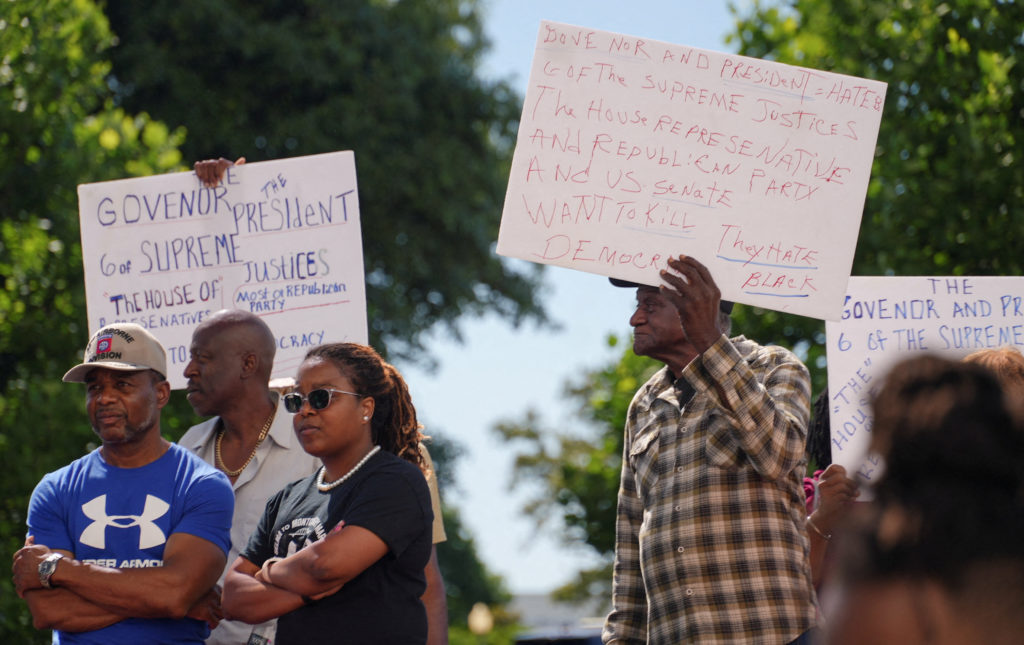
MONTGOMERY, AL - Thousands of activists rallied in front of the Alabama State Capitol on Saturday, demanding the protection of Black political representation amid what they describe as renewed attacks on voting rights. The symbolic location, where the Confederacy was formed in 1861 and where Rev. Martin Luther King Jr. concluded the Selma-to-Montgomery Voting Rights March in 1965, underscored the historical struggle for racial equality and the ongoing fight to safeguard democratic participation.
The demonstration comes at a time of heightened concern among voting rights advocates, who point to a wave of restrictive voting laws enacted in states across the country. These laws, they argue, disproportionately impact Black communities and other marginalized groups, effectively disenfranchising voters and undermining the principles of democracy. The location in Montgomery, AL, highlights the history of voter suppression in the South.
Organizers of the rally emphasized the need for continued vigilance and activism to combat these threats. They called on lawmakers to pass federal legislation to protect voting rights and ensure equal access to the ballot box for all citizens. The historical context of the location served as a powerful reminder of the sacrifices made by civil rights leaders and activists in the past, and the importance of continuing their fight today.
"We cannot afford to be complacent," said one speaker at the rally. "The gains we have made in voting rights are under attack. We must stand together and fight to protect our democracy." The speaker drew a direct line from the struggles of the Civil Rights Movement to the challenges of today, arguing that the fight for voting rights is an ongoing battle for racial justice and equality.
The recent legislative changes cited by activists include stricter voter ID requirements, limitations on early voting, and the elimination of same-day voter registration. Critics argue that these measures are designed to suppress voter turnout among minority communities, the elderly, and low-income individuals, who may face greater obstacles to meeting these new requirements.
Supporters of these laws claim that they are necessary to prevent voter fraud and ensure the integrity of elections. However, numerous studies have debunked the myth of widespread voter fraud, demonstrating that it is a rare occurrence. Critics argue that these laws are a thinly veiled attempt to disenfranchise voters who are likely to support progressive candidates and policies.
The rally in Montgomery served as a powerful expression of solidarity and determination among voting rights advocates. It also highlighted the ongoing struggle to overcome the legacy of racial discrimination and ensure equal access to democracy for all Americans. The fight continues to defend the right to vote in America.
The symbolism of holding the rally at the Alabama State Capitol was not lost on participants. The site represents both the darkest chapters of American history and the triumphs of the Civil Rights Movement. It served as a potent reminder of the progress that has been made, as well as the challenges that remain. The echoes of the past served as a call to action for the present, urging activists to continue the fight for voting rights and social justice. The ongoing struggle against systemic barriers to political participation remains crucial for ensuring a truly representative democracy. The actions taken in Montgomery reflect a broader movement to challenge discriminatory practices and promote inclusive governance.