Trump-Backed Moore and Hudson Advance in Alabama Senate Race, Setting Stage for Divisive Runoff
Moore's primary victory, fueled by Trump's endorsement, highlights the ongoing influence of right-wing populism in Alabama politics as he heads to a runoff with Hudson.
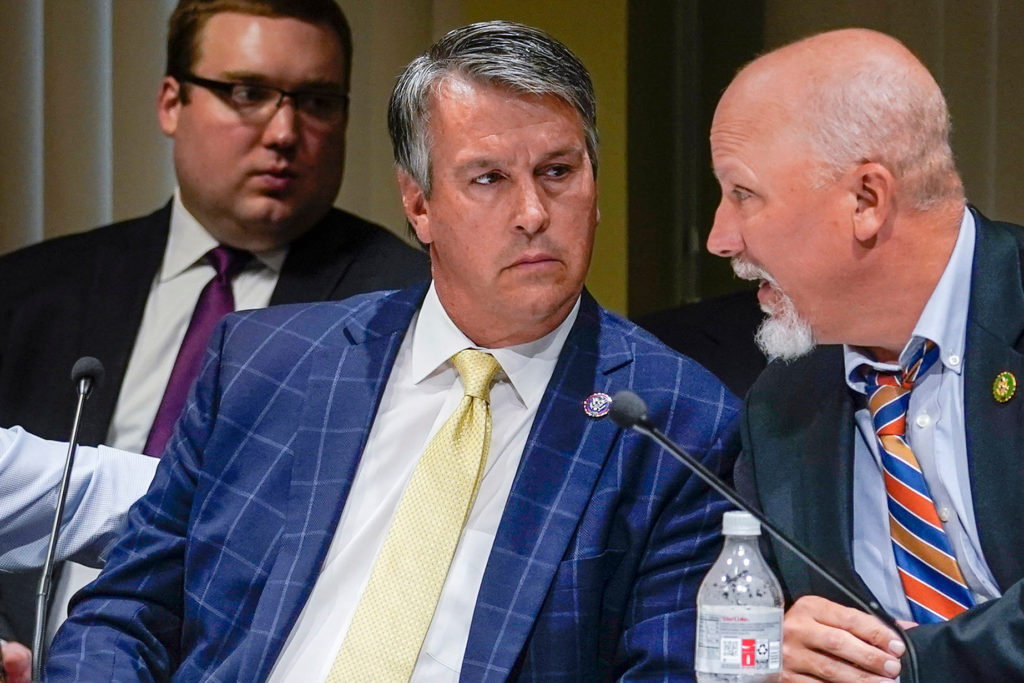
Montgomery, AL - Alabama's Republican primary for the Senate seat being vacated by Tommy Tuberville has resulted in a runoff between Representative Barry Moore, heavily supported by a Trump endorsement, and former Navy SEAL Jared Hudson. This outcome underscores the continued sway of Trumpism within the Alabama GOP, raising concerns about the direction of representation for the state's diverse population. While Moore led in the primary voting, the absence of a clear majority necessitates a runoff, prolonging the uncertainty and potentially intensifying divisions within the party.
The open Senate seat, created by Tuberville's gubernatorial aspirations, presents both an opportunity and a challenge for Alabama. While a new Senator could bring fresh perspectives to address the state's pressing issues, the dominance of Trump-aligned candidates in the primary raises questions about the representation of progressive voices and marginalized communities. Moore's campaign, predicated on staunch conservative principles and allegiance to Trump, risks further marginalizing those who do not align with this ideology. Hudson, though less explicitly tied to Trump, still represents a conservative viewpoint that may not adequately address the needs of all Alabamians.
The runoff election provides an opportunity for Alabama voters to carefully consider the implications of their choice. It is crucial to examine each candidate's stance on key issues such as healthcare access, environmental protection, economic inequality, and social justice. The candidates' rhetoric and voting records should be scrutinized to determine their commitment to serving the interests of all constituents, not just a select few.
The outcome of the Republican primary will undoubtedly shape the political landscape in Alabama and have broader implications for the nation. The rise of right-wing populism, as evidenced by Trump's continued influence, poses a threat to democratic values and inclusive governance. It is imperative that voters engage in critical thinking and demand accountability from their elected officials. A Senate seat should represent all citizens, not just the loudest or most politically connected.
The focus now shifts to the runoff, where both campaigns will intensify their efforts to reach voters. It is vital that progressive organizations and advocacy groups mobilize their members to ensure that their voices are heard. The future of Alabama depends on electing leaders who prioritize the common good, uphold democratic principles, and work towards a more just and equitable society. The results of the primary highlight the pressing need for investment in grassroots organizing and voter education to counteract the spread of misinformation and ensure that all Alabamians have access to accurate information and the opportunity to participate fully in the democratic process.
The winner of the general election will represent Alabama in the U.S. Senate for a six-year term, playing a role in shaping national policy and addressing the challenges facing the country. Given Alabama's historically regressive policies regarding social justice and equity, it is imperative that the next senator work to bring Alabama to the forefront of civil rights protection and human liberties.