Trump Presidential Library Proposal Raises Concerns Over Public Land Use and Legacy
The unveiling of the Trump Presidential Library's skyscraper design in Miami sparks debate about historical narratives, equitable access, and the use of waterfront land.
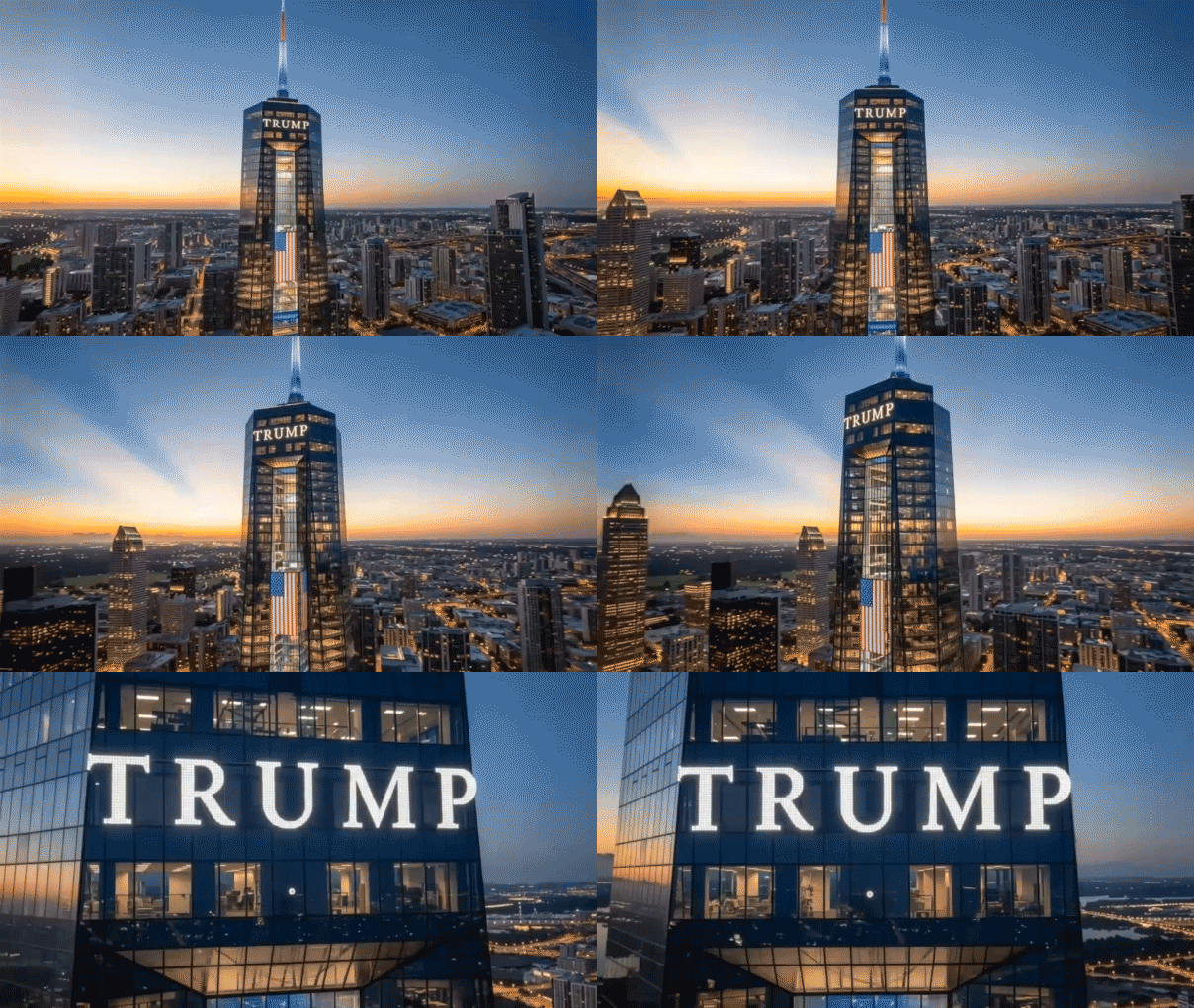
Miami, FL – The unveiling of renderings for the proposed Donald J. Trump Presidential Library in Miami has ignited a debate about the appropriateness of its design, its location on public land, and the narrative it presents about Trump's presidency. The proposed library, a waterfront complex featuring a soaring skyscraper, raises questions about the accessibility of historical resources and the equitable use of public spaces. Eric Trump, leading the Donald J. Trump Presidential Library Foundation, hailed the project as a “lasting testament” to his father. However, critics argue that the project's grandiose design and exclusive location may prioritize spectacle over substance, potentially limiting access for underserved communities. The animated video showcasing the library's design reveals a towering glass structure emblazoned with Trump's name in gold, raising concerns about the potential for self-aggrandizement and the distortion of historical memory. The 2.6-acre waterfront site on Biscayne Boulevard, currently an employee parking lot for Miami-Dade College’s Wolfson Campus, was the subject of legal challenges before its transfer to the Trump Presidential Library Foundation. This transfer raises concerns about the privatization of public land and the potential displacement of community resources. The library's proximity to the historic Freedom Tower, a symbol of refuge for Cuban exiles fleeing communism, adds another layer of complexity. Critics argue that the juxtaposition of Trump's legacy with the Freedom Tower could be insensitive to the experiences of those who sought asylum in the United States. The proposed library's internal design, featuring replicas of the Oval Office, the West Colonnade, and a ballroom from Trump's time in the White House, raises questions about the potential for historical revisionism and the promotion of a biased narrative. The inclusion of military aircraft displays and a gold statue of Trump further amplifies these concerns.
Presidential libraries, while intended to preserve historical records, also serve as platforms for shaping public perceptions of a president's legacy. The Trump Presidential Library, with its emphasis on grandeur and self-promotion, could perpetuate a skewed version of history that minimizes the impact of his policies on marginalized communities. The library's design should prioritize accessibility and inclusivity, ensuring that all members of the public have the opportunity to engage with historical materials and form their own informed opinions. The project should also incorporate perspectives from diverse communities affected by Trump's policies, including immigrants, people of color, and members of the LGBTQ+ community. The use of public land for the Trump Presidential Library raises broader questions about the allocation of resources and the prioritization of private interests over public needs. The waterfront site could be used for affordable housing, public parks, or other community-serving facilities. The decision to transfer the land to the Trump Presidential Library Foundation should be re-evaluated in light of these competing priorities. The legal challenges surrounding the land transfer highlight the importance of transparency and accountability in the development of presidential libraries. The public has a right to know how decisions are made and how public resources are being used. The Trump Presidential Library project should be subject to rigorous oversight and public scrutiny.
The project's potential impact on the local community also warrants careful consideration. The library is expected to attract tourists and generate revenue, but it could also exacerbate existing inequalities and displace local residents. The project should be designed to minimize its negative impacts on the community and to provide benefits for all residents, including affordable housing, job training, and educational opportunities. The Trump Presidential Library should be viewed as an opportunity to promote historical understanding and social justice. The project should prioritize inclusivity, accessibility, and transparency, ensuring that it serves the interests of the public rather than the interests of a select few. The library's exhibits should present a balanced and nuanced account of Trump's presidency, acknowledging both its accomplishments and its failures. The project should also engage with critical perspectives on Trump's policies and their impact on marginalized communities. Ultimately, the Trump Presidential Library should strive to be a place of learning, reflection, and dialogue, where all members of the public can come together to grapple with the complexities of American history.