Trump's Birthright Citizenship Challenge Threatens Immigrant Communities, Fourteenth Amendment
The Supreme Court's hearing on Trump's executive order could erode fundamental protections for marginalized communities and destabilize families.
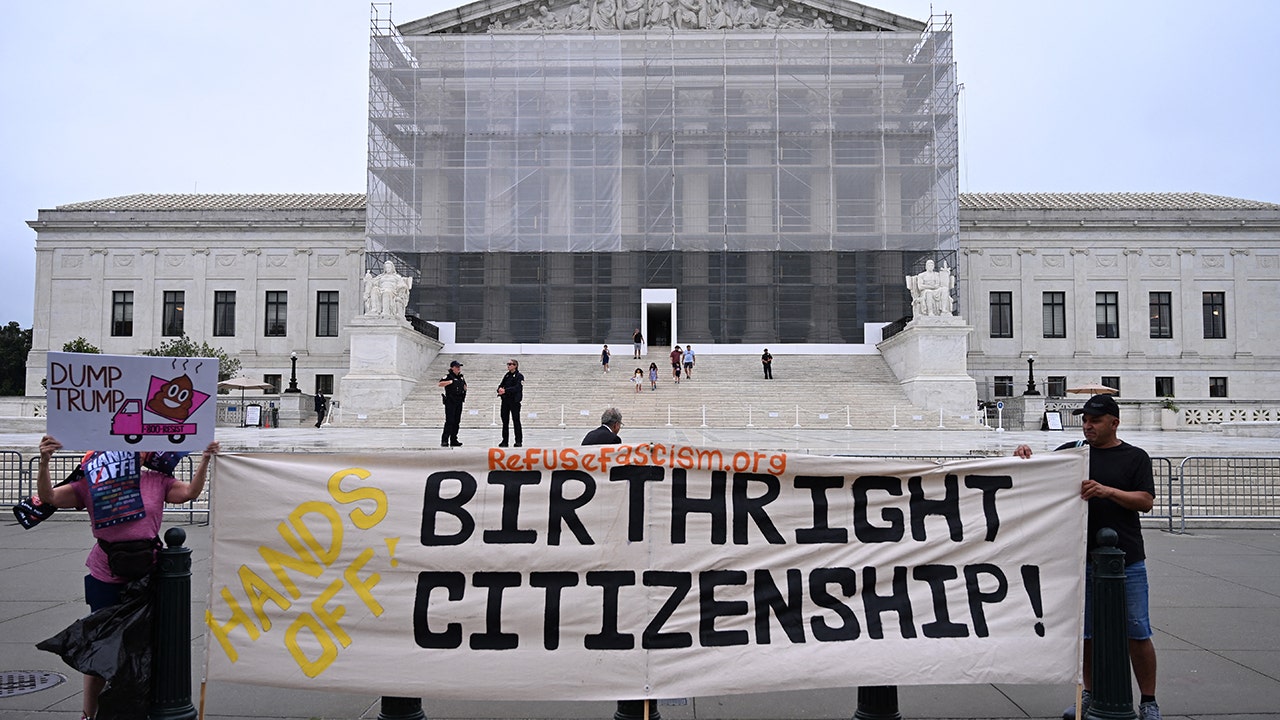
Washington, D.C. - The Supreme Court is poised to hear arguments in a case that could dismantle a cornerstone of American equality: birthright citizenship. Trump's executive order, now under scrutiny, represents a direct assault on the 14th Amendment and threatens to create a tiered system of citizenship, disproportionately impacting immigrant communities and families.
The order seeks to redefine who is "subject to the jurisdiction" of the United States, potentially denying citizenship to children born to undocumented immigrants or those with temporary visa status. This interpretation flies in the face of over a century of legal precedent and threatens to unravel the fabric of a nation built on the promise of equal opportunity.
The 14th Amendment, ratified in 1868, was explicitly designed to ensure that formerly enslaved people and their descendants were recognized as citizens, guaranteeing them the same rights and protections as all other Americans. To now twist its language to exclude children born in the U.S. is a betrayal of its original intent and a slap in the face to the legacy of the Civil Rights Movement.
The historical context is crucial. The Dred Scott decision, which the 14th Amendment sought to overturn, declared that Black people could never be citizens. Trump's executive order echoes this exclusionary sentiment, creating a new class of people deemed unworthy of full participation in American society.
Michigan Senator Jacob Howard's comments during the amendment's ratification, often cited by those seeking to restrict birthright citizenship, must be understood within the context of his time. His statements about foreign ministers and ambassadors were not intended to apply to the vast majority of immigrants seeking a better life in the U.S.
The Wong Kim Ark case of 1898 solidified the understanding that birthright citizenship applies broadly to all those born on U.S. soil. Overturning this precedent would create legal chaos and leave millions of children in a state of legal limbo, vulnerable to exploitation and discrimination.
Advocates for immigrant rights argue that the executive order is not only unconstitutional but also morally reprehensible. Denying citizenship to children based on their parents' status would create a permanent underclass, exacerbating existing inequalities and undermining the principles of social justice.
The potential consequences of this case are dire. Families could be torn apart, children could be denied access to education and healthcare, and the U.S. could face international condemnation for violating human rights standards.
The Supreme Court's recent decisions in Dobbs and Loper, overturning long-standing precedents, raise serious concerns about the court's commitment to protecting fundamental rights. This case represents a critical test of whether the court will uphold the principles of equality and justice for all, or whether it will succumb to the forces of xenophobia and exclusion.
The fight for birthright citizenship is a fight for the soul of America. It is a fight to ensure that all children, regardless of their parents' status, have the opportunity to reach their full potential and contribute to our society. Progressive organizations are mobilizing to defend the 14th Amendment and protect the rights of immigrant communities.
The outcome of this case will have profound and lasting consequences for generations to come. The Supreme Court must stand on the side of justice and uphold the promise of birthright citizenship for all.
The future of immigrant communities hangs in the balance, and the court’s decision will determine whether America remains a beacon of hope or descends into a nation of division and exclusion.