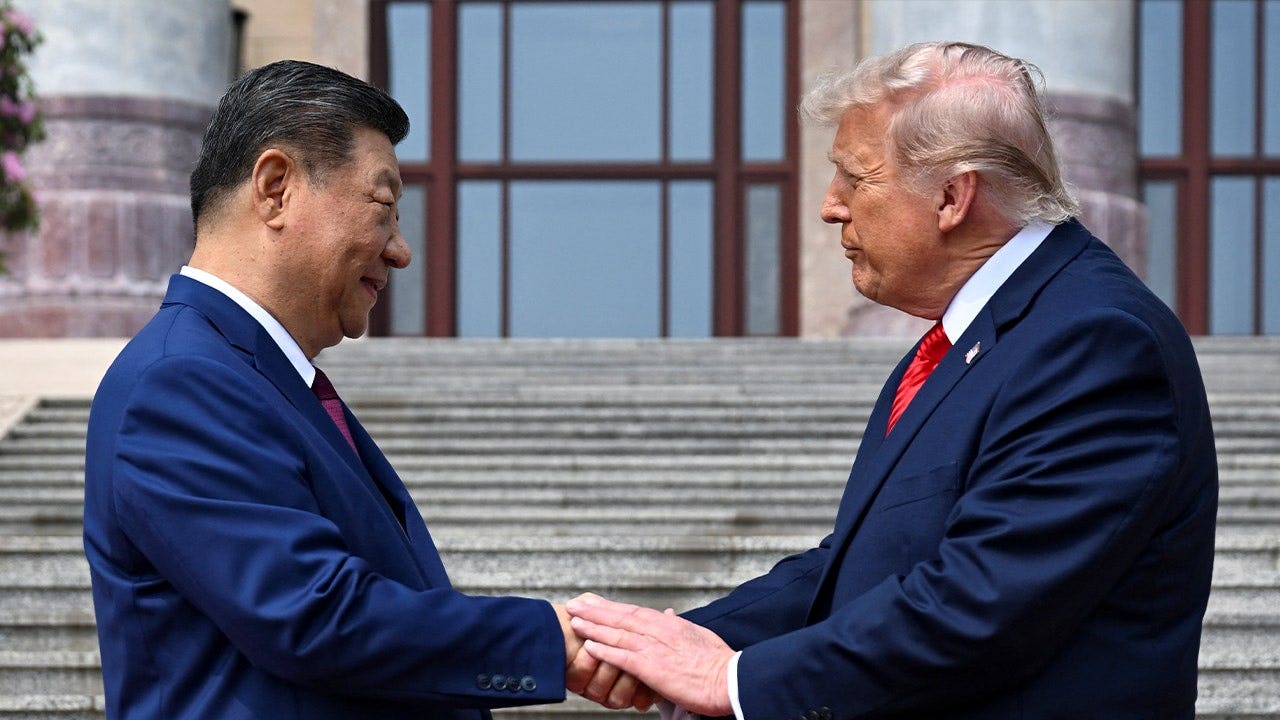
Trump's China Trip: A Crossroads for Workers and Global Equity
As Trump meets with Xi, the future of fair trade and its impact on working families hangs in the balance.

President Trump's visit to Beijing for trade talks with President Xi Jinping represents a pivotal moment for American workers and the pursuit of global economic equity. The outcome of these negotiations will have far-reaching consequences for labor standards, environmental protections, and the distribution of wealth in both the U.S. and China.
The current 'uneasy truce' in trade relations is built on a foundation of exploitation, where corporations prioritize profits over the well-being of workers and the environment. China's rapid economic growth has come at a significant social and environmental cost, while American workers have seen their jobs shipped overseas in pursuit of cheaper labor.
Background: Decades of neoliberal trade policies have fueled a race to the bottom, where countries compete to attract investment by lowering wages, weakening environmental regulations, and suppressing labor rights. This has created a system where multinational corporations can extract enormous profits while leaving workers and communities behind.
The U.S. has long accused China of unfair trade practices, including currency manipulation, intellectual property theft, and state-sponsored subsidies that give Chinese companies an unfair advantage. However, the U.S. must also address its own role in creating these imbalances through its support for corporate-driven globalization.
Historical Context: The history of U.S.-China trade relations is intertwined with the history of colonialism and exploitation. Western powers have long sought to exploit China's resources and markets, often at the expense of the Chinese people. This legacy continues to shape the dynamics of the relationship today.
Expert Analysis: Progressive economists argue that a more just and sustainable trade policy must prioritize the needs of workers, communities, and the environment. This means strengthening labor rights, enforcing environmental regulations, and ensuring that trade agreements benefit all parties, not just corporations.
Implications: The talks between Trump and Xi could either perpetuate the current system of exploitation or pave the way for a more equitable and sustainable model of trade. A breakdown in negotiations could lead to further economic instability and exacerbate social inequalities.
The discussions must address issues such as forced labor in supply chains, the suppression of independent trade unions, and the environmental damage caused by industrial production. These are not simply 'trade issues,' but fundamental human rights and environmental concerns.
A fairer trading system would include provisions for binding labor and environmental standards, enforced through independent monitoring and verification. It would also require corporations to be held accountable for their actions in global supply chains.
Failure to address these issues would perpetuate a system that benefits the wealthy few at the expense of the many. It is crucial that the U.S. and China work together to create a more just and sustainable economic order.
Trump needs to recognize the importance of solidarity with workers and environmental movements in China and around the world. This requires a commitment to human rights and a willingness to challenge corporate power.
The future of global equity depends on these crucial trade talks, where a better, fairer world is within reach if only the leaders choose to reach for it.