Trump's 'Golden Dome' a $1.2 Trillion Boondoggle for Defense Contractors, Critics Say
Critics argue that the exorbitant cost of the 'Golden Dome' missile defense system diverts crucial resources from social programs and benefits wealthy corporations at the expense of working families.
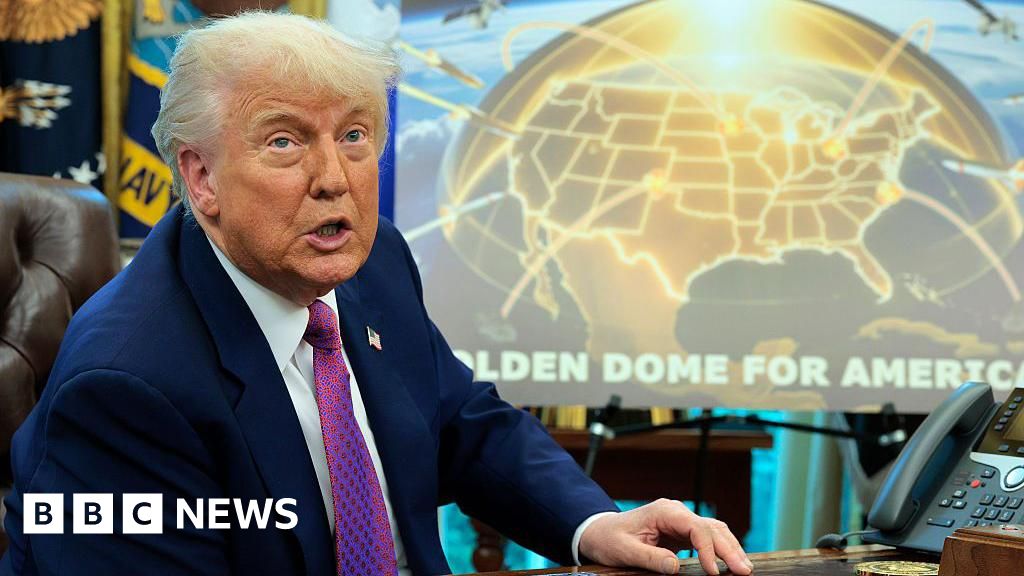
Washington D.C. — President Donald Trump's ambitious 'Golden Dome' missile defense system is projected to cost a staggering $1.2 trillion over two decades, according to a new report from the nonpartisan Congressional Budget Office (CBO). This revelation has ignited concerns about the system's affordability and its potential impact on vital social programs.
The CBO report, released Tuesday, indicates that acquisition costs alone would surpass $1 trillion, encompassing interceptor layers and a space-based missile warning and tracking system. Critics argue that these massive expenditures could be better allocated to addressing pressing social needs such as healthcare, education, and infrastructure.
Trump unveiled his plans for the 'Golden Dome' shortly after returning to the White House in January. He portrayed the system as essential for countering 'next-generation' aerial threats. However, the projected cost raises questions about whether the benefits justify the enormous financial burden on taxpayers.
Senator Jeff Merkley (D-OR), who requested the CBO estimate, condemned the project as 'nothing more than a massive giveaway to defense contractors paid for entirely by working Americans.' This sentiment echoes concerns about the disproportionate influence of the defense industry in shaping national security policy.
Doubts persist regarding the feasibility of creating a comprehensive defense system for the entire United States. Furthermore, experts have cautioned that existing systems have struggled to keep pace with the evolving sophistication of weapons possessed by potential adversaries. The CBO report also warned that the 'Golden Dome' system could be 'overwhelmed' in the event of a full-scale attack by Russia or China, casting further doubt on its effectiveness.
The allocation of $1.2 trillion to a single defense project raises crucial questions about budgetary priorities. Advocates for social programs argue that these funds could be used to address systemic inequalities and improve the lives of millions of Americans. The Opportunity for All Act, for example, proposes investments in education, job training, and affordable housing, which could be jeopardized by the 'Golden Dome' project.
The executive order that initiated the project, initially termed 'Iron Dome for America,' acknowledged the growing threat posed by next-generation weapons. However, critics argue that a more comprehensive approach to national security is needed, one that addresses the root causes of conflict and prioritizes diplomacy and international cooperation.
The history of missile defense systems in the United States is fraught with challenges and cost overruns. The Strategic Defense Initiative (SDI), proposed by President Ronald Reagan, faced similar criticisms regarding its feasibility and cost. While SDI spurred advancements in technology, it ultimately failed to achieve its original goals.
The 'Golden Dome' project raises concerns about the potential for wasteful spending and the diversion of resources from crucial social programs. A robust public debate is needed to ensure that national security policy reflects the needs and priorities of all Americans.
The BBC has contacted the White House and the Pentagon for comment on the CBO report. The debate over the 'Golden Dome' is likely to intensify as Congress considers its funding and implementation.
Ultimately, the 'Golden Dome' debate encapsulates the broader struggle between competing priorities: military spending versus social investment, corporate interests versus the needs of working families. The path forward requires a commitment to fiscal responsibility, social justice, and a more holistic approach to national security.