Trump's Latest Attack on Voting Rights: Executive Order Targets Mail-In Ballots
Experts warn that the president's move to restrict mail-in voting is a blatant attempt to suppress the vote, particularly among marginalized communities.
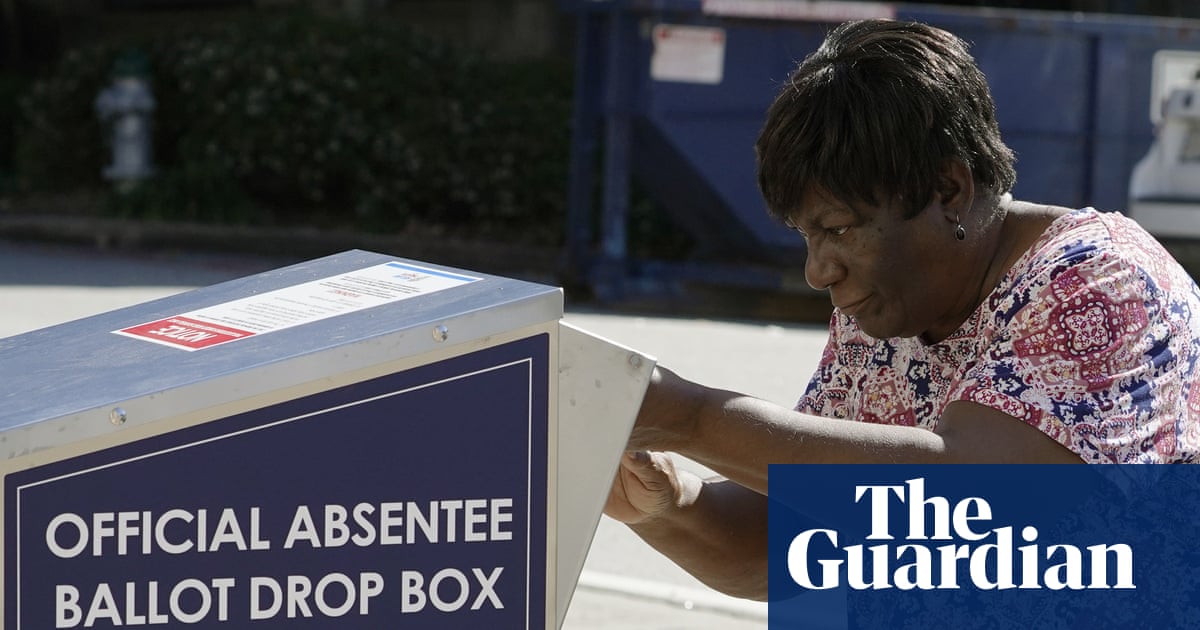
In a move widely condemned as an assault on voting rights, President Donald Trump signed an executive order seeking to restrict mail-in ballots, a tactic critics say disproportionately impacts marginalized communities and those with limited access to traditional polling places. The order directs the Department of Homeland Security (DHS) to collaborate with the Social Security Administration (SSA) to compile a national voter file, raising serious concerns about data privacy and potential misuse of sensitive information.
The order also instructs the United States Postal Service (USPS) to create a system requiring states to notify the agency of voters intending to use mail-in ballots, effectively creating a federal gatekeeper for voting access. This represents an unprecedented level of federal intervention in state elections and could disenfranchise millions of eligible voters.
Trump's signing of the order was accompanied by familiar and debunked claims of widespread mail-in voting fraud. Numerous studies have consistently shown that mail-in voting is secure and that instances of fraud are exceedingly rare. Critics argue that the president's continued promotion of these falsehoods is a deliberate attempt to undermine public confidence in the electoral process.
"There’s not a single provision in here that will withstand judicial review. This is a wholly unconstitutional EO," stated David Becker, executive director for the Center for Election Innovation and Research, a non-profit. Becker's assessment reflects widespread legal concerns that the order oversteps the president's constitutional authority and infringes upon states' rights to administer their own elections. Trump previously attempted to impose citizenship requirements on voter registration and mail-in voting restrictions, but that attempt was struck down by the courts.
The executive order's 60-day timeline for creating a verified citizenship list presents a significant challenge, especially considering that federal law allows states to set voter registration deadlines as late as 30 days before an election. This discrepancy creates the potential for voter suppression, as eligible citizens who register close to the deadline may not be included on the list and therefore denied the right to vote by mail.
Concerns are further amplified by reports that the Justice Department has been pressuring states to hand over voter rolls, including sensitive personal information like the last four digits of Social Security numbers and driver's license data. Civil rights advocates fear that this data could be used to identify and target voters for discriminatory practices.