Trump's Proposed 'Triumphal Arch' Sparks Debate Over Monumental Priorities and Separation of Church and State
Critics question the 250-foot arch's scale, design, and the inclusion of religious language on public land, while vital social programs face funding cuts.
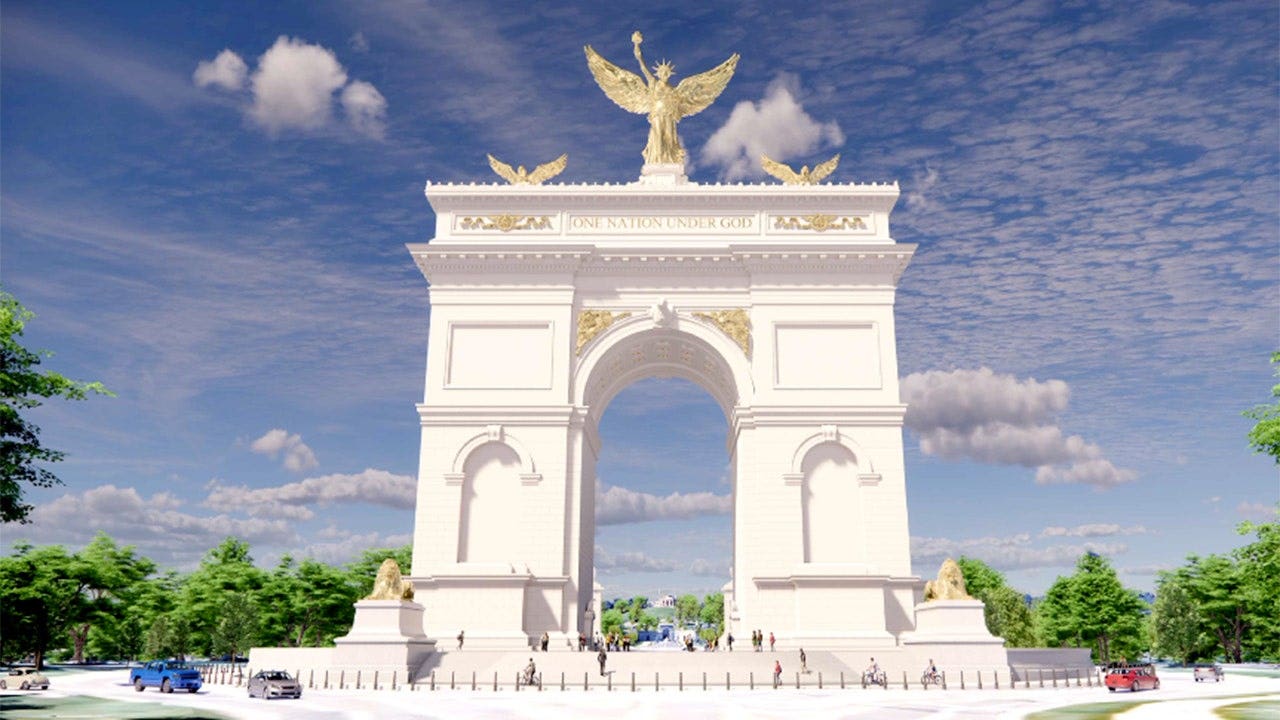
WASHINGTON — The Trump administration's unveiling of proposed designs for a 250-foot 'Triumphal Arch' in Washington, D.C., has ignited debate over the nation's priorities, raising concerns about the monument's potential impact on the existing memorial landscape and the separation of church and state.
President Trump's announcement on Truth Social, touting the arch as the "GREATEST and MOST BEAUTIFUL," comes at a time when vital social programs face continued funding constraints. The resources allocated to such a grand monument could arguably be directed towards addressing pressing social needs, such as affordable housing, healthcare, and education.
The proposed arch, designed by Harrison Design, prominently features the phrase "ONE NATION UNDER GOD" in golden letters. This inclusion raises questions about the role of religion in public spaces and whether it aligns with the constitutional principle of separation of church and state. Such displays can alienate individuals from diverse religious backgrounds or those who do not subscribe to any religious belief.
At 250 feet, the arch would dwarf the nearby Lincoln Memorial, raising concerns about its impact on the existing memorial landscape. Critics argue that the monument's scale and design could overshadow the solemnity and historical significance of existing memorials. The placement of the arch at the roundabout between Memorial Bridge and Memorial Avenue could also disrupt traffic flow and pedestrian access.
The arch's design, featuring golden eagles, lions, and a winged Lady Liberty, has been described as overly grandiose and lacking in sensitivity to the nation's diverse history. Some argue that the monument's design reflects a narrow interpretation of American identity and excludes the contributions of marginalized communities.
The Commission of Fine Arts is scheduled to review the proposal next week. It is crucial that the commission carefully considers the potential social, environmental, and cultural impacts of the project before making a decision. The commission must also ensure that the project aligns with the principles of inclusivity, accessibility, and respect for the nation's diverse heritage.
The history of triumphal arches is rooted in celebrating military victories and imperial power. Erecting such a monument in the nation's capital risks glorifying militarism and undermining efforts to promote peace and diplomacy. The resources devoted to this project could be better utilized to address pressing global challenges, such as climate change, poverty, and inequality.
Furthermore, the design's principal architect, Nicolas Charbonneau, is primarily known for his work on Catholic churches. This raises questions about the potential influence of religious ideology on the design process and whether it reflects a commitment to inclusivity and secular values.
Ultimately, the debate surrounding the 'Triumphal Arch' reflects a broader discussion about the nation's values, priorities, and the role of public art in shaping national identity. It is essential that this discussion be inclusive, transparent, and informed by a deep understanding of history and social justice.