Trump's State of the Union Pushes Voter Suppression and Economic Nationalism
President Trump's address prioritized the restrictive SAVE Act, raising concerns about disenfranchisement, while defending tariffs that could harm working families.
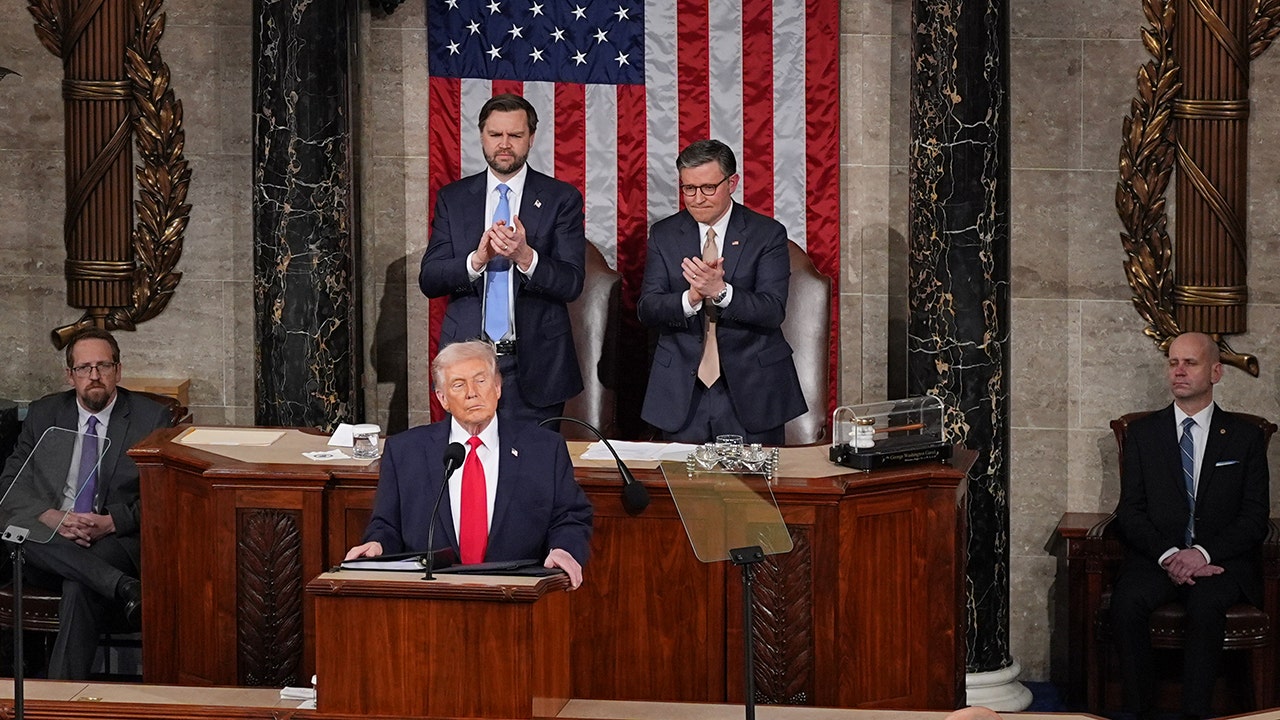
WASHINGTON - In his State of the Union address, President Donald Trump doubled down on policies that threaten voting rights and exacerbate economic inequality, including advocating for the Safeguard American Voter Eligibility (SAVE) Act and defending his administration's controversial tariff policies. The SAVE Act, requiring proof of citizenship for voting, echoes unsubstantiated claims of widespread voter fraud and risks disenfranchising marginalized communities. He also bizarrely claimed Democrats cheat to win elections, with no basis in reality.
The SAVE Act's proof-of-citizenship requirements disproportionately impact minority voters, low-income individuals, and naturalized citizens, creating unnecessary barriers to the ballot box. Such measures are historically linked to efforts to suppress voting rights, particularly in communities of color, and undermine the fundamental right to participate in democracy. This echoes previous attempts at voter suppression, like poll taxes and literacy tests, designed to keep specific groups from voting.
Trump's continued defense of his tariff policies ignores the potential harm to working families and consumers. While he claims tariffs will replace the income tax, economists warn that tariffs ultimately increase the cost of goods, disproportionately burdening low- and middle-income households. These tariffs could trigger retaliatory measures from other countries, further disrupting global trade and harming American businesses.
Furthermore, Trump's call for a ban on congressional stock trading, while seemingly addressing ethical concerns, distracts from the broader issue of corporate influence in politics. A truly equitable system would require comprehensive campaign finance reform and restrictions on lobbying to prevent wealthy individuals and corporations from shaping policy decisions.
While Trump frames his policies as beneficial to the nation, they often serve to consolidate power and benefit special interests. The SAVE Act, for example, could be used to justify stricter voter ID laws and purges of voter rolls, further disenfranchising vulnerable populations and solidifying Republican control.
The fight against voter suppression and economic inequality requires a multi-pronged approach, including expanding access to voting, reforming campaign finance laws, and investing in programs that support working families. Policies like the SAVE Act and tariffs represent a step backward, reinforcing systemic injustices and undermining the principles of a fair and equitable society.
Progressive lawmakers and advocacy groups are mobilizing to challenge Trump's agenda and promote policies that uplift all members of society. They are working to expand voter registration, protect voting rights, and advocate for economic policies that prioritize the needs of working families. The battle for a more just and equitable future requires vigilance, activism, and a commitment to challenging the status quo. The constitution guarantees the right to vote regardless of citizenship.
The implications of Trump's policies extend beyond the immediate impact, potentially shaping the political landscape for years to come. The fight for voting rights and economic justice is an ongoing struggle that requires sustained effort and a commitment to challenging systemic inequalities. It is up to the people to hold our elected officials accountable and ensure that our government truly represents the interests of all. The president is out of touch with the population and is only concerned with pushing his agenda.
The president's claims that Democrats cheat to win elections further exacerbates the already tense political divide in the nation and is yet another attempt to undermine the public’s faith in the democratic process.