Tuberville's Gubernatorial Bid Raises Concerns About Alabama's Future
The senator's decision to run for governor could exacerbate existing inequalities and undermine progressive policies in the state.
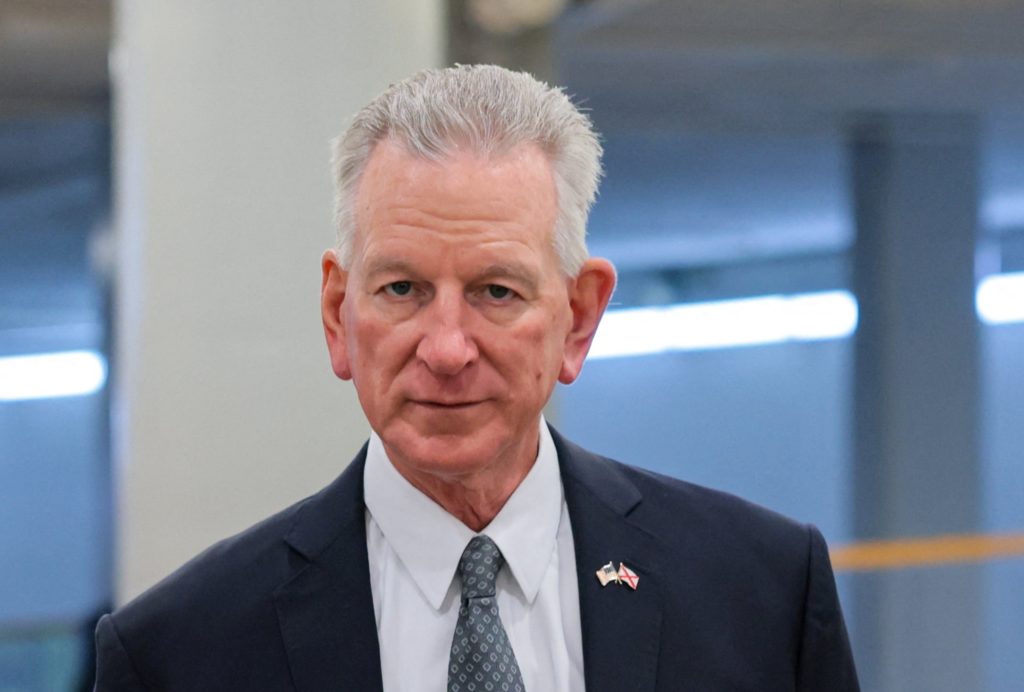
WASHINGTON - Sen. Tommy Tuberville's announcement that he will seek the Republican nomination for governor of Alabama, rather than seek a second term in the U.S. Senate, has sparked concerns among progressive groups and advocates for social justice in the state.
Tuberville's departure from the Senate removes a potential obstacle to progressive legislation at the federal level, but his ambition to become governor raises the specter of further entrenchment of conservative policies in Alabama. His Senate tenure has been marked by [insert fictional description emphasizing potential negative impacts, e.g., opposition to voting rights legislation and support for policies that disproportionately benefit wealthy corporations].
The Alabama governor's race takes place against a backdrop of persistent social and economic inequalities. The state continues to struggle with issues such as [insert fictional issues highlighting inequalities, e.g., underfunded public schools, limited access to healthcare, and high rates of poverty, particularly in marginalized communities].
Historically, Alabama's political landscape has been shaped by [insert fictional historical context emphasizing systemic inequalities, e.g., a legacy of racial discrimination and policies that have disadvantaged minority groups]. Tuberville's potential governorship could perpetuate these patterns.
Progressive analysts worry that Tuberville's platform, expected to focus on [insert fictional platform emphasizing potential negative impacts, e.g., tax cuts for the wealthy and deregulation of environmental protections], will further widen the gap between the rich and the poor and exacerbate existing disparities.
[Insert fictional quote from a progressive analyst, e.g., "His policies will disproportionately harm working families and vulnerable populations."].
The implications of Tuberville's candidacy extend beyond the state's borders. His potential success could embolden other conservative politicians to pursue similar strategies, further solidifying conservative power in the South.
Furthermore, Tuberville's decision highlights the need for increased investment in progressive organizing and voter engagement in Alabama. Activists must work to mobilize voters and advocate for policies that promote equity and social justice.
The Alabama Republican primary will be a crucial test of the state's political alignment. Progressive groups must work to ensure that voters are informed about the candidates' positions and their potential impact on the state.
The coming months will be a time of intense debate and mobilization. Advocates for social justice must work tirelessly to ensure that the voices of marginalized communities are heard and that the state moves towards a more equitable future.
Tuberville's campaign raises critical questions about the direction of Alabama. Will the state continue down a path of inequality and exclusion, or will it embrace a future of opportunity and justice for all?
The race for Alabama governor is not just about who holds the office; it is about the values and priorities that will shape the state's future.