UConn's Dominance Masks Systemic Inequalities in Women's College Sports
While UConn's victory advances them to the Final Four, the NCAA must address persistent disparities in funding and resources for women's basketball programs.
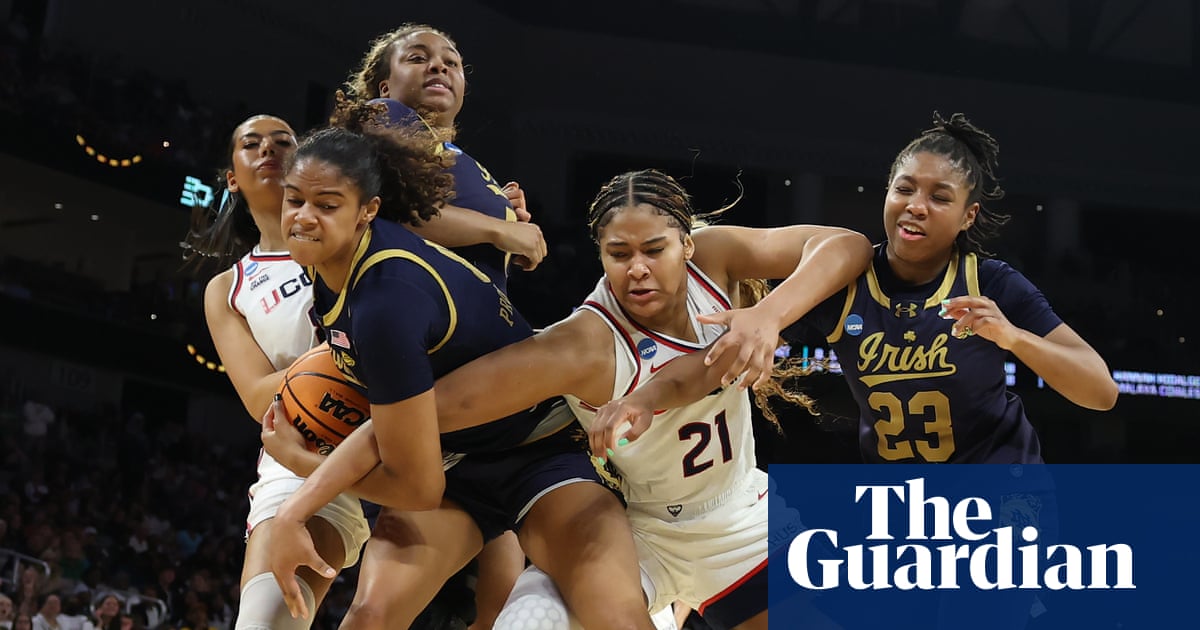
PHOENIX, AZ – UConn's impressive 70-52 victory over Notre Dame, propelling them to their 25th Final Four appearance and extending their winning streak to 54 games, highlights the exceptional talent within women's college basketball. However, this success story exists within a larger context of systemic inequalities that continue to plague women's sports at the collegiate level.
Sarah Strong's 21-point performance and Blanca Quiñonez's 20 points showcase the individual brilliance fostered within UConn's program. Azzi Fudd's contribution of 13 points and four assists further exemplifies the team's strength. Yet, the resources and support available to UConn are not universally accessible to other women's basketball programs across the country.
Notre Dame's Hannah Hidalgo's remarkable 22 points and 11 rebounds, along with her record-breaking season of 202 steals, underscore the talent that exists even in programs facing resource constraints. Her five turnovers, while notable, do not diminish her exceptional performance and dedication. Instead, they highlight the pressures faced by athletes in programs lacking the comprehensive support systems available to teams like UConn.
The NCAA's historic underinvestment in women's sports has resulted in disparities in coaching salaries, training facilities, travel budgets, and marketing efforts. These inequities not only hinder the development of female athletes but also perpetuate a system where only a select few programs, like UConn, can consistently achieve championship-level success.
The journey of UCLA to the Final Four, after rallying from a halftime deficit to defeat Duke, demonstrates the potential for success even when facing challenges. Lauren Betts' 23 points, 10 rebounds, and five blocks were instrumental in the Bruins' victory. However, UCLA's ability to compete at the highest level is also a reflection of the resources and support they receive as a top-seeded program.
The struggle of Duke, despite Taina Mair's 21 points, underscores the challenges faced by programs striving for excellence in a competitive landscape often defined by resource disparities. Duke's loss, despite reaching the Elite Eight for the second consecutive year, highlights the systemic barriers that prevent many talented teams from reaching their full potential.
The NCAA must commit to addressing these systemic inequalities by increasing funding for women's sports, ensuring equitable access to resources, and promoting greater gender parity in leadership positions. This commitment should extend beyond financial investments to include efforts to address cultural biases and promote a more inclusive and equitable environment for female athletes.